


Hollow fiber reactor revolutionizes delivery of nutrients and oxygen in bioprocesses. Efficient nutrient and oxygen supply determines cell growth and productivity. Cells require a constant influx of essential nutrients and oxygen to thrive, while high cell densities often introduce challenges like aggregation and oxygen deprivation. Hollow fiber bioreactor offers a unique 3D structure and a surface area to volume ratio of 100–200 cm²/mL, supporting cell densities up to 2 × 10⁸ or more. Researchers at the University of Tokyo use this technology for cultivated meat production, demonstrating its impact in advanced biotechnology.
Table: Key Performance Features of Hollow Fiber Reactor
Characteristic Value Surface area to volume ratio 100–200 cm²/mL Cell density 1–2 × 10⁸ or more Equivalent stirred tank volume 100 L for 1 L HFBR module Reduction in product harvest volume 10 to 100 times
Key Takeaways
- Hollow fiber reactor enhances nutrient and oxygen delivery, crucial for cell growth and productivity.
- The unique 3D structure of hollow fibers supports high cell densities, improving overall cell viability.
- Continuous perfusion in hollow fiber systems allows real-time control of nutrient supply and waste removal.
- Hollow fiber technology is vital for applications in cultivated meat production and regenerative medicine.
- Innovations in reactor design and membrane materials promise to improve scalability and efficiency in biomanufacturing.
Hollow Fiber Reactor and Nutrient Delivery
Mechanisms of Nutrient and Oxygen Diffusion
A hollow fiber reactor emulates the function of blood vessels in living tissues. By arranging hollow fibers in a precise manner, the bioreactor achieves uniform nutrient delivery and oxygen distribution. This approach addresses a major challenge in traditional cell culture, where thick tissues often suffer from poor nutrient penetration and necrosis. The hollow fiber bioreactor uses semipermeable hollow fibers for nutrient delivery, allowing nutrients and oxygen to diffuse from the intracapillary space through the membrane to the extracapillary space, where cells reside. The process relies on concentration gradients and the properties of the substances involved.
“We’re using semipermeable hollow fibers, which mimic blood vessels in their ability to deliver nutrients to the tissues,” explains senior author Shoji Takeuchi.
The geometry and arrangement of hollow fibers for nutrient delivery play a crucial role in the rate and uniformity of nutrient and oxygen diffusion. Random packing of fibers creates irregular flow domains, leading to complex mass transfer dynamics. Concentration boundary layers in the lumen and shell spaces can impact the efficiency of transport. Variations in flow due to non-parallel fiber alignment and uneven fluid distribution further affect both the rate and uniformity of delivery.
Hollow fiber membrane bioreactor utilizes semi-permeable membranes that allow small molecules such as nutrients and oxygen to diffuse while retaining cells. This design creates a nutrient circulation system similar to natural capillary networks, which is essential for sustaining growing tissues. The structure of the bioreactor minimizes diffusion paths for nutrients and waste products, maintaining a stable microenvironment that closely resembles in vivo conditions.
Continuous Perfusion and High Cell Density
The hollow fiber reactor supports a continuous perfusion process, which is vital for maintaining high cell density cultures. The design enables a steady supply of nutrients and efficient removal of waste, creating optimal conditions for cell growth. The culture environment can be controlled in real-time, allowing adjustments to nutrient composition as needed. Cells are separated from the bulk medium by a selectively permeable membrane, which enables differential exchange of nutrients and waste and optimizes the culture conditions.
- Continuous nutrient supply and efficient waste removal are crucial for maintaining high cell densities.
- Real-time control of the culture environment enables adjustments to nutrient composition.
- Selectively permeable membranes separate cells from the bulk medium, optimizing nutrient and waste exchange.
Experimental results show that death-resistant CHO cell lines in perfusion cultures within hollow fiber reactor demonstrates significantly higher cell viability and reduced necrosis compared to control cell lines. This highlights the effectiveness of the continuous perfusion process in preventing cell death in high-density cultures.
The following table summarizes the effect of continuous medium flow on cell viability and necrosis prevention:
| Measurement | Result |
|---|---|
| LDH Levels | Stable throughout the follow-up, indicating no significant cell death. |
| Total Detached Cells | Most seeded cells remained inside the cartridge, with a total count of 4 × 10^6 cells. |
| Glucose Consumption | Constant decrease observed over a minimum of two weeks of culture. |
| LDH Levels Over Time | Did not significantly increase, indicating balance between cell proliferation and death. |
Hollow fiber reactor achieves cell densities greater than 10^9 cells/ml, providing an environment that closely mimics natural tissues. The process scales linearly by adding more cartridges, allowing for quick adjustments based on demand. Cells can be directly injected into the bioreactor after scaling up, simplifying the process. Steady-state metabolic activity enhances cell viability, and continuous operation allows for sustained product harvest. Automation reduces daily maintenance, and high product concentration minimizes downstream processing steps.
Hollow Fiber Bioreactor Technology
Structure and Function of Hollow Fiber Membranes
The design of hollow fiber membranes forms the foundation of the hollow fiber bioreactor. Engineers have used these membranes for high-density animal cell culture since the 1970s. A typical hollow fiber unit contains thousands of fibers packed inside a cylindrical tube. Cells are placed in the extracapillary chamber, while the nutrient medium flows through the lumen of each fiber. The ultrafiltration layer acts as a selective barrier, allowing small molecules such as nutrients and oxygen to pass while retaining larger proteins.
The porous structure of the fibers creates a pressure drop, which helps fresh medium and waste products move radially. This arrangement supports efficient nutrient delivery and waste removal.
The following table summarizes key features of hollow fiber membranes:
| Feature | Description |
|---|---|
| Inner Diameter | Approximately 180-220 μm |
| Length | Approximately 20-24 cm |
| Number of Fibers | 7,000 to 14,000 |
| Flow Dynamics | Governed by the Hagen-Poiseuille equation |
| Surface Area for Blood Contact | Maximizes nutrient exchange |
Design parameters such as packing density, fiber length, and inner diameter influence cell distribution and reactor performance. Dense packing can change local flow rates, while adjustments in fiber diameter and potting thickness affect filtration and output efficiency.
Role of Hollow Fiber Spinning Machine
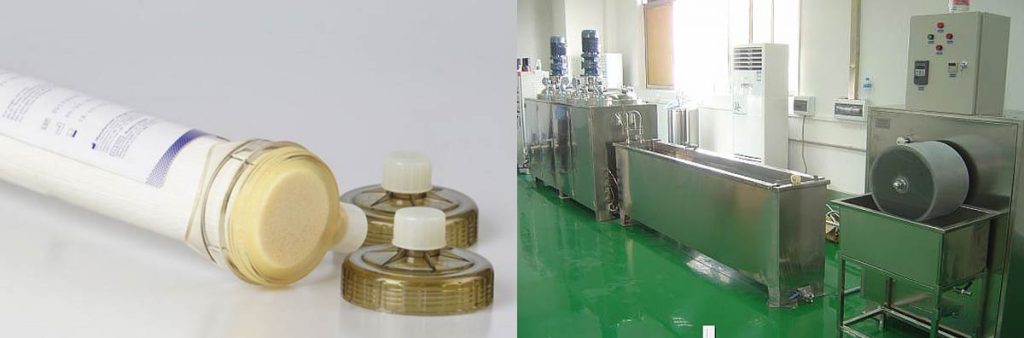
The hollow fiber spinning machine plays a critical role in producing membranes for bioreactor systems. This machine enables precise control over fiber diameter, wall thickness, and porosity. These adjustments allow engineers to optimize flow rates and mass transfer, which are essential for cell growth and product formation.
- Hollow fiber membranes serve as a filtering and separation mechanism.
- They enable exchange of nutrients, gases, and waste products between the medium and cells.
- Advanced automation in spinning machines reduces labor costs and improves consistency.
| Feature | Impact on Bioreactor Efficiency and Scalability |
|---|---|
| Fiber Diameter Control | Optimizes flow and mass transfer rates |
| Wall Thickness Adjustment | Enhances filtration and structural integrity |
| Porosity Customization | Improves nutrient delivery and waste removal |
| Scalability | Suitable for large-scale and research applications |
The hollow fiber bioreactor benefits from these customizable features, supporting efficient and scalable cell culture for biotechnology applications.
Benefits and Applications of Hollow Fiber Technology
Improved Cell Growth and Product Yield
Hollow fiber technology supports remarkable improvements in cell culture outcomes. Researchers have observed higher cell yields when using a hollow fiber reactor compared to manual expansion methods. The continuous exchange of media in the bioreactor enhances nutrient supply and removes metabolic byproducts, which leads to better cell viability and increased product yield. The high surface-to-volume ratio of hollow fiber bioreactor allows a large number of cells to attach in a small volume, boosting productivity for both anchorage-dependent and suspension cultures.
Hollow fiber reactor maintains a stable environment, which is essential for producing high-quality extracellular vesicles (EVs) and monoclonal antibodies.
The following table highlights quantitative improvements in cell growth and product yield:
| Aspect | Improvement Description |
|---|---|
| Cell Growth | Higher cell yields achieved with Quantum hollow-fiber bioreactor compared to manual expansion of MSCs. |
| Product Yield | Continuous media exchange in the bioreactor enhances nutrient supply and removes metabolic byproducts. |
| Product Yield | Increased scalability of EV production due to larger cell seeding surface area in hollow-fiber technology. |
| Cell Viability | Bioreactor systems maintain high cell viability, crucial for producing high-quality EVs for clinical use. |
Comparative studies show that hollow fiber bioreactor outperforms other bioreactor types in terms of Tcell yield and fold-expansion. The chart below illustrates these differences:
In monoclonal antibody production, hollow fiber bioreactor has produced between 137 to 307 mg of antibody fragments in crude extract, with a maximum IgG concentration of about 2.4 mg/ml. This efficiency demonstrates the value of hollow fiber technology in biomanufacturing and biopharmaceutical manufacturing.
Applications in Cultivated Meat and Regenerative Medicine
Hollow fiber technology plays a vital role in cultivated meat production. It enables scalable tissue biofabrication, allowing the creation of large, well-vascularized tissues. The hollow fibers act as artificial circulatory systems, ensuring uniform delivery of nutrients and oxygen. This process supports the development of densely packed myotubes, which are essential for producing centimeter-scale skeletal muscle tissues.
In regenerative medicine, hollow fiber technology provides an optimized environment for cell culture and bioprocessing. The following list summarizes its main uses:
- Hollow fiber technology creates high cell density environments, which are crucial for tissue engineering.
- Semi-permeable hollow fiber membranes ensure efficient nutrient supply.
- Optimized gas exchange supports rapid oxygen delivery and CO2 removal.
- Effective waste removal maintains a clean and stable culture environment.
- The technology is ideal for cell therapies and tissue engineering applications.
Hollow fiber reactor continues to advance the fields of cultivated meat and regenerative medicine by supporting scalable, high-quality cell culture and efficient nutrient delivery.
Challenges and Future of Hollow Fiber System
Technical Barriers and Optimization
Hollow fiber system faces several technical barriers that limit their full potential in cell culture and biomanufacturing. Engineers must address challenges in nutrient delivery and waste removal to maintain healthy cell populations. Continuous feeding and minimal mass transfer limitations create a favorable environment for cell growth, but scaling up these systems introduces complexity. Researchers have developed specific designs, such as the crossed hollow fiber bioreactor, which support the formation of liver and cerebral organoids. Integration of hollow fiber membranes enhances nutrient supply in three-dimensional tissue constructs. Bioreactors improve nutrient diffusion and reduce hypoxic regions, supporting dense cell culture environments.
Key strategies under investigation include:
- Implementation of scaffolds with artificial microvasculature and oxygen carriers.
- Development of perfusion culture systems for adequate nutrient delivery.
- Optimization of reactor performance and efficiency for scalable cell therapies.
Industry experts highlight the need for cost-effective solutions. Advanced technologies in reactor design have led to optimized solutions that enhance performance and efficiency. Computer-aided modeling allows for testing and optimization of designs, contributing to the scalability of hollow fiber system. Pharmaceutical and biotechnology companies continue to drive demand for these reactors in therapeutic protein and vaccine production.
Innovations in Fiber and Reactor Design
Recent innovations in hollow fiber membrane design have improved reactor performance for cell culture and biomanufacturing. Researchers have tested new additives and composite materials to enhance permeability, hydrophilicity, and antifouling properties. The table below summarizes improvements in flux recovery ratio (FRR) and pure water permeability (PWP) across several studies:
| Study | Additive | FRR Improvement | PWP Improvement |
|---|---|---|---|
| Yu et al. (2013) | N-halimane-grafted SiO2 | 87% to 96% | 200 to 384.4 L.m−2.h−1.bar−1 |
| Feng et al. (2015) | CNT and alumina | 53.2% to 84.1% | 330 to 375 L.m−2.h−1 |
| Kumari et al. (2020) | TPGS and MWCNT-COOH | 58% to 89% | 165 to 396 L.m−2.h−1.bar−1 |
| Modi et al. (2020) | ZIF-67/cGO nanocomposites | 55.5% to 95.7% | 68 to 346 L.m−2.h−1 |
Innovations in reactor design also support the expansion of human T cells and improve the efficiency of cell therapies. Optimization of media perfusion and waste removal has led to substantial increases in T cell yield. Hollow fiber membrane contactors now recover dissolved methane and CO2 from wastewater streams, enhancing biogas recovery and reducing greenhouse gas emissions. Composite membranes made from mixed PVDF and PES polymers improve hydrophilicity and mechanical strength, providing tunable strategies for water treatment.
Environmental biotechnology applications are expanding, especially in wastewater treatment, where hollow fiber reactor supports dense microbial populations. Aerated PVDF hollow fiber ultrafiltration devices achieve high efficiency with low energy consumption, confirming scalability for biomass recovery. The future of hollow fiber system in cell culture and biomanufacturing looks promising, with ongoing research focused on improving scalability, cost-effectiveness, and performance for cell therapies and advanced tissue engineering.
Conclusion
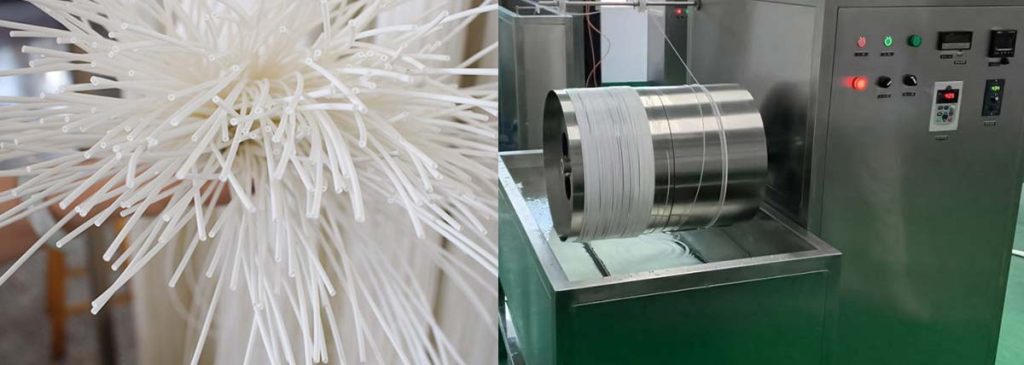
Hollow fiber reactor supports cell growth by providing a large surface area and efficient nutrient exchange. The table below highlights their main benefits:
| Benefit | Description |
|---|---|
| Enhanced Cell Growth and Proliferation | Large surface area for cell attachment and nutrient exchange, mimicking in vivo conditions. |
| Continuous and Long-Term Culture | Extended culture periods with reduced contamination risks. |
| Scalability for Various Applications | Easily adapts from laboratory to industrial production. |
These reactors transform industries such as cultivated meat and regenerative medicine. They enable scalable tissue production, improve product quality, and open new possibilities for biohybrid robotics. Ongoing research continues to improve efficiency, scalability, and versatility, promising even greater impact in the future.
FAQ
What Is a Hollow Fiber Reactor?
A hollow fiber reactor uses thousands of tiny, tube-like fibers to deliver nutrients and oxygen to cells. This design mimics blood vessels and supports high cell density. Scientists use these reactors in biotechnology, cultivated meat, and regenerative medicine.
How Does a Hollow Fiber Reactor Improve Nutrient Supply?
The reactor provides a large surface area for nutrient exchange. Nutrients and oxygen diffuse through the fiber walls directly to the cells. This process keeps cells healthy and supports rapid growth.
Why Do Researchers Prefer Hollow Fiber Reactors for High-Density Cultures?
Researchers choose hollow fiber reactors because they prevent cell death by ensuring even nutrient and oxygen delivery. The continuous flow system removes waste efficiently, which helps maintain high cell viability.
What Are the Main Applications of Hollow Fiber Technology?
Hollow fiber technology finds use in cultivated meat production, regenerative medicine, and biopharmaceutical manufacturing. It supports tissue engineering, cell therapy, and the production of therapeutic proteins.
Can Hollow Fiber Reactors Be Scaled for Industrial Use?
Yes. Engineers can scale hollow fiber reactors by adding more fiber cartridges. This modular approach allows for easy expansion from laboratory research to industrial production.