


Laboratories worldwide now prioritize advanced filtration methods to improve research outcomes. The global laboratory filtration market reached US$3.8 billion in 2023 and is set to grow rapidly, driven by rising standards and increased R&D spending, especially in the Asia Pacific region. Hollow fiber membrane technology stands out for its efficiency and versatility across applications.
- Laboratories use this technology for nutrient recovery, wastewater treatment, and even desalination.
- These membranes support high-performance separation and circular economy strategies.
Researchers can follow clear steps, choose the right equipment, and maintain reliable results with proper integration.
Key Takeaways
- Hollow fiber membranes enhance laboratory efficiency by providing high packing density and flexibility in configurations, making them ideal for various filtration tasks.
- Selecting the right membrane and conducting integrity tests are crucial for maintaining performance and ensuring reliable results in laboratory applications.
- Proper staff training on operation and maintenance of hollow fiber membranes is essential for smooth integration and consistent performance in lab workflows.
- Regular monitoring and preventive maintenance, such as cleaning and integrity testing, help extend the lifespan of hollow fiber membranes and improve overall system efficiency.
- Hollow fiber membranes support sustainable practices by enabling resource recovery from wastewater, contributing to the circular economy in various industries.
Benefits of Hollow Fiber Membrane Technology
Efficiency and Versatility
Hollow fiber membrane technology offers laboratories a unique combination of efficiency and adaptability. Scientists often choose hollow fiber membranes for their ability to handle demanding membrane processes. The small diameter of each strand allows for high packing density, which increases the filtration surface area without requiring more space. This design supports high flow rates and minimizes pressure loss, making membrane processes more effective.
The following table highlights key efficiency advantages:
| Efficiency Advantage | Description |
|---|---|
| High Packing Density | Hollow fiber membranes have a small strand diameter, allowing for a very high packing density. |
| Flexibility in Configurations | The flexibility of the strands enables unique filter configurations not possible with other methods. |
| Backflushing and Air Scouring | These membranes can be backflushed from the permeate side and air scoured, enhancing operational efficiency. |
| High TSS Processing Capability | They can effectively process feed streams with high total suspended solids (TSS). |
| Large Surface Area | Hollow fibers provide a significant surface area for filtration, improving efficiency. |
| Compact Size | Their compact size allows for high flow rates with minimal pressure loss. |
| Self-Supported Structure | The mechanically self-supported nature eliminates the need for spacers, increasing effective surface area. |
| High Flow Rates | Hollow fibers allow for high flow rates, making them suitable for large-scale applications. |
| Low Pressure Loss | Their design minimizes pressure loss, enhancing overall system efficiency. |
| Competitive Advantages | They offer advantages over other configurations, such as denser packing and higher effective surface area. |
Researchers value the versatility of hollow fiber membranes in laboratory settings. The technology supports a wide range of membrane processes, from ultrafiltration to gas separation. Laboratories can modify membrane properties to improve fouling resistance, selectivity, and permeability. The flexibility of the hollow fiber spinning apparatus encourages innovation during early research stages.
Tip: Laboratory-scale equipment enables small production runs, testing, and trials, allowing researchers to experiment with different polymer blends and spinning conditions.
- Scientists use hollow fiber membranes for various filtration and separation tasks.
- The technology provides a reliable and efficient way to conduct experiments.
- Researchers can analyze substances and optimize membrane performance for specific needs.
Key Laboratory Applications
Hollow fiber membranes have transformed several research fields by improving membrane processes and enabling new applications. The following table summarizes areas where laboratories have reported significant advancements:
| Research Field | Description of Improvement |
|---|---|
| Nano/Micro/Ultrafiltration | Significant enhancements in separation performance. |
| Forward/Reverse Osmosis | Improved efficiency in water treatment processes. |
| Gas Separation | Enhanced separation capabilities for gases. |
| CO2 Capture | Advanced methods for capturing carbon dioxide. |
| Hollow Fiber Membrane Contactors | Innovations in liquid-liquid extraction processes. |
| Membrane Distillation | Improved efficiency in desalination applications. |
| Renal Dialysis | Enhanced performance in medical applications. |
| Artificial Lungs | Development of more effective respiratory support. |
Laboratories continue to expand the use of hollow fiber membrane technology in membrane processes. These advancements support research in water treatment, medical devices, and environmental protection. Scientists rely on hollow fiber membranes to achieve precise separation and filtration, driving progress in multiple disciplines.
Preparing for Hollow Fiber Membranes Integration
Membrane Selection
Selecting the right hollow fiber membranes is essential for laboratory success. Researchers consider the intended application, such as ultrafiltration or integrity testing, before making a choice. Integrity testing ensures the membrane structure remains intact and effective. Methods like forward-flow diffusion tests and pressure decay monitoring help detect even small defects or leaks. These tests can identify flaws as tiny as 10 microns, which is critical because a single damaged fiber can reduce virus removal efficiency. Continuous monitoring of system parameters, especially in reverse osmosis, maintains membrane performance. The Natural Virus method also provides valuable insights for ultrafiltration membrane integrity.
When comparing membrane types, temperature and transmembrane pressure (TMP) play a significant role in performance. For example, both MI and MII membranes show optimal results at 25°C and 10 cm Hg vacuum, delivering high effluent flux. Hollow fiber membranes offer higher flux but require more frequent cleaning than flat sheet membranes. Researchers may also consider ionic liquid membranes for specialized separation tasks, as these can provide unique selectivity and stability.
Equipment and Hollow Fiber Spinning Machine
Integrating hollow fiber membrane technology requires specific laboratory equipment. Essential tools include flow meters for measuring filtration efficiency, visual inspection tools for detecting physical damage, HPLC systems for chemical analysis, spectrophotometers for contaminant detection, and pressure gauges for monitoring system integrity.
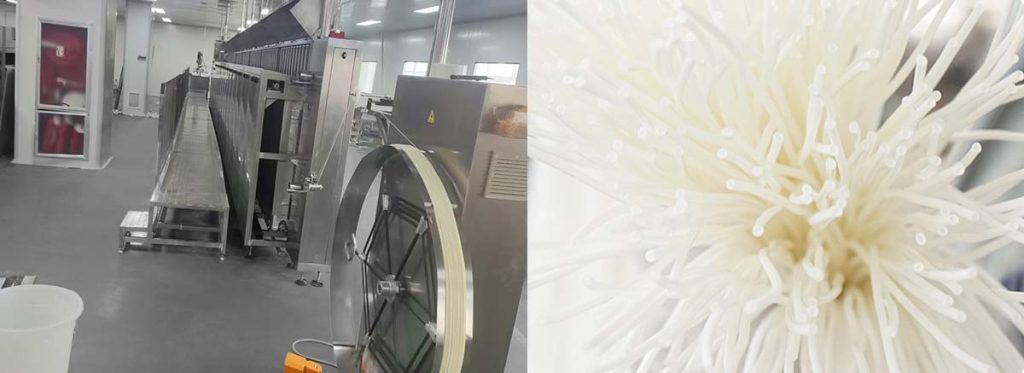
Laboratories interested in custom membrane production benefit from a hollow fiber spinning machine. This machine allows precise control over parameters such as temperature, pressure, polymer concentration, and spinning speed. Adjusting these factors influences pore size, mechanical strength, and fiber uniformity. The hollow fiber membrane spinning machine supports high production efficiency, consistency, and the ability to tailor fiber properties for various applications, including ionic liquid membranes. Its scalability makes it suitable for both research and larger-scale projects.
| Equipment Type | Purpose |
|---|---|
| Flow Meters | Measure flow rate to evaluate filtration efficiency and membrane performance. |
| Visual Inspection Tools | Identify physical damage in hollow fiber membranes. |
| HPLC | Analyze chemical composition of filtered water. |
| Spectrophotometers | Detect contaminants by measuring light absorption. |
| Pressure Gauges and Monitors | Ensure membrane performance and detect leaks. |
Staff Training
Proper staff training ensures smooth integration of membrane technology into laboratory workflows. Team members must understand the operation and maintenance of hollow fiber membranes and related equipment. Training should cover integrity testing procedures, cleaning protocols, and troubleshooting common issues. Staff should also learn to operate the hollow fiber spinning machine for custom membrane production, including the creation of ionic liquid membranes. Regular workshops and hands-on sessions help maintain high standards and reliable results.
Tip: Ongoing education and clear protocols empower laboratory staff to adapt quickly to new membrane technologies and maintain consistent performance.
Implementation Steps
System Setup
Setting up hollow fiber membranes in a laboratory requires careful planning and attention to detail. Researchers begin by selecting the appropriate module and confirming compatibility with existing laboratory systems. They then install the membrane module, ensuring all connections are secure and leak-free. Before starting any membrane processes, the team must rinse the ultrafiltration module thoroughly to remove any protective liquid. This step uses both low and high-pressure water to ensure no contaminants remain.

Safety remains a top priority during installation. The following table outlines important safety considerations:
| Safety Consideration | Description |
|---|---|
| Regular Sterilization | The filtration system must be sterilized regularly to prevent bacterial growth. |
| Rinsing Protective Liquid | Protective liquid in ultrafiltration modules must be rinsed thoroughly before use. |
| Careful Handling | Handle components gently to avoid damage. Rinse and disinfect if not used immediately. |
Researchers should also prepare for seasonal changes. In winter, antifreeze treatment protects the system from damage. After installation, the team runs a baseline test to confirm system integrity and performance. This test helps establish a reference point for future quality control.
Operational Tips
Operating hollow fiber membranes efficiently requires a combination of routine checks and best practices. Laboratory staff monitor pressure and flow rates closely to avoid overloading the system. They also pre-treat feedwater using sediment filtration or chemical dosing to minimize fouling and extend membrane life.
The table below summarizes essential maintenance tasks for optimal performance:
| Maintenance Task | Description |
|---|---|
| Cleaning | Remove particles, biofilms, and fouling from the membrane surface. |
| Integrity Testing | Perform regular tests to ensure membranes remain structurally sound. |
| Chemical Compatibility Checks | Use only chemicals that do not damage the membrane material. |
| Monitoring Operating Parameters | Track pressure, flow rates, and temperature to maintain stable operation. |
| Preventative Maintenance | Replace consumables and check system components regularly. |
| Monitoring Feedwater Quality | Watch for changes in water composition that could affect performance. |
| Recordkeeping and Data Analysis | Keep detailed records to identify trends and optimize system performance. |
| Replacement of Worn-out Membranes | Inspect and replace membranes as needed to maintain efficiency. |
Researchers conduct regular inspections to identify persistent performance issues. If they notice unexplained pressure drops or consistent fouling, they seek professional assistance. Routine cleaning and integrity testing help maintain reliable results in all membrane processes.
Tip: Pre-treating water and monitoring system parameters can prevent many common operational issues.
Quality Control
Quality control ensures that hollow fiber membrane technology delivers consistent and reliable results in laboratory workflows. Researchers create a baseline water flux for each new membrane. They monitor changes in water flux over time to detect fouling or performance drops. Membrane performance should stabilize soon after initial use.
The following table highlights key quality control measures:
| Quality Control Measure | Description |
|---|---|
| Optimizing Membrane Materials | Test different membrane blends or surface modifications to reduce fouling and improve performance. |
| Controlling Fouling | Adjust hydrodynamic conditions, such as gas sparging or pulsatile flow, to limit fouling. |
| Advanced Testing Protocols | Establish baseline water flux and monitor changes to ensure stable performance. |
Researchers also use advanced testing protocols to verify membrane integrity. They adjust membrane materials and surface properties to enhance resistance to fouling. By controlling hydrodynamic conditions, such as using gas sparging, they further reduce the risk of fouling during membrane processes.
Laboratory teams keep detailed records of all tests and maintenance activities. This data supports trend analysis and helps optimize future research. When performance issues arise, staff review records to identify patterns and implement corrective actions.
Note: Consistent quality control and recordkeeping are essential for maintaining the integrity of membrane technology in laboratory research.
Applications in Wastewater Treatment and Resource Recovery
Wastewater Treatment
Laboratories rely on hollow fiber membranes for advanced wastewater treatment. This technology removes contaminants from liquids, separating particles from 0.6µm to as low as 0.001µm. Hollow fiber membranes offer superior filtration efficiency, capturing particles as small as 0.1 microns. They operate with lower transmembrane pressure, which reduces energy costs and extends membrane lifespan. The following table highlights the main advantages of hollow fiber membranes in laboratory-scale wastewater treatment:
| Advantage | Description |
|---|---|
| Superior Filtration Efficiency | Capable of removing particles as small as 0.1 microns |
| Energy-Efficient Operation | Requires lower transmembrane pressure, reducing costs |
| Longer Lifespan | Durable materials extend product life |
| Scalability | Easily integrated into both small and large-scale systems |
| Versatility | Applicable in various industries like municipal, pharmaceutical, and food processing |
Hollow fiber membranes serve many industries, including municipal wastewater plants, pharmaceutical and chemical industries, food and beverage processing, and textile and dyeing units. Nanofiltration membranes use less energy than reverse osmosis but may not remove all emerging contaminants. Hydrophobic dense membranes provide better selectivity and fouling control for specific contaminants. Backwashed hollow fiber membranes consistently produce high-quality permeate that meets effluent reuse regulations. The backwashing process controls fouling and restores membrane performance across multiple filtration cycles. This method reduces concentrate volume and increases the production of high-quality permeate.
A comparison of hollow fiber and flat sheet membrane systems in laboratory wastewater treatment shows the following removal rates:
| Parameter | Hollow Fiber (HF) | Flat Sheet (FS) |
|---|---|---|
| TN Removal Rate | 49.4% | 61.2% |
| NH4+ Removal Rate | 47.8% | 63.4% |
| COD Removal Efficiency | 71.4% | 68.5% |
| BOD Removal Rate | 92.2% | 93.2% |
| TP Removal Rate | 79.4% | 78.5% |
| PO43− Removal Rate | Higher with HF | N/A |
Resource Recovery
Laboratories use hollow fiber membranes for resource recovery from wastewater streams. This approach supports the circular economy by reclaiming valuable materials. Membrane distillation crystallization (MDCr) enables resource recovery from acid mine drainage. Under optimal conditions, laboratories recover valuable mineral salts and purify water. Polypropylene hollow fiber membranes achieve 99.9% ion rejection, making them effective for this purpose.
| Key Findings | Details |
|---|---|
| Technology Used | Membrane Distillation Crystallization (MDCr) |
| Application | Resource recovery from acid mine drainage (AMD) |
| Results | Recovery of valuable mineral salts and water purification |
| Optimal Conditions | pH 6.47 for smaller crystals; pH 3.58 for metal-rich salts; 60°C for feed temperature |
| Membrane Performance | 99.9% ion rejection with polypropylene hollow fiber membranes |
| Implications | Supports circular economy and sustainable resource management in mining-impacted regions |
Hollow fiber membranes recover nitrogen, which is valuable for fertilizer production. They also recover proteins from food industry waste, providing alternative resources for animal feed.
| Resource Type | Description |
|---|---|
| Nitrogen | Hollow fiber membranes are effective in ammonia recovery, which is valuable for fertilizer production. |
| Proteins | Membrane technology can recover proteins from various waste sources, including food industry waste. |
Laboratories benefit from the versatility of hollow fiber membrane technology in both wastewater treatment and resource recovery. This approach improves sustainability and supports new research opportunities.
Conclusion
Laboratory teams follow clear steps to integrate hollow fiber membrane technology, including membrane selection, equipment setup, and staff training. Experts recommend preventive maintenance, easy cleaning, and troubleshooting strategies for reliable operation. Laboratories benefit from scalability, high pollution resistance, and simple installation. The following table highlights future advancements in hollow fiber membrane technology:
| Advancement Type | Description |
|---|---|
| Green Spinning Techniques | Eco-friendly solvents and recovery methods for membrane production. |
| Enhanced Selectivity and Antifouling | Improved selectivity and resistance to fouling in nanostructured membranes. |
| Multi-layer Hollow Fibers | Multiple polymers in a single fiber for better performance and strength. |
| AI-driven Analytics | Predictive maintenance using sensors and artificial intelligence. |
Researchers should assess current workflows and consider adopting hollow fiber membranes for greater efficiency and new research opportunities. Over the next five years, laboratories will see technological advancements, sustainability initiatives, and increased demand in healthcare. Hollow fiber membrane technology will continue to support innovation in laboratory research.
FAQ
What Types of Samples Can Hollow Fiber Membranes Filter?
Hollow fiber membranes can filter water, biological fluids, and industrial wastewater. They work well with samples containing suspended solids, proteins, or dissolved contaminants. Researchers often use them for both liquid and gas separation tasks.
How Often Should Laboratories Clean Hollow Fiber Membranes?
Laboratories should clean membranes regularly, based on usage and fouling rates. Most teams perform cleaning after each experiment or when they notice a drop in filtration performance. Routine cleaning helps maintain efficiency and extends membrane life.
Can Laboratories Customize Hollow Fiber Membranes for Specific Applications?
Yes. Laboratories can use a hollow fiber spinning machine to adjust fiber diameter, pore size, and membrane material. This customization allows researchers to optimize membranes for unique separation tasks or challenging sample types.
What Are Common Signs of Membrane Fouling?
Common signs include reduced flow rate, increased pressure drop, and changes in filtrate quality. Researchers may also notice visible deposits on the membrane surface. Regular monitoring helps detect fouling early.
Is Staff Training Necessary for Integrating Hollow Fiber Membrane Technology?
Staff training is essential. Proper training ensures safe operation, accurate testing, and effective troubleshooting. Well-trained staff can maximize membrane performance and prevent costly errors.