


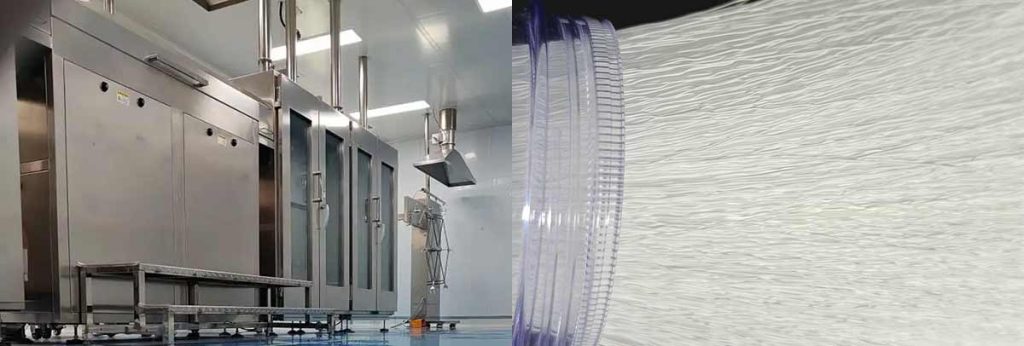
Effective thermal management in a hollow fiber spinneret ensures precise control during spinning. Temperature directly affects the viscosity of the polymer, which determines how smoothly it flows through the device. Operators observe several critical outcomes when maintaining stable temperature:
- Membrane properties, such as permeability and mechanical integrity, improve with consistent thermal conditions.
- Variations in temperature often cause fluctuations in flux rates and separation efficiency.
- Shifts in viscosity complicate membrane performance, influencing permeation rates and selectivity.
Careful monitoring helps maintain fiber quality and process stability while protecting device integrity.
Key Takeaways
- Effective thermal management is crucial for maintaining polymer viscosity, which directly impacts fiber quality and membrane performance.
- Consistent temperature control prevents defects in hollow fiber membranes, ensuring uniform diameter and strong mechanical properties.
- Real-time monitoring systems allow operators to quickly respond to temperature fluctuations, enhancing membrane quality and reducing defects.
- Using advanced insulation materials helps maintain stable temperatures, improving the efficiency of the spinning process and extending membrane lifespan.
- Implementing best practices, such as preheating and continuous monitoring, leads to consistent production of high-quality hollow fiber membranes.
Temperature Role
Polymer Flow
Temperature plays a crucial role in the wet-spinning and air-gap wet-spinning processes. When the fiber temperature increases, the viscosity of the polymer solution drops sharply. For example, researchers observed that in the range of 16–70 °C, viscosity decreased from 36.5 Pa∙s to 6.3 Pa∙s. Even a small change in fiber temperature, such as from 20–25 °C, can cause viscosity to shift by about 20%. During the membrane formation stage, a temperature change from 17–27 °C leads to a 37% decrease in viscosity. This relationship means that higher temperatures allow the polymer to flow more easily through the spinneret, which is essential for forming uniform fibers during spinning.
Shear tests on polyamide 12 show how temperature affects polymer flow:
- Flowability drops as the temperature approaches 20°C below the melting point.
- The spreading process can be blocked by natural agglomeration, but this is avoided between 100 and 140°C.
- Stable flow is necessary for consistent production of hollow fiber membranes.
Fiber Morphology
The structure of fibers depends on precise temperature control during wet-spinning and air-gap wet-spinning. If the fiber temperature fluctuates, the polymer may not solidify evenly, leading to defects in the membrane. The air-gap region, where fibers travel before entering the coagulation bath, is especially sensitive to temperature changes. Proper management ensures that fibers maintain their intended diameter and wall thickness, which directly affects the performance of hollow fiber membranes.
Hollow Fiber Membranes Quality
Temperature management impacts the overall quality of hollow fiber membranes. The following table summarizes research findings on how temperature affects membrane properties:
| Finding | Description |
|---|---|
| Foulant Accumulation | Higher temperatures cause larger foulant buildup, increasing cake resistance even with cleaning. |
| Membrane Resistance | Lower temperatures raise membrane resistance due to fouling and intrinsic factors. |
| Extracellular Polymeric Substances | Operating below 10 °C increases EPS, SMP, proteins, and polysaccharides, which contribute to membrane fouling. |
| Fouling Rates | Membrane fouling rates are higher at low temperatures (8.7–10 °C) than at higher temperatures (19.7–20 °C). |
| Permeability | A drop in temperature reduces irreversible permeability by changing organic matter and increasing water viscosity. |
| Fouling Conditions | Low feedwater temperature leads to severe fouling, thick layers, high TMP, and changes in impurity retention. |
Operators must monitor fiber temperature throughout wet-spinning and air-gap wet-spinning to ensure that fibers meet quality standards. Consistent temperature control helps maintain membrane structure, reduces fouling, and improves the lifespan of hollow fiber membranes.
Hollow Fiber Spinneret Challenges
Heat Stability
Maintaining stable heat within a hollow fiber spinneret is essential for consistent fiber production. Operators must ensure that the temperature remains uniform throughout the spinning process. Fluctuations in heat can cause the polymer solution to change viscosity, which leads to uneven fiber formation. When the heat supply is not steady, the polymer may solidify too quickly or too slowly. This instability can result in fibers with weak mechanical properties or irregular shapes. Engineers often use precise heating systems to keep the temperature constant. They monitor the heat closely to prevent sudden spikes or drops. Stable heat also protects the spinneret from thermal stress, which can damage the device over time.
Temperature Gradients
Temperature gradients inside the hollow fiber spinneret present a significant challenge. Uneven heat distribution can cause different parts of the polymer to behave unpredictably. Researchers tested spinning temperatures of 285 °C, 287 °C, and 290 °C and observed the following:
- As spinning temperature increased, the cross-section of the spun fibers deviated from the expected shape.
- The degree of profile decreased from 40.99% to 35.86% with increasing temperature.
- At 290 °C, the hollow outline of the spun fibers was not square.
These results show that even small changes in heat can affect the final fiber structure. Operators must minimize temperature gradients to ensure that each fiber has a uniform cross-section and consistent quality.
Device-Wide Control
Device-wide control of heat is necessary for the entire spinning system. The hollow fiber spinneret must work in harmony with other components, such as heating jackets and temperature sensors. Operators use advanced control systems to distribute heat evenly across the device. They often rely on feedback from real-time monitoring tools to adjust the heat as needed. Proper device-wide heat management reduces the risk of defects and improves the efficiency of the spinning process. Consistent heat across the system ensures that every fiber meets strict quality standards.
Thermal Management Strategies
Spinneret Design
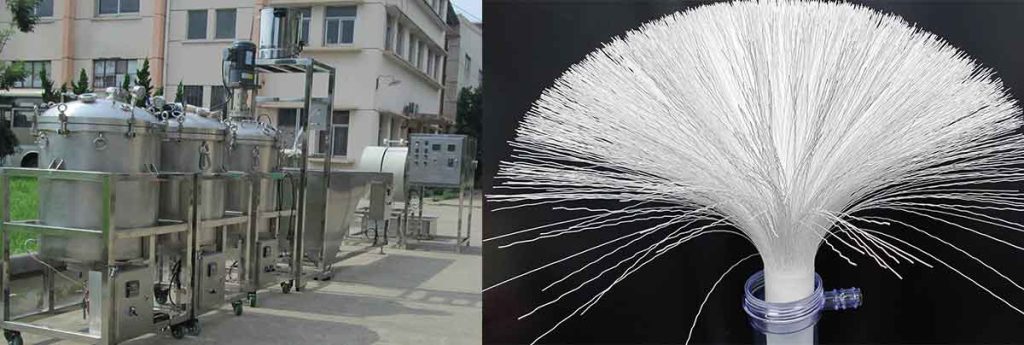
Engineers design the hollow fiber spinneret to optimize heat transfer and maintain consistent spinning temperature. Heat conduction and convection play major roles in distributing thermal energy throughout the spinneret. Conduction moves heat through the solid metal structure, while convection occurs as the polymer melt flows through the spinneret holes. Uneven heating can cause the polymer to reach different ultimate fiber temperatures, resulting in inconsistent fiber diameters and reduced membrane performance. If heat transfer happens too quickly, overheating and polymer degradation may occur, which negatively affects membrane fabrication. The use of a triple-orifice spinneret in co-extrusion technology allows precise control over membrane pore size and surface structure, enhancing permeability and overall performance. Operators often select spinneret materials with high thermal conductivity to ensure uniform temperature distribution. The hollow fiber spinning machine incorporates these design features to support stable thermally induced phase separation and reliable cooling of the fiber.
- Heat transfer occurs through conduction, convection, and sometimes radiation.
- Triple-orifice spinnerets regulate membrane pore size and surface structure.
- Proper design prevents overheating and supports consistent membrane fabrication.
Heating and Cooling Systems
Heating and cooling systems in hollow fiber spinning machine maintain the required spinning temperature for optimal membrane performance. Operators use advanced heating jackets and temperature sensors to control the polymer melt temperature. Cooling systems, such as water baths or air jets, rapidly lower the temperature of the extruded fibers, enhancing the cooling and stabilizing the membrane structure. In dehumidification systems, hollow fiber membranes promote isothermal processes, which improve energy efficiency and reduce emissions. These HVAC systems consume about 36–40% of building energy, but membrane-based cooling minimizes energy use by avoiding the need for thermal regeneration. Cooling of the fiber after extrusion is critical for achieving the desired morphology and permeability. Engineers adjust heating and cooling rates to support thermally induced phase separation, which is essential for high-quality membrane fabrication.
- Lowering spinning temperature for polyketone hollow fiber membrane fabrication with a low-toxic diluent system improves membrane performance.
- Cooling systems stabilize fiber structure and support thermally induced phase separation.
- Membrane-based dehumidification enhances energy efficiency in HVAC applications.
Insulation Methods
Insulation methods protect the hollow fiber spinneret and hollow fiber spinning machine from unwanted heat loss or gain, ensuring stable spinning temperature and consistent membrane performance. Operators use advanced materials to insulate the hollow fiber spinneret and maintain the desired thermal environment. The following table summarizes proven insulation methods and their benefits:
| Insulation Method | Properties | Benefits |
|---|---|---|
| YSZ/SiO2 Nanofiber Membrane | Tensile strength: 4.0 ± 0.7 MPa, Thermal conductivity: 0.0287 to 0.0469 W·m−1·K−1 | Improved thermal insulation performance |
| SiO2-ZrO2 Composite Ceramic Nanofiber Membrane | Strength: 5 to 8.4 MPa, Thermal conductivity: 0.030 W·m−1·K−1, Heat radiation reflectivity: 90%, Hydrophobic temperature resistance: up to 450 °C | Suitable for fire-fighting thermal insulation clothing |
| Hollow ZrO2 Fiber | Exceptional thermal resistance and stability, Reduced thermal conductivity | Superior heat-insulating properties compared to solid fibers |
These insulation materials help maintain the spinning temperature required for effective thermally induced phase separation and membrane fabrication. Operators select insulation based on the specific needs of the hollow fiber spinning machine, balancing thermal stability and mechanical strength.
Real-Time Monitoring
Real-time monitoring systems provide continuous feedback on temperature, cooling, and membrane performance during spinning. Operators install sensors throughout the hollow fiber spinning machine to track spinning temperature, cooling rates, and polymer melt conditions. Automated control systems adjust heating and cooling to maintain optimal conditions for thermally induced phase separation. Real-time data helps prevent overheating, uneven cooling of the fiber, and evaporation issues that could compromise membrane fabrication. Monitoring also supports consistent membrane permeability and performance by ensuring stable temperature and cooling throughout the process. Engineers use advanced software to analyze trends and make adjustments, improving membrane quality and extending equipment lifespan.
Tip: Real-time monitoring enables rapid response to temperature fluctuations, supporting consistent membrane performance and reducing the risk of defects.
Case Studies: Hollow Fiber Membranes
Process Optimization
Researchers have explored several approaches to optimize the spinning process for hollow fiber membranes. They often adjust spinning temperature, polymer concentration, and air-gap length to improve membrane structure. For example, one study increased spinning temperature in small increments. The team observed that the membrane became more uniform, and the risk of defects decreased. Another group experimented with different polymer concentrations. They found that a balanced concentration produced hollow fiber membranes with consistent wall thickness and fewer voids.
A common method involves real-time monitoring of temperature and flow rates. Operators use sensors to track the spinning environment. This data helps them make quick adjustments, which leads to better membrane quality. Some teams also use advanced spinneret designs. These designs distribute heat evenly, which supports the formation of hollow fiber membranes with high water permeability.
Note: Careful control of each parameter during spinning can significantly boost membrane performance.
Best Practices
Successful production of hollow fiber membranes relies on a set of best practices. Operators should always preheat the hollow fiber spinneret to the target temperature before starting the process. They must check that all heating and cooling systems work correctly. Regular calibration of temperature sensors ensures accurate readings.
A checklist for best practices includes:
- Preheat the spinneret and polymer solution.
- Monitor temperature and flow rates continuously.
- Use insulation to prevent heat loss.
- Inspect the membrane for defects after spinning.
- Adjust parameters based on real-time feedback.
Teams that follow these steps consistently produce hollow fiber membranes with strong mechanical properties and reliable separation performance. They also reduce the risk of fouling and extend the lifespan of each membrane.
Conclusion

Precise thermal management in hollow fiber spinneret ensures high fiber quality and stable process efficiency. Temperature control directly affects polymer flow and membrane structure. Operators who adopt best practices achieve consistent results and extend membrane lifespan. For advanced techniques, several resources support further improvement:
- Smart thermally conductive fiber materials offer enhanced performance but require careful balance with comfort and durability.
- Advanced spinneret nozzles enable efficient composite membrane production and precise customization.
- Modern spinneret designs improve polymer flow control and membrane uniformity.
Continuous learning in these areas drives innovation in membrane technology.
FAQ
What Is the Main Purpose of Thermal Management in Hollow Fiber Spinneret?
Thermal management keeps the polymer at the right temperature. This control ensures smooth flow, stable fiber formation, and high-quality membranes. Operators rely on precise temperature to prevent defects and maintain consistent membrane properties.
How Do Temperature Fluctuations Affect Fiber Quality?
Temperature changes can cause uneven polymer flow. This leads to fibers with irregular shapes or weak spots. Consistent temperature helps produce fibers with uniform diameter and strong mechanical properties.
Which Materials Work Best for Spinneret Insulation?
Engineers often choose materials like YSZ/SiO₂ nanofiber membranes or hollow ZrO₂ fibers. These materials offer excellent thermal resistance and stability. They help maintain the desired spinning temperature and protect the hollow fiber spinneret from heat loss.
Why Is Real-Time Monitoring Important During Hollow Fiber Spinning?
Real-time monitoring allows operators to detect temperature shifts quickly. They can adjust heating or cooling systems right away. This rapid response helps prevent defects and supports consistent membrane performance.