


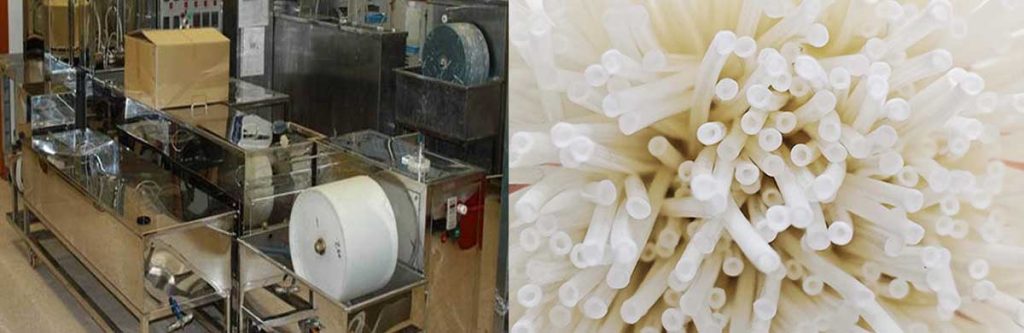
The bore fluid flow rate in a hollow fiber spinneret changes fiber structure and performance. Researchers observed that adjusting the bore fluid from 5 ml/min to 8 ml/min increased middle layer thickness and inner diameter. The manipulation of bore fluid also affects mean pore size, which shapes membrane properties. Control over bore fluid improves mass transfer rate and membrane permeability, as shown in the table below.
| Flow Rate (mL/min) | Mass Transfer Rate | Membrane Permeability |
|---|---|---|
| 200 | Increased | Improved |
| 300 | Increased | Improved |
| 400 | Increased | Improved |
Small changes in bore fluid flow rate can impact gas separation performance. Spinneret design and fluid composition deserve careful attention in every setup of hollow fiber spinning machine.
Key Takeaways
- Adjusting bore fluid flow rates can significantly change fiber structure, impacting performance in gas separation applications.
- Maintaining a steady bore fluid flow is crucial for uniform fiber dimensions, preventing defects like uneven walls and inconsistent pores.
- Using saline solutions in bore fluid enhances gas separation performance by creating a more uniform pore structure and improving mechanical strength.
- Regular monitoring and maintenance of the hollow fiber spinneret and flow rates ensure high-quality membrane production and reliable ultrafiltration performance.
- Optimizing the bore fluid composition and flow rate can lead to better membrane properties, supporting advancements in filtration technology.
Bore Fluid Flow Rate and Hollow Fiber Spinneret
Spinneret Structure and Fluid Channels
A hollow fiber spinneret uses a dual-channel design to create the unique structure of hollow fiber membranes. The outer channel delivers the polymer dope, while the inner channel supplies the bore fluid. This setup allows the formation of a hollow core inside each fiber. The design of the spinneret directly affects how the bore fluid and polymer interact during spinning.
Several features of the spinneret influence the flow and quality of the resulting fibers. The table below highlights key components and their roles:
| Component/Feature | Description |
|---|---|
| Per-hole independence | Individual control of dope and bore fluid for each hole, preventing line stoppage from single-hole failure. |
| Enhanced flow field and fluid dynamics | Optimizes internal flow paths for uniform distribution, minimizing pressure drop and improving consistency. |
| Modular, independent spinneret core | Enables rapid core replacement and maintenance, reducing downtime and supporting flexible specifications. |
| Pinless, high-precision forming | Reduces defect sources and improves dimensional stability of the fiber. |
| Corrosion-resistant materials | Extends service life and maintains surface finish critical for precision forming. |
These features help maintain a stable flow of both the polymer and bore fluid, which is essential for producing fibers with consistent dimensions and properties.
Managing Bore Fluid Flow Rate
Controlling the bore fluid flow rate is crucial for achieving high-quality hollow fiber membranes. When operators maintain a steady flow, the inner diameter and wall thickness of the fibers remain uniform. Fluctuations in flow can cause defects, such as uneven walls or inconsistent pore structures.
Operators often use precise pumps and monitoring systems to keep the bore fluid flow steady. They check for any signs of blockage or leaks in the fluid channels. Consistent flow ensures that each fiber forms correctly as it exits the spinneret.
A stable bore fluid flow also supports the overall performance of the hollow fiber membrane. It helps control the size of the hollow core and the thickness of the fiber wall. This control leads to better mechanical strength and reliable separation properties. By focusing on flow management, manufacturers can produce hollow fiber membranes that meet strict quality standards for various applications.
Effects of Bore Fluid Flow on Hollow Fiber Membrane Properties
Fiber Diameter and Wall Thickness
The hollow fiber spinneret plays a key role in shaping the diameter and wall thickness of each fiber. When the dope extrusion rate increases, the shear stress inside the spinneret rises. This change causes the internal diameter of the hollow fiber membrane to decrease, while the wall thickness becomes greater. Operators can adjust the bore fluid flow-rate to control these dimensions. A higher flow-rate often leads to a larger inner diameter and a thinner wall, which can influence fiber performance in applications like gas separation. Polyimide-based hollow fibers show clear changes in structure when the bore fluid flow changes. These adjustments help manufacturers produce membranes with the right balance of strength and permeability.
Pore Size and Internal Morphology
Bore fluid flow directly affects the pore size and internal structure of the hollow fiber membrane. As the flow increases, the mean pore size at the inner surface becomes smaller. The distribution of pore sizes also narrows, which means the membrane has more uniform pores. Scanning electron microscope images confirm that higher bore fluid flow rates create smaller pores. The table below shows how the mean pore size changes with different flow rates:
| Bore Fluid Flow Rate (ml/min) | Mean Pore Size (nm) |
|---|---|
| 2.6 | 146.27 |
| 13 | 104.7 |
- Higher bore fluid flow rates lead to smaller mean pore sizes.
- The percentage of small pores increases as the flow rises.
- More uniform pores improve membrane gas selectivity and separation performance.
A well-controlled hollow fiber spinneret ensures that the internal morphology supports high gas permeation rates and reliable separation.
Structural Integrity and Functionality
The structural integrity of a hollow fiber membrane depends on both the composition and the flow of the bore fluid. Lowering water activity in the bore fluid improves selectivity for gas separation and strengthens the membrane over time. High concentrations of NMP in the bore fluid increase viscosity, which affects how solvents move through the fiber. This change can create thinner skin layers, but sometimes reduces selectivity. Salt solutions in the bore fluid help solvents leave the fiber more effectively. This process boosts gas separation performance without lowering permeance. The table below summarizes these effects:
| Evidence Description | Impact on Structural Integrity |
|---|---|
| Lowering water activity in bore fluid enhances selectivity for gas separation. | Improved structural integrity over time. |
| High NMP concentration increases viscosity, affecting solvent diffusion. | Thinner skin layers, but less selective. |
| Salt solutions promote effective solvent outflow. | Enhances gas separation performance without compromising permeance. |
A stable and well-designed hollow fiber spinneret supports the creation of membranes with strong structure and high functionality. Careful management of bore fluid flow and composition allows for better fiber performance in demanding applications.
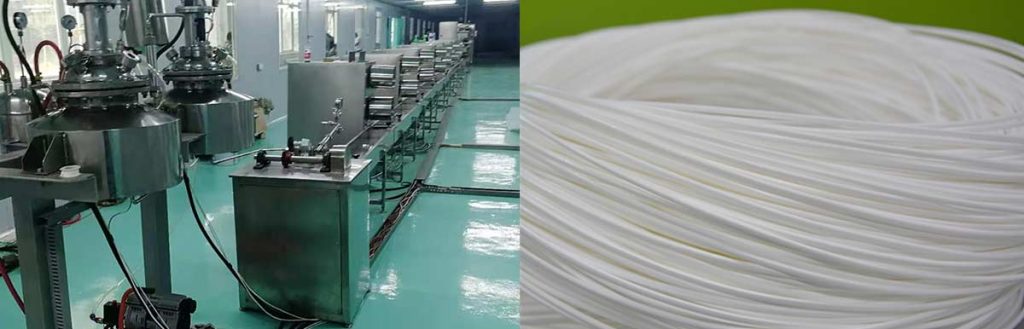
Bore Fluid Composition and Gas Separation Performance
Influence of Saline Solutions
Saline solutions play a crucial role in the spinning process of hollow fiber membranes. When operators add salt to the bore fluid, they observe changes in the internal structure of the fibers. Salt increases the osmotic pressure, which helps solvents exit the membrane more efficiently. This process leads to improved separation and enhances gas separation performance. Researchers found that saline solutions create a more uniform pore structure inside hollow fiber membranes. The fibers show greater consistency in wall thickness and diameter. These improvements support higher mechanical strength and better separation efficiency. Operators often select the concentration of salt based on the desired membrane properties. They monitor the effect of saline solutions to optimize fiber formation and ensure reliable performance in gas separation applications.
Tip: Adjusting the salt concentration in the bore fluid can fine-tune the pore size and internal morphology of hollow fiber membranes.
Perm-Selectivity and Application Outcomes
Perm-selectivity describes how well hollow fiber membranes separate gases based on their permeability. The bore fluid composition influences this property by affecting the fiber’s internal structure. When operators use saline solutions or adjust the bore fluid flow rate, they see changes in perm-selectivity and overall performance. The geometry of the spinneret and the ratio of bore-to-clad flow rate also impact separation outcomes. Rapid changes in fiber dimensions occur when recirculation regions form after the die swell. These factors determine the efficiency of gas separation performance in real-world applications.
| Parameter | Impact on Gas Separation Processes |
|---|---|
| Bore-to-Clad Flow Rate Ratio | Key parameter affecting the presence and size of recirculation regions |
| Die Geometry | Influences the behavior of the bore fluid and gas separation efficiency |
| Recirculation Region Presence | Leads to rapid changes in fiber dimensions post-die swell |
Hollow fiber membranes with optimized bore fluid composition achieve higher perm-selectivity and improved separation. These membranes perform well in gas separation systems, supporting industries that require precise control over gas mixtures.
Optimizing Bore Fluid Flow in Hollow Fiber Spinning Machine
Practical Adjustment Tips
Operators can improve ultrafiltration in a hollow fiber spinning machine by following several best practices. They should match the bore fluid flow rate closely to the dope flow rate. For example, a flow rate of 1.1 cm³/s for the bore fluid and 1.14 cm³/s for the dope creates uniform stresses. This balance leads to consistent ultrafiltration membrane thickness and reliable separation performance. When the dope/bore fluid ratio increases from 1 to 10, the outer diameter of hollow fiber ultrafiltration membranes stays near 1000 µm, but the inner diameter drops from 640 to 300 µm. Wall thickness rises from about 200 to 360 µm, which boosts burst pressure from 17 to 83 bar. A ratio of 10 means the bore fluid flow rate drops to 0.2 ml/min, which changes the bore fluid composition and affects the phase inversion path. This adjustment results in a more porous inner structure and improves ultrafiltration properties.
Regular cleaning and flushing of the hollow fiber spinneret, coagulation bath, and extrusion system prevent residue buildup and keep ultrafiltration flux stable.
Monitoring Flow Rate for Quality Control
Operators must monitor the internal coagulant flow rate to ensure high ultrafiltration flux and separation performance. They should check for clogging or inconsistent fiber production by inspecting machine parts. Routine maintenance helps maintain the internal coagulant flow rate and prevents defects in hollow fiber ultrafiltration membranes. Operators should use precise pumps and sensors to track the internal coagulant flow rate. They can adjust settings to keep ultrafiltration flux and membrane performance at optimal levels. Consistent monitoring supports reliable ultrafiltration and separation in every batch.
Spinneret Geometry Considerations
The geometry of the spinneret affects the internal coagulant flow rate and the structure of hollow fiber ultrafiltration membranes. The table below shows how different aspects of spinneret design impact ultrafiltration properties and separation performance:
| Aspect | Impact on Membrane Properties |
|---|---|
| Concentricity | Affects uniformity of fiber structure |
| Wall Thickness Uniformity | Influences mechanical strength and durability |
| Pore Size Distribution | Determines separation performance and efficiency |
| Mechanical Strength | Essential for operational stability under pressure |
| Separation Performance | Critical for application in filtration processes |
Instabilities in fiber spinning can lower ultrafiltration flux and reduce the quality of hollow fiber ultrafiltration membranes. Careful design of internal channels in the hollow fiber spinneret ensures stable internal coagulant flow rate and consistent ultrafiltration properties. Recent studies show that adjusting the flow rate from 5 to 8 ml/min increases the inner diameter from 344 to 358 μm and the middle layer thickness from 30 to 35 μm. These changes improve ultrafiltration and separation performance.
Conclusion
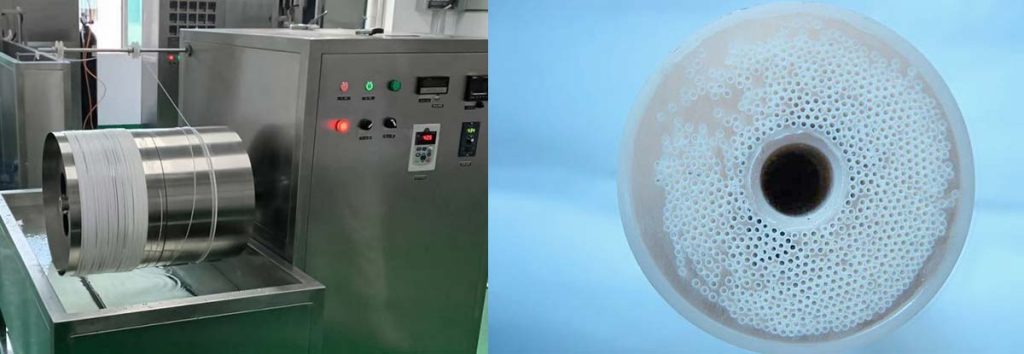
Bore fluid flow rate and spinneret design shape hollow fiber membrane properties. Operators see changes in internal diameter, wall thickness, and porosity when they adjust flow velocity and composition. The table below shows these effects:
| Parameter | Effect of Increased Flow Rate |
|---|---|
| Internal Diameter | Increases |
| Wall Thickness | Decreases |
| Porosity | Dependent on flow velocity and composition |
Optimizing bore fluid flow and composition improves gas separation and supports other applications. Ongoing experimentation and careful monitoring help operators achieve consistent results and advance membrane technology.
FAQ
What Is the Role of Bore Fluid in Hollow Fiber Spinning?
Bore fluid forms the hollow core inside each fiber. It shapes the inner diameter and supports the membrane during spinning. Operators adjust its flow to control fiber structure and performance.
How Does Bore Fluid Flow Rate Affect Membrane Properties?
A higher bore fluid flow rate increases the inner diameter and reduces wall thickness. This adjustment changes pore size and can improve gas separation efficiency. Operators monitor flow rate to maintain consistent membrane quality.
Why Should Operators Monitor Bore Fluid Composition?
Bore fluid composition influences pore structure and selectivity. Saline solutions or solvents in the fluid can enhance separation performance. Careful monitoring helps operators achieve the desired membrane characteristics.
Can Spinneret Design Impact Bore Fluid Flow?
Spinneret design determines how evenly the bore fluid distributes. Features like concentricity and modular cores help maintain stable flow. Good design reduces defects and improves fiber uniformity.
What Problems Occur with Unstable Bore Fluid Flow?
Unstable flow can cause uneven wall thickness, inconsistent pore sizes or fiber collapse. These defects lower membrane strength and separation performance. Regular checks and maintenance prevent these issues.