


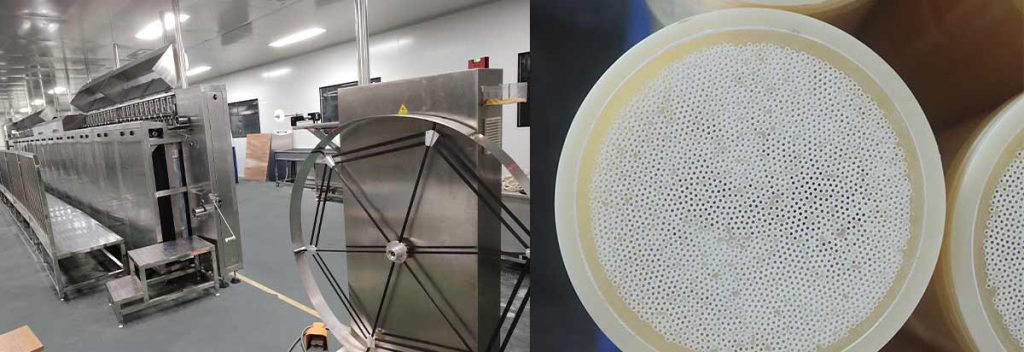
Restoring the performance of a hollow fiber spinneret remains essential for producing high-quality fibers. Cleaning and maintenance play a key role in ensuring consistent fiber output. Spinneret care supports reliable operation in every hollow fiber spinning machine. Operators who clean and maintain the spinneret benefit from:
- Reduced risk of fouling
- Stable fiber extrusion
- Consistent fiber diameter
A clean spinneret helps maintain uniform fiber quality and supports dependable separation.
Key Takeaways
- Regular cleaning and maintenance of the hollow fiber spinneret prevent fouling and ensure consistent fiber quality.
- Operators should watch for warning signs like reduced fiber output and changes in fiber diameter to address spinneret issues early.
- Using the right cleaning methods, such as chemical or ultrasonic cleaning, can effectively remove stubborn residues and blockages.
- Routine inspections and lubrication of spinneret components enhance performance and extend the lifespan of the equipment.
- Implementing preventive care strategies, like air sparging and filtration relaxation, minimizes fouling and reduces cleaning frequency.
Causes of Spinneret Performance Decline
Fouling and Blockage in Hollow Fiber Spinneret
Operators often notice that the spinneret in a hollow fiber spinning machine loses efficiency over time. The main reason involves fouling and blockage. Organic contaminants, such as proteins and polysaccharides, tend to stick to the spinneret’s small orifices. Microalgae and activated sludge in the feed can make fouling worse. These substances form gel and cake layers, which block the flow of polymer through the hollow fiber spinneret. As a result, residues build up and cause the spinneret to become clogged. This blockage disrupts the smooth extrusion of fiber and reduces overall machine performance.
Tip: Regular cleaning and maintenance can help prevent fouling and keep the spinneret operating at peak efficiency.
Effects on Fiber Quality
A decline in spinneret performance directly affects fiber quality. When the hollow fiber spinneret becomes blocked, the fiber diameter may vary. Some fibers may appear thin, while others become thick or uneven. This inconsistency leads to poor separation and weak mechanical properties in the final product. The presence of residues in the hollow fiber spinneret can also cause defects on the fiber surface. These defects reduce the reliability and lifespan of the fibers produced.
Warning Signs of Spinneret Issues
Operators should watch for several warning signs that indicate spinneret problems. Common symptoms include:
- Reduced fiber output from the hollow fiber membrane spinning machine
- Visible changes in fiber diameter or appearance
- Increased pressure required to force polymer through the spinneret
- Frequent need for cleaning and maintenance
The table below summarizes the most common causes of spinneret performance decline:
| Cause | Description |
|---|---|
| Micro-Scale Precision | Tolerances are often in the micron range, making manufacturing challenging. |
| Clogging and Fouling | Small orifices can become clogged with polymer residues during production. |
| Material Degradation | Aggressive polymer solvents can corrode spinneret materials over time. |
| Scaling Up | Difficulties in replicating lab-scale designs in industrial systems. |
Operators who recognize these signs early can take action to restore spinneret performance and maintain high fiber quality.
Cleaning Methods for Hollow Fiber Spinneret
Operators can choose from several cleaning methods to restore the performance of a hollow fiber spinneret. Each method targets specific types of fouling and residues. Selecting the right approach depends on the nature of the clogging and the materials involved. The following sections describe the most effective cleaning and maintenance strategies for spinneret care.
Chemical Cleaning Solutions
Chemical cleaning remains a popular choice for removing both organic and inorganic residues from spinnerets. Operators often select cleaning solutions based on the type of fouling present. For organic fouling, mild alkaline cleaning solutions such as Alconox and Liquinox work well. These detergents minimize residue formation and suit automated cleaning systems. Inorganic fouling may require basic chemicals like sodium hydroxide (NaOH), nitric acid (HNO3), or phosphoric acid (H3PO4). Commercial cleaning solutions often combine agents to tackle mixed fouling.
Operators should always follow safety precautions when using chemical cleaning. They must shut down the production line, allow the spinneret to cool, and inspect for visible damage before starting. Checking for loose parts or debris in the area helps prevent accidents.
Tip: Low-foaming cleaning solutions are ideal for automated systems and help maintain permeability in the spinneret.
Ultrasonic Cleaning Process
Ultrasonic cleaning uses high-frequency sound waves to remove stubborn contaminants from spinneret surfaces. This process creates microscopic bubbles that dislodge particles from intricate areas. Operators often combine ultrasonic cleaning with specialized cleaning solutions containing surfactants or detergents. The recommended temperature for ultrasonic cleaning ranges from 50–65 °C (122–149 °F).
Ultrasonic cleaning machines offer several advantages. They control the generation position, density, and impact force, which prevents damage to the spinneret. Many machines include vacuum degassing, temperature control, and circulation functions for thorough cleaning. This method works especially well for spinnerets with complex geometries or fine holes.
| Cleaning Method | Description |
|---|---|
| Ultrasonic Cleaner | Utilizes cavitation to enhance cleaning effectiveness with specific chemical solutions. Recommended temperature: 50–65 °C (122–149 °F). |
Mechanical and Needle Cleaning
Mechanical cleaning involves physically removing deposits from the spinneret. Operators use brushes, scrapers, or air pressure to scrub away residues. For precise work, a hole cleaning tool kit can remove unwanted material and check the stability of spinneret holes. These kits match specific mounting hole sizes and help prevent damage during installation.
Needle cleaning targets individual spinneret holes. Operators insert fine needles to clear blockages without harming the delicate structure. This method works best for isolated clogs or when other cleaning methods cannot reach certain areas.
| Tool Type | Effectiveness | Additional Features |
|---|---|---|
| Hole Cleaning Tool Kit | Removes residue and checks hole stability to prevent damage during cleaning. | Designed for specific mounting hole sizes. |
Backflushing and Dedicated Systems

Backflushing uses reverse flow to push out debris and residues from the hollow fiber spinneret. Operators often use this method as part of a dedicated cleaning system in industrial settings. These systems combine mechanical, chemical, and ultrasonic cleaning for comprehensive maintenance. Some systems also include thermal cleaning, which applies controlled heat to soften and detach polymer build-up.
| Cleaning Method | Description |
|---|---|
| Mechanical Cleaning | Physically scrubs spinnerets to remove deposits using brushes, scrapers, or air pressure. |
| Chemical Cleaning | Utilizes specialized agents to dissolve polymer deposits, effective for stubborn residues. |
| Ultrasonic Cleaning | Uses high-frequency sound waves to create bubbles that dislodge contaminants, ideal for intricate areas. |
| Thermal Cleaning | Applies controlled heat to soften and detach polymer build-up, suitable for heat-resistant materials. |
Operators should select cleaning methods based on the type of clogging. High-temperature calcination prevents clogging and maintains orifice precision. Ultrasonic cleaning with solvents cleans the spinneret to avoid clogging and carbonization. For mixed fouling, a combination of chemical and mechanical cleaning may yield the best results.
Note: Regular cleaning and maintenance using the right cleaning methods ensures consistent fiber quality and extends the lifespan of the hollow fiber spinneret.
Cleaning and Maintenance Best Practices
Regular Inspection and Lubrication
Operators should perform regular inspections to maintain the performance of the hollow fiber spinneret. Routine checks help identify cracks, leaks, or residues that may affect fiber quality. Visual inspections allow early detection of issues before they escalate. Annual professional maintenance can reveal hidden problems and extend the lifespan of the spinneret. Routine maintenance ensures optimal operation and reduces the risk of unexpected failures.
Lubrication of spinneret components is essential for smooth operation. The right lubricant prevents wear and makes cleaning easier. The table below lists lubricants designed for spinneret care:
| Product Name | Description |
|---|---|
| Stoner® S260 SPINNERET LUBRICANT | Specially formulated to lubricate spinneret dies, enhancing performance and providing long-lasting lubrication. |
| Stoner® S284 SPINMAX™ SPINNERET LUBRICANT | Specifically designed for spinneret dies, improving operation and making scrapes faster and easier. |
Storage and Handling Tips
Proper storage and handling protect the spinneret from damage and contamination. Operators should store spinnerets in clean, dry environments. Avoid stacking spinnerets to prevent deformation. Use protective covers to shield spinneret surfaces from dust and accidental contact. When handling, always wear gloves to prevent oil or dirt transfer. Clean spinnerets before storage to remove any remaining cleaning solution or residues.
Tip: Label each spinneret after cleaning to track maintenance history and ensure correct installation in the hollow fiber spinning machine.
Preventive Care for Spinneret
Preventive care reduces fouling and blockage in the hollow fiber spinneret. Operators can use several strategies to minimize cleaning frequency and maintain fiber quality:
- Air sparging improves hydrodynamic conditions and reduces fouling.
- Filtration mode relaxation allows periods of rest, minimizing residue buildup.
- Control of hydrodynamic conditions prevents the formation of reversible foulants.
- Physical cleaning removes cake layers from the spinneret surface.
- Chemical cleaning solutions address irreversible fouling from substances like EPS.
- Addition of biochar can lower fouling propensity in some systems.
A preventive maintenance program for the hollow fiber spinning machine offers several benefits:
| Benefit/Drawback | Description |
|---|---|
| Minimized Disruptions | Preventive maintenance reduces unexpected machine failures, leading to fewer interruptions in production. |
| Increased Uptime | Regular maintenance ensures machines are operational more consistently, enhancing productivity. |
| Extended Lifespan | Systematic servicing prolongs the life of spinning machines, reducing the need for replacements. |
| Improved Reliability | Early identification of issues leads to more dependable machine performance. |
| Potential Overservicing | Excessive maintenance can lead to unnecessary costs and resource allocation. |
| Downtime During Maintenance | Scheduled maintenance can temporarily halt production, impacting overall output. |
Operators who follow these cleaning and maintenance best practices ensure consistent fiber output and reliable spinneret performance.
Troubleshooting and Professional Help
Fixing Clogged Spinneret Holes
Operators often encounter clogged holes in the hollow fiber spinneret, which can disrupt fiber production. Troubleshooting begins with identifying the root cause. Several factors influence clogging, such as changes in voltage, electrospinning distance, solution flow rate, and solvent concentration. Adjusting these parameters can help reduce clogging times. Supplying extra solvent to the droplet surface at the spinneret has proven effective in experiments.
To address clogged holes, operators use specialized cleaning equipment and techniques. They inspect the spinneret to assess its condition and lifespan. If chemical or ultrasonic cleaning does not clear the blockage, mechanical removal may be necessary. Operators should exercise caution, as improper self-removal can damage the spinneret. Common solutions include heating the spinneret and filter in a furnace, gradually raising the temperature to 460℃, and maintaining it for a set period. Ultrasonic cleaning with detergent at 70℃ for several hours can also help. For persistent blockages, a needle with a 0.25mm diameter may be used to clear the holes.
Resolving Uneven Fiber Output
Uneven fiber output signals underlying spinneret issues. Operators should check for partial blockages or residue buildup. Routine maintenance, including regular inspection and cleaning, helps prevent these problems. Consistent fiber quality depends on keeping the spinneret free from debris. If uneven output persists after cleaning, operators should review process parameters and ensure the spinneret is properly aligned in the hollow fiber spinneret system.
When to Contact a Specialist?
Some spinneret problems require professional intervention. Persistent fouling, repeated clogging, or visible damage indicate the need for expert help. Operators should seek specialists who qualify as ‘qualified persons‘ under relevant regulations. These professionals understand the equipment, its maintenance needs, and potential hazards. They may operate under supervision or possess direct experience with spinneret operation and repair. Timely professional support ensures the spinneret continues to produce high-quality fiber and extends its service life.
Tip: Early troubleshooting and routine maintenance reduce the risk of severe spinneret damage and costly downtime.
Conclusion
Operators maintain hollow fiber spinneret by following these key steps:
- Complete pre-cleaning checks and inspect for damage.
- Use chemical or ultrasonic cleaning methods to remove contaminants.
- Conduct regular inspections and apply compatible lubricants.
- Store spinnerets in clean, dry environments.
- Troubleshoot issues such as clogged holes and uneven fiber output.
Routine cleaning and maintenance support consistent fiber quality and extend the lifespan of the hollow fiber spinning machine. Operators monitor spinneret condition through wear measurement, temperature tracking, and pressure assessment. When problems persist, industry standards recommend professional inspection, lubrication, corrosion protection, calibration, and prompt repair or replacement.
FAQ
How Often Should Operators Clean the Hollow Fiber Spinneret?
Operators should inspect and clean the spinneret after each production cycle. Regular cleaning prevents fouling and maintains fiber quality. For heavy use, weekly deep cleaning is recommended.
What Is the Best Way to Remove Stubborn Blockages?
Ultrasonic cleaning with a suitable detergent works well for stubborn blockages. Operators may also use a fine needle for individual holes. Always follow safety guidelines.
Can Operators Use Household Cleaners on Spinnerets?
Household cleaners may damage spinneret materials. Operators should use only approved chemical solutions designed for industrial spinneret cleaning. This ensures safety and effectiveness.
Why Does Fiber Output Become Uneven?
Uneven fiber output often results from partial blockages or residue buildup in the hollow fiber spinneret. Regular inspection and cleaning help maintain consistent fiber diameter and quality.
When Should Operators Replace the Spinneret?
Operators should replace the hollow fiber spinneret if they notice visible damage, persistent clogging, or a decline in fiber quality despite regular maintenance. Professional assessment can confirm the need for replacement.