


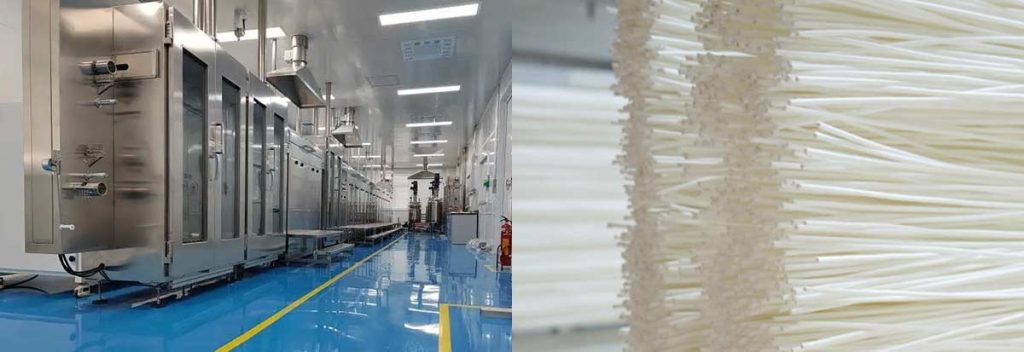
Effective cleaning stands as the most reliable method to maintain the performance and extend the lifespan of a hollow fiber membrane module. Operators regularly encounter contaminants like organic matter, colloids, and minerals, each requiring tailored cleaning approaches. Regular cleaning prevents fouling and preserves membrane integrity. The construction process, especially the use of a hollow fiber spinning machine, influences cleaning needs and outcomes.
| Factor Influencing Membrane Performance | Description |
|---|---|
| Fouling Status | Significant factor affecting membrane integrity and performance. |
| Cleaning Agent Concentration | Influences the effectiveness of cleaning and membrane lifespan. |
| Magnitude of Back Pulse | Affects the cleaning efficiency and membrane longevity. |
| Number of Applied Back Pulses | Correlates with membrane performance and fouling management. |
| Mechanical Properties | Evaluated through tensile testing to assess durability. |
Key Takeaways
- Regular cleaning is essential for maintaining the performance and lifespan of hollow fiber membrane module. Schedule cleaning every 1-2 weeks to prevent fouling.
- Choose the right cleaning method based on the type of contaminants. Combine physical methods like backflushing with chemical cleaning for optimal results.
- Monitor trans-membrane pressure and flow rates to detect fouling early. Sudden changes indicate the need for cleaning.
- Use glycerol soaking after cleaning to prevent pore collapse and maintain membrane structure, ensuring long-term filtration performance.
Hollow Fiber Membrane Module Basics
Structure and Function
A hollow fiber membrane module uses bundles of fine, straw-like fibers to filter liquids. Each fiber acts as a tiny filter, allowing water and small molecules to pass while blocking larger particles. The design provides a large surface area, which improves ultrafiltration efficiency and cleaning effectiveness. The lightweight structure makes handling and installation easier, which helps with maintenance. Modules can use either external or internal perfusion types. This choice affects pressure drop and energy use during cleaning. Material properties, such as silicone, influence the need for specific cleaning methods and how often cleaning should occur.
| Structural Feature | Influence on Cleaning Effectiveness |
|---|---|
| Hollow fiber structure | Provides a large surface area for filtration, enhancing cleaning efficiency |
| Lightweight design | Facilitates easier handling and installation, impacting maintenance ease |
| External vs. Internal perfusion types | Affects pressure drop and energy efficiency during cleaning processes |
| Cleaning methods (back-pressure, chemical) | Determines the effectiveness of contaminant removal from membrane surfaces |
| Material properties (e.g., silicone) | Impacts the need for specific cleaning methods and frequency |
Common Contaminants
Operators often face several types of contaminants in ultrafiltration systems. Organic matter, colloids, and minerals can build up on the membrane surface. These substances cause membrane pollution, which reduces water flow and increases pressure. Sodium alginate and bovine serum albumin are common foulants. Studies show that hollow fiber membrane module resisst fouling better than flat sheet membranes. They maintain higher flux recovery ratios and experience less decline in water permeability, even after repeated fouling and cleaning cycles. This resistance helps keep ultrafiltration systems running efficiently.
Why Cleaning Matters?
Regular cleaning protects the performance and lifespan of every hollow fiber membrane module. Without proper cleaning, modules can fail in several ways. Chemical attack may occur if cleaning agents are not compatible with the hollow fiber membrane. Excessive fiber movement from mechanical forces can damage the structure. Harsh chemicals, such as sodium hypochlorite, may cause oxidation. Routine cleaning chemicals can also lead to pore expansion, changing the membrane’s structure. Foreign bodies from poor pretreatment can cause fouling and blockages.
| Failure Mode | Cause of Failure |
|---|---|
| Chemical Attack | Incompatibility of cleaning chemicals with membrane |
| Excessive Fibre Movement | Mechanical forces and vibrations affecting integrity |
| Oxidation | Use of harsh cleaning agents like sodium hypochlorite |
| Pore Expansion | Routine cleaning chemicals causing structural changes |
| Presence of Foreign Bodies | Inefficient pretreatment processes leading to fouling |
Tip: Consistent cleaning schedules and careful selection of cleaning agents help prevent these failure modes and support long-term ultrafiltration performance.
Physical Cleaning Methods
Physical cleaning methods play a crucial role in maintaining the efficiency and lifespan of a hollow fiber membrane module. Operators use these cleaning methods to remove fouling without chemicals, relying on mechanical and hydraulic actions. The most common approaches include backflushing, relaxation, and backwashing. Each cleaning method offers unique benefits and requires specific operational steps.
Backflushing
Backflushing stands as a primary cleaning method for hollow fiber membrane module. During this process, operators reverse the flow of water through the hollow fiber. This action dislodges accumulated contaminants from the surface and pores. To perform backflushing, operators typically:
- Stop the normal filtration process.
- Apply water or air in the opposite direction through the fibers.
- Maintain the reversed flow for a set duration, often between 30 seconds and several minutes.
High water velocity and air addition can significantly improve cleaning efficacy. Studies show that combining physical cleaning with crossflow operation recovers up to 86% of foulants, while dead-end operation recovers less than 8%. Operators should monitor trans-membrane pressure and initiate cleaning before it exceeds 200 kPa to prevent excessive fouling. The effectiveness of backflushing depends on influent water quality and membrane type. No universal cleaning method suits all modules, so operators must tailor the backflush process to specific system needs.
| Step | Description |
|---|---|
| Reverse Flow | Water or air flows opposite to filtration |
| Duration | 30 seconds to several minutes |
| Pressure Monitoring | Clean before pressure exceeds 200 kPa |
Tip: Excessive backflushing may allow macromolecules to enter membrane pores, so operators should balance duration and frequency for optimal filter membrane cleaning.
Relaxation
Relaxation offers a gentle cleaning method for hollow fiber membrane module. Operators halt the filtration process temporarily, allowing the membrane to recover some flux. This method works best when the membrane is submerged and aerated. During relaxation:
- Operators stop the flow of water through the module.
- The membrane remains in contact with air or water, which helps release loosely attached foulants.
- After a set period, filtration resumes.
Relaxation helps manage reversible fouling, but it cannot address all types of contaminants. Under challenging conditions, reversible fouling may become irreversible, requiring additional cleaning operation steps such as chemical cleaning. Operators often combine relaxation with backflushing and other cleaning methods for comprehensive fouling control.
| Method | Description | Limitation |
|---|---|---|
| Relaxation | Temporary halt in filtration to recover flux | May not remove irreversible fouling |
Backwashing
Backwashing serves as another essential cleaning method for hollow fiber membrane module. Operators force water or cleaning solutions through the membrane in the reverse direction. This backwash process removes particulates, colloids, and organic matter from the membrane surface. The recommended steps for backwashing include:
- Stop the filtration process.
- Introduce water or a low-concentration cleaning solution (such as NaClO) at controlled pressure.
- Maintain the backwash for about 30 seconds.
- Resume normal filtration after cleaning.
Chemical-enhanced backwashing with 20–30 mg/L NaClO achieves over 93% permeability recovery for membranes fouled by natural organic matter. Operators should avoid excessive backwash duration, as prolonged cleaning may lead to macromolecule penetration into membrane pores. Monitoring trans-membrane pressure and flux decline helps determine the optimal timing for backwashing.
| Step/Method | Description | Performance Improvement |
|---|---|---|
| Chemical Enhanced Backwashing | Uses low NaClO concentration for organic fouling | Up to 95% flux recovery |
| Optimal NaClO Concentration | 20–30 mg/L recommended for backwashing | Over 93% permeability recovery |
| Backwashing Duration | 30 seconds recommended | High recovery rates |
Physical cleaning methods, including backflushing, relaxation, and backwashing, offer cost-effective solutions for maintaining hollow fiber membrane module. Technological advancements have reduced operational costs, making physical cleaning methods attractive for large-scale applications. Operators should select the appropriate cleaning method based on membrane type, contaminant load, and operational parameters to ensure long-term performance.
Chemical Cleaning for Membrane Modules
Chemical Selection

Operators select cleaning agents based on the type of foulant and the structure of the hollow fiber membrane. The right cleaning solution can restore performance and extend the lifespan of a hollow fiber membrane module. Acidic, alkaline, and combined acid/base cleaning agents each offer unique benefits. Acid-based cleaning agents remove mineral scales and provide high flux recovery. Alkaline cleaning agents target organic fouling and help recover operating cycle time. When operators combine acid and base cleaning agents, they achieve the highest cleaning efficiency and restore up to 96% of the operating cycle and 94% of the flux.
| Cleaning Agent Type | Effectiveness | Notes |
|---|---|---|
| Alkaline Cleaning | Moderate | Higher recovery of operating cycle time but lower permeate flux recovery. |
| Acid Cleaning | High | More complete removal of foulant layer, resulting in better flux recovery. |
| Combined Acid/Base | Highest | Best results in terms of operating cycle time and flux recoveries. |
Operators also use specialized cleaning agents for targeted cleaning. Enzymes such as proteases and lipases break down proteins and lipids. Surfactants, including anionic, nonionic, and cationic types, help disperse and emulsify contaminants. Sequestrants like EDTA remove mineral deposits. Disinfectants such as sodium metabisulphite, sodium hypochlorite, and hydrogen peroxide oxidize organic matter and increase hydrophilicity. Acid-based cleaning agents work best for oil-contaminated membranes.
Note: The choice of cleaning fluid depends on the contaminant type and the membrane’s material. Using the wrong cleaning solution can damage the membrane or reduce cleaning effectiveness.
Cleaning Protocols
Operators follow specific protocols to maximize cleaning efficiency and protect the membrane. The cleaning process usually starts with water rinsing while keeping the permeate outlets closed. This step removes loose debris and prepares the module for chemical cleaning. Next, operators recirculate a cleaning fluid, such as a basic or acidic solution, through the module. The cleaning fluid concentration should remain around 1 wt.% to avoid damaging the membrane. Combining cleaning agents, such as adding a surfactant to an alkaline cleaning solution, can improve cleaning results. For example, Triton with sodium hydroxide restores more flux than sodium hydroxide alone.
Operators must monitor the cleaning fluid’s concentration and exposure time. High concentrations or prolonged exposure can reduce flux recovery and cause membrane damage. After chemical cleaning, operators rinse the module thoroughly with clean water to remove residual cleaning agents.
- Recommended Steps for Chemical Cleaning:
- Rinse with water (permeate outlets closed).
- Recirculate cleaning fluid (acidic, alkaline, or combined) at optimal concentration.
- Use surfactants or enzymes if needed for specific foulants.
- Rinse thoroughly with water to remove cleaning agents.
Operators should time chemical cleaning to prevent irreversible fouling. Maintenance chemical cleaning occurs every 1–2 weeks, while mandatory cleaning takes place every 6–12 months.
| Type of Cleaning | Frequency |
|---|---|
| Maintenance Chemical Cleaning | Every 1–2 weeks |
| Mandatory Chemical Cleaning | Every 6–12 months |
Tip: Operators should perform chemical cleaning before a significant decline in membrane performance. Early intervention prevents irreversible fouling and extends the life of the modules.
Safety Tips
Operators must handle cleaning agents and cleaning fluids with care to protect both the membrane and the environment. Prolonged exposure of PVDF membranes to chlorine, especially in acidic solutions, leads to degradation and fiber failure. Repeated use of sodium hydroxide and sodium hypochlorite causes premature aging and reduces membrane lifespan. Chemical cleaning can break down membrane polymers, changing their charge and permeability.
| Evidence Description | Environmental Impact |
|---|---|
| Prolonged exposure of PVDF membranes to chlorine leads to degradation, including chain scission and crosslinking, especially in acidic solutions. | Chemical attack can result in membrane fiber failure, affecting water quality. |
| Repetitive use of cleaning agents like sodium hydroxide and sodium hypochlorite causes premature ageing and reduced lifespan of membranes. | Detrimental effects on membrane structure and properties. |
| Sodium hydroxide and citric acid create a net negative charge on the membrane surface, increasing hydrophilicity. | This leads to a decrease in membrane permeability, impacting water treatment efficiency. |
Operators should always use personal protective equipment when handling cleaning fluids. Clean-in-place systems must be compatible with cleaning solutions and corrosion resistant. Facilities must provide equipment to monitor pressure drop across the membrane and document test results. Operation and maintenance manuals should include detailed instructions for chemical cleaning and biological cleaning procedures.
Caution: Never mix incompatible cleaning agents. Always follow manufacturer guidelines and regulatory requirements to ensure safe and effective cleaning.
Biological cleaning also plays a role in maintaining membrane performance. Operators use biological cleaning fluids to break down organic contaminants and reduce the need for harsh chemicals. This approach helps minimize environmental impact and supports sustainable water treatment.
Special Considerations for Hollow Fiber Membrane Module
Glycerol Soaking
Glycerol soaking plays a vital role in maintaining the structure of a hollow fiber membrane module after cleaning. When operators soak the membrane in a high-viscosity solution, such as 20–50% glycerol, the glycerol fills the pores. As the membrane dries, water evaporates but glycerol remains inside the pores. This process prevents pore collapse, which can occur if the membrane dries without protection. In laboratory studies, soaking hollow fibers in a 30% glycerin solution for over 24 hours effectively preserved pore structure after cleaning. This step ensures the membrane retains its filtration performance and extends its service life.
Module Design Factors
Several design factors influence the ease and effectiveness of cleaning for these modules. The following aspects are especially important:
- Material selection: Chemically compatible and mechanically durable materials support long-term cleaning and performance.
- Module configuration: Designs that maximize packing density while allowing easy maintenance improve cleaning outcomes.
- Hydrodynamic design: Uniform flow distribution reduces fouling and supports efficient cleaning.
- Fouling control features: Anti-fouling coatings and optimized spacers enhance cleaning efficiency.
These factors help operators select and maintain modules that resist fouling and respond well to cleaning protocols.
Spinning Machine Impact
The hollow fiber spinning machine shapes the physical and chemical properties of the membrane. This equipment determines fiber diameter, wall thickness, and surface characteristics. These features affect how well cleaning methods work. For example, physical back-pressure cleaning relies on the membrane’s strength and flexibility, both of which depend on how the hollow fiber membrane spinning machine produced the fibers. The hollow fiber spinning machine also influences the membrane’s compatibility with different cleaning agents. Operators often use hot water, sodium hypochlorite, sodium hydroxide, enzymes, surfactants, or acids to target specific contaminants. The right combination of spinning machine settings and cleaning protocols ensures that the hollow fiber membrane module remains effective and easy to maintain.
Note: Compared to flat sheet membranes, hollow fiber modules experience more internal pore blocking and require more frequent backwash cycles and air scouring. The table below highlights key differences:
| Aspect | Hollow Fiber Membrane | Flat Sheet Membrane |
|---|---|---|
| Fouling Mechanisms | More prone to internal pore blocking; cake layer forms on outer surface during outside-in mode. | Surface fouling predominant; foulants accumulate on flat face, leading to cake resistance. |
| Cleaning Protocols | Backwash cycles: 5–15 minutes every 15–30 minutes of operation; Air scouring: 5–10% air-to-water ratio; Chemical Clean-In-Place (CIP) with caustic or acid solutions quarterly. | Surface flushing: cross-flow or gentle back-flushing; Manual scraping/brush cleaning during shutdowns; CIP frequency: monthly to quarterly depending on fouling severity. |
Membrane Maintenance Best Practices
Cleaning Schedule
A well-structured cleaning schedule helps maintain membrane performance and extends the lifespan of hollow fiber modules. Operators should base the schedule on operational data, considering factors such as flow, reagent concentration, temperature, contact time, fouling intensity, type of foulants, and application context. For example, food production facilities may require daily cleaning, while other applications need less frequent routines. The table below summarizes key factors that influence the cleaning schedule:
| Factor | Description |
|---|---|
| Flow | Kinetic energy that aids in the cleaning process. |
| Reagent Concentration | Chemical energy that influences the effectiveness of the cleaning agents used. |
| Temperature | Thermal energy that can enhance the cleaning efficiency. |
| Contact Time | Duration for which the cleaning agents are in contact with the membrane, affecting cleaning success. |
| Fouling Intensity | Determines how often cleaning is required; more intense fouling necessitates more frequent cleaning. |
| Type of Foulants | Different foulants (inorganic, organic, biological) require tailored cleaning approaches. |
| Application Context | Membranes in food production may need daily cleaning, while others may not require as frequent cleaning. |
Operators should adjust the cleaning frequency based on observed fouling and operational demands.
Performance Monitoring
Regular monitoring ensures that the membrane operates efficiently. Operators track parameters such as trans-membrane pressure, flow rate, and water quality. Sudden changes in these values often signal fouling or reduced cleaning effectiveness. Online sensors and automatic control systems provide real-time data, allowing for prompt adjustments. By keeping detailed records, operators can identify trends and optimize maintenance routines. Consistent monitoring supports early detection of issues and helps maintain stable membrane performance.
Fouling Prevention
Operators use several strategies to prevent fouling and protect the membrane. These include:
- Adjusting cross-flow and aeration rates to optimal levels.
- Incorporating physical cleaning methods like backwashing and air scouring into maintenance routines.
- Utilizing online sensors and automatic control systems for real-time monitoring.
- Applying dynamic shear-enhanced systems, such as rotating hollow fiber membranes, to control fouling in complex suspensions.
- Using pre-treatment methods like in-situ and ex-situ coagulation to reduce fouling.
- Increasing rotational speed during backwashing to disperse detached foulants.
- Implementing a relaxation stage during cleaning to enhance fouling re-dispersion.
These practices help operators minimize fouling, reduce downtime, and ensure reliable operation.
Conclusion

Hollow fiber membrane module benefits most from a combination of physical and chemical cleaning methods. Operators who clean modules before fouling becomes severe maintain higher performance and longer service life. Timely cleaning leads to consistent flux rates, longer intervals between chemical cycles, and improved energy efficiency.
- Modified membranes last 30–50% longer and require less frequent chemical cleaning.
- Energy demands drop by up to 25%, and chemical discharge volumes decrease by 40%.
Troubleshooting persistent fouling involves several steps:
- Scheduled cleaning with specialty products.
- Mechanical cleaning using low-pressure high-flow pumps.
- Chemical cleaning tailored to contaminant type.
- Pre-treatment processes like flocculation and filtration.
- Careful system design to minimize fouling risks.
Operators should monitor log removal values (LRV) to guide maintenance decisions:
| LRV Threshold | Action Required |
|---|---|
| LRV ≤ 2.3 | Module replacement needed |
| 2.9 ≥ LRV > 2.3 | Consider fiber re-plugging |
| LRV > 2.9 | Normal operation, no action |
Regular cleaning, performance monitoring, and prompt troubleshooting help operators maintain reliable membrane filtration and reduce operational costs.
FAQ
What Is the Most Effective Cleaning Method for Hollow Fiber Membrane Module?
Operators find that combining physical and chemical cleaning methods yields the best results. Backflushing and chemical cleaning remove most contaminants. Regular cleaning schedule help maintain high performance and extend module lifespan.
Tip: Early cleaning prevents irreversible fouling.
How Often Should Operators Clean Hollow Fiber Membrane Module?
Operators should clean modules every 1–2 weeks for maintenance. Mandatory chemical cleaning occurs every 6–12 months. Cleaning frequency depends on fouling intensity and application context.
| Cleaning Type | Recommended Frequency |
|---|---|
| Maintenance | Every 1–2 weeks |
| Mandatory | Every 6–12 months |
Can Harsh Chemicals Damage the Membrane?
Harsh chemicals, such as sodium hypochlorite, can damage membrane fibers. Prolonged exposure leads to oxidation and reduced lifespan. Operators should always follow manufacturer guidelines and use compatible cleaning agents.
Caution: Use personal protective equipment when handling chemicals.
Why Is Glycerol Soaking Important After Cleaning?
Glycerol soaking prevents pore collapse in hollow fiber membranes. The glycerol fills the pores and maintains structure during drying. This step preserves filtration performance and extends module life.
What Signs Indicate That a Membrane Needs Cleaning?
Operators monitor trans-membrane pressure, flow rate, and water quality. A sudden increase in pressure or decrease in flow signals fouling. Regular performance checks help identify cleaning needs early.
- Increased pressure
- Reduced flow rate
- Declining water quality