


Clogged filters can slow down any water treatment process. Many operators face the challenge of keeping hollow fiber membranes clean and efficient. Persistent buildup often leads to frustration, extra maintenance, and unexpected costs.
Regular cleaning sometimes feels like a losing battle.
Understanding the causes of fouling helps users take control and restore performance.
Key Takeaways
- Membrane fouling occurs when particles and microorganisms accumulate on hollow fiber membranes, leading to reduced performance and increased operational costs.
- Understanding the types of fouling—such as particulate, biological, and scaling—helps operators choose effective prevention and cleaning strategies.
- Implementing pre-treatment methods like UV treatment can significantly reduce fouling by improving water quality before it reaches the membranes.
- Regular monitoring of permeate flux and flow resistance allows operators to detect fouling early and take timely action to maintain system efficiency.
- Choosing advanced membrane materials with better antifouling properties can enhance performance and reduce the frequency of cleaning.
Membrane Fouling Basics
What Is Fouling?
Membrane fouling describes the process where particles or dissolved substances accumulate on the surface or inside the pores of a membrane. This buildup causes a decline in membrane performance. In hollow fiber membranes, membrane fouling can disrupt water treatment, reduce efficiency, and increase operational costs. Operators often notice that membrane fouling leads to more frequent cleaning and shorter membrane lifespan. Membrane fouling remains a major concern in filtration and membrane bioreactor applications. The presence of membrane fouling means water quality can drop, and the system may require more energy to maintain flow. Membrane fouling affects both the surface and the internal structure of the membrane, making it harder for water to pass through.
Why It Happens?
Membrane fouling happens due to several physical and chemical processes. These processes cause different types of fouling in hollow fiber membranes. The main reasons for membrane fouling include the presence of suspended solids, organic matter, inorganic salts, and microorganisms in the feed water. Seasonal changes also impact membrane fouling rates. For example, higher extracellular polymeric substances (EPS) in summer increase membrane fouling, leading to a faster decline in membrane performance. Operators see that membrane fouling rates rise when feed water contains more turbidity or organic content. The table below shows how different types of fouling occur in hollow fiber membranes:
| Fouling Type | Fouling Mechanism |
|---|---|
| Colloidal Fouling | Pore Narrowing, Pore Plugging |
| Organic Fouling | Pore Narrowing, Gel/Cake Formation |
| Inorganic Fouling | Pore Narrowing, Gel/Cake Formation |
| Biofouling | Pore Narrowing, Pore Plugging, Gel/Cake Formation |
Membrane fouling can also depend on the membrane configuration. Hollow fiber membranes and spiral-wound membranes both experience high fouling rates, especially with feed streams containing many solids. Plate-and-frame modules show less membrane fouling because their open design reduces clogging.
Types of Fouling
Operators classify membrane fouling into several main types. Each type of membrane fouling affects the membrane in a unique way:
- Particulate and colloidal fouling: Suspended solids block the membrane.
- Biological and microbial fouling: Microorganisms grow on the membrane surface.
- Scaling or precipitation fouling: Crystallized salts and inorganic materials deposit on the membrane.
- Organic fouling: Carbon-based materials accumulate on the membrane.
Membrane fouling can occur alone or as a combination of these types. The rate and severity of membrane fouling depend on feed water quality, membrane material, and operational conditions. Membrane fouling remains a challenge for all membrane systems, but understanding the types helps operators choose the right prevention and cleaning strategies.
Fouling Mechanisms in Hollow Fiber Membranes
Understanding the membrane fouling mechanism in hollow fiber systems helps operators manage and prevent common issues. The main fouling mechanisms include cake layer formation, hydrophobic adhesion, and pore plugging. Each mechanism affects membrane performance and influences fouling behavior in unique ways. Algal extracellular organic matter (EOM) and other substances also play a significant role in membrane fouling.
Cake Layer Formation
Cake layer formation stands as a primary membrane fouling mechanism in hollow fiber membranes. During the early stage of filtration, particles begin to deposit and rearrange on the membrane surface. The morphologies of sludge flocs influence how the cake layer develops. Larger sludge flocs impact the initial stage, while smaller flocs and colloidal materials become more important as filtration continues. Specific cake resistance and mass transfer flux depend on colloidal matters, such as extracellular polymeric substances (EPS) and soluble microbial products (SMP).
- The early stage of filtration is crucial for cake layer formation.
- Larger sludge flocs affect the initial cake layer structure.
- Smaller flocs and colloidal materials dominate as filtration progresses.
- EPS and SMP determine specific cake resistance and mass transfer flux.
The structure and thickness of the cake layer directly influence membrane performance. As the cake layer forms, its porosity decreases, leading to higher packing density. This change results in lower porosity and reduced membrane performance. Operators often monitor hydraulic resistance and electrical impedance to track these changes during filtration. A denser cake layer increases resistance, which causes a decline in permeate flux and overall membrane efficiency.
Hydrophobic Adhesion
Hydrophobic adhesion represents another key fouling mechanism in hollow fiber membranes. This process involves the interaction between hydrophobic regions of the membrane and foulants. These interactions include van der Waals forces and Lewis acid-base interactions, which contribute to membrane fouling. The degree of hydrophobicity in both the membrane and the foulants determines the strength of adhesion and the severity of fouling behavior.
| Evidence Type | Description |
|---|---|
| Hydrophobic Interactions | The membrane-foulant hydrophobic interaction includes van der Waals and Lewis acid-base interactions, which are significant in fouling processes. |
| Foulants Involved | Major foulants identified include natural organic matter, extracellular polymeric substances, and soluble microbial products. |
| Impact of Hydrophobicity | Higher hydrophobicity of membranes and foulants leads to stronger hydrophobic adsorption, contributing to fouling. |
Natural organic matter, EPS, and SMP are the main foulants involved in hydrophobic adhesion. When the membrane or foulants have high hydrophobicity, the risk of membrane fouling increases. This mechanism often leads to the formation of a stubborn fouling layer that resists standard cleaning methods. Operators need to consider the hydrophobic properties of both the membrane and the feed water to reduce fouling.
Pore Plugging
Pore plugging occurs when substances block the pores of the hollow fiber membrane. This membrane fouling mechanism restricts water flow and reduces membrane performance. Common substances responsible for pore plugging include:
- LiCl
- Glycerol
- Phosphoric acid
- Ethylene glycol
- Diethylene glycol
- Polyethylene glycol
- PVP (Polyvinylpyrrolidone)
These substances can enter the membrane pores and cause severe fouling. Pore plugging often results in a rapid decline in permeate flux and increased operational pressure. Operators must identify the sources of these substances in the feed water to prevent pore plugging and maintain stable membrane performance.
The Role of Algal Extracellular Organic Matter (EOM) and Other Contributors
Algal extracellular organic matter (EOM) significantly contributes to membrane fouling in hollow fiber systems. EOM accumulates on membrane surfaces and within pores, leading to increased fouling and reduced filtration efficiency. High recovery rates in submerged hollow fiber ultrafiltration often face challenges due to EOM-related fouling.
| Key Findings | Description |
|---|---|
| Membrane Fouling | Algal EOM accumulation on membrane surfaces and within pores leads to fouling, impacting filtration efficiency. |
| Operational Challenges | High recovery rates in submerged hollow fiber ultrafiltration are often hindered by fouling due to EOM. |
| AOM Deposition | The study identifies the deposition of algal organic matter (AOM) as a primary fouling mechanism on membrane surfaces. |
| Transport Mechanism | AOM can also penetrate membrane pores, exacerbating fouling issues, especially in high AOM content waters. |
Other contributors to membrane fouling include natural organic matter, inorganic salts, and microbial products. These substances interact with the membrane through various fouling mechanisms, affecting fouling behavior and membrane performance. Operators must monitor feed water quality and adjust operational strategies to minimize the impact of these contributors.
Membrane fouling remains a complex challenge in hollow fiber systems. By understanding the main fouling mechanisms—cake layer formation, hydrophobic adhesion, and pore plugging—operators can better predict fouling behavior and develop effective control strategies. Regular monitoring and targeted interventions help maintain optimal membrane performance and extend membrane lifespan.
Effects of Membrane Fouling
Reduced Permeate Flux
Membrane fouling causes a significant drop in permeate flux in hollow fiber membrane systems. Operators observe that as fouling accumulates, water passes through the membrane at a much slower rate. The buildup of foulants on the membrane surface and inside the pores restricts flow, making filtration less efficient. Different membranes show varying degrees of flux reduction due to membrane fouling.
- The alumina hollow fiber membrane (CM) exhibited a relative flux reduction of 82% due to fouling.
- CM-PDA25 and CM-PDA45 membranes showed relative flux reductions of 64%, indicating less fouling.
- The normalized permeate flux for the CM membrane was 0.14, suggesting significant fouling, while CM-PDA25 and CM-PDA45 had values of 0.27 and 0.36, respectively, indicating lower fouling intensity.
Operators must monitor permeate flux closely to detect early signs of membrane fouling. A sharp decrease in flux often signals the need for cleaning or operational adjustments. Membrane fouling not only reduces water output but also affects the overall reliability of the filtration process.
Increased Flow Resistance
Fouling increases flow resistance in hollow fiber membranes. As foulants accumulate, the membrane requires higher pressure to maintain the desired flow rate. Hydraulic resistance rises, forcing pumps to work harder and consume more energy. This increase in energy demand leads to higher operational costs for water treatment facilities.
Studies show that energy costs can account for 30-40% of operational expenses when membrane fouling increases flow resistance. Operators must optimize cleaning and maintenance to reduce energy use and maintain membrane performance.
Membrane fouling also impacts the economics of water treatment. Facilities face increased costs due to frequent maintenance, cleaning, and membrane replacement. Biofouling, scaling, and organic clogging require multiple cleaning cycles, which increase downtime and expenses. Membrane fouling remains a major challenge for operators who strive to keep systems efficient and cost-effective.
| Impact of Membrane Fouling | Description |
|---|---|
| Reduced Permeate Flux | Lower water output due to blocked membrane pores |
| Increased Flow Resistance | Higher energy consumption and operational costs |
| Frequent Maintenance | More cleaning cycles and membrane replacement |
Membrane fouling affects both performance and economics. Operators must address fouling quickly to maintain stable operation and minimize costs.
Fouling Prevention
Pre-Treatment Methods
Operators can reduce membrane fouling by applying effective pre-treatment methods before ultrafiltration or membrane filtration. Pre-treatment improves water quality and lowers the risk of fouling in hollow fiber membrane systems. Several approaches stand out for their ability to enhance removal of contaminants and support fouling control:
- UV and UV/H2O2 pre-treatments increase the removal of dissolved organic carbon, turbidity, and aromaticity. These factors contribute to membrane fouling in ultrafiltration treatment.
- Both UV and UV/H2O2 methods lower transmembrane pressure by 30–44%, which signals a decrease in fouling.
- UV/H2O2 pre-treatment improves dissolved organic carbon removal by 31% and turbidity removal by over 30%.
- A reduction in specific ultraviolet absorbance (SUVA) indicates less membrane fouling and aligns with lower transmembrane pressure.
- These pre-treatments can cut operational costs related to membrane cleaning and maintenance.
Pre-treatment steps such as coagulation, sedimentation, and advanced oxidation help prevent fouling and extend membrane lifespan. Operators who invest in robust pre-treatment see fewer cleaning cycles and more stable treatment performance.
Operational Adjustments
Operators can manage fouling by making key operational adjustments during ultrafiltration and membrane filtration. These changes help maintain stable treatment and improve fouling resistance. The table below summarizes the most effective adjustments for fouling control:
| Operational Adjustment | Effect on Fouling Control |
|---|---|
| Backwash Duration | Prolonged backwash duration is more effective than increased air scouring duration in controlling membrane plugging. |
| Backwash Flow Rate | Lower final transmembrane pressure observed with optimal backwash flow rate; excessive flow can limit the benefits of air scouring. |
| Filtration Duration | Increased filtration duration leads to more significant irreversible fouling initially, with a transition over cycles. |
| Air Scouring | Moderate air flow during backwash improves fouling removal efficiency compared to high air flow rates. |
Operators should monitor backwash duration and flow rate to optimize fouling control. Moderate air scouring during backwash enhances removal of foulants without causing excessive wear. Adjusting filtration duration can help manage the balance between reversible and irreversible fouling. These operational strategies support consistent treatment and reduce the frequency of membrane cleaning.
Cleaning Techniques
Membrane cleaning remains essential for restoring performance in fouled hollow fiber membrane systems. Operators use a range of cleaning methods to remove foulants and maintain efficient treatment. The table below highlights the most effective cleaning techniques for fouling control:
| Cleaning Method | Effectiveness | Key Findings |
|---|---|---|
| Citric Acid | High | Almost all fouling substances were removed, restoring performance to nearly original state. |
| Pump Circulation after Artificial Wetting | Most Effective | This method was determined to be optimal for restoring fouled membranes. |
Citric acid cleaning removes most fouling substances and brings membrane performance close to its original state. Pump circulation after artificial wetting stands out as the most effective method for restoring fouled membranes. Operators should select cleaning methods based on the type and severity of fouling. Regular cleaning supports stable ultrafiltration treatment and reduces downtime.
Note: Increased chemical cleaning can harm the environment. Chemical agents used in membrane cleaning raise sustainability concerns. These processes consume large amounts of water and introduce pollutants, which conflict with sustainable treatment practices. Operators should balance cleaning frequency with environmental impact and seek alternative cleaning methods when possible.
Membrane Material Choice
The choice of membrane material plays a crucial role in fouling resistance and overall treatment performance. Advanced materials such as HMR-PVDF and ZnO-modified membranes offer improved antifouling properties. The table below compares the performance of different membrane types:
| Membrane Type | ZnO Loading (wt.%) | Hydrophilicity Improvement | BSA Rejection (%) | Flux Recovery Rate (%) |
|---|---|---|---|---|
| PVDF | 2.5 | Increased | 93.4 ± 0.4 | 70.9 ± 2.1 |
| PVDF | 7.5 | Increased | 93.4 ± 0.4 | 70.9 ± 2.1 |
Membranes with higher hydrophilicity show better fouling resistance and higher flux recovery rates after cleaning. Recent studies reveal that Pdopa-modified membranes achieve a fouling recovery rate of 76%, while pristine PTFE hollow fiber membranes reach only 29%. PDA-incorporated ZnO nanoparticle membranes also demonstrate strong fouling resistance, with a recovery rate of 68%. These materials support more reliable ultrafiltration and membrane filtration.
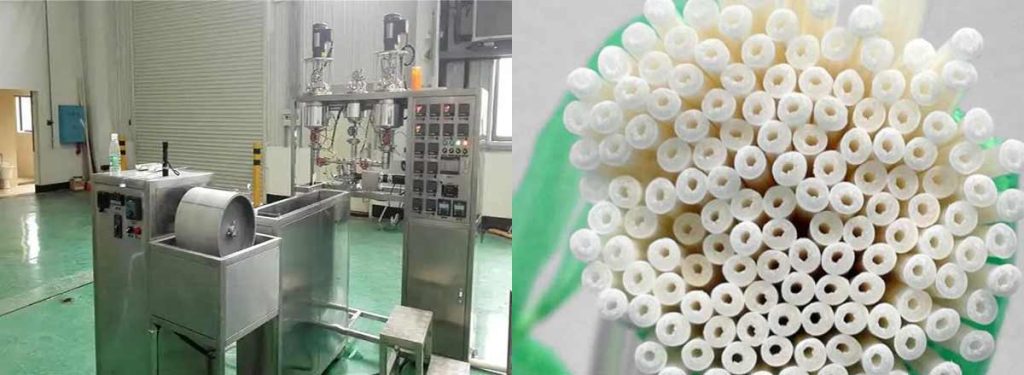
Operators can further enhance membrane performance by using a hollow fiber spinning machine during manufacturing. This technology allows precise control over membrane structure and material distribution, resulting in membranes with superior fouling resistance and longer service life.
Tip: Selecting the right membrane material and manufacturing technology can reduce the need for frequent cleaning and lower operational costs. Operators should consider both performance and sustainability when choosing membranes for ultrafiltration treatment.
By combining effective pre-treatment, smart operational adjustments, targeted cleaning, and advanced membrane materials, operators can achieve robust fouling control. These strategies ensure reliable treatment, minimize downtime, and support sustainable water management.
Troubleshooting Fouling
Identifying Fouling Type
Operators often face challenges when diagnosing membrane fouling in hollow fiber membranes. Accurate identification of fouling type helps optimize cleaning and maintenance. Several diagnostic methods allow operators to pinpoint the source and nature of fouling. These methods improve membrane performance and reduce downtime.
- The MOJS-ADBN model diagnoses membrane components and optimizes system performance. This model uses adaptive learning rates for stable and accurate fault classification. Operators rely on this model to classify and locate faults in hollow fiber membrane systems.
- Advanced instrumental techniques provide real-time characterization of membrane fouling dynamics. Magnetic Resonance Imaging (MRI) monitors fouling inside individual fibers. Operators gain insight into the temporal and spatial evolution of fouling. This understanding supports the development of effective mitigation strategies.
Operators use these diagnostic tools to identify membrane fouling early. Early detection allows for targeted interventions and reduces the risk of severe fouling. Accurate diagnosis ensures that cleaning methods match the type of fouling present in the membrane.
Quick Fixes
Operators sometimes need immediate solutions to restore flow in fouled hollow fiber membrane systems. Quick fixes provide temporary relief from membrane fouling and help maintain system operation until a thorough cleaning can occur. The table below summarizes effective quick fixes for membrane fouling:
| Method | Description |
|---|---|
| Flow regulation | Adjusting flow rates to optimize performance and reduce fouling. |
| Alternative flow through modules | Changing flow direction or path to minimize fouling effects. |
| System vibration | Using vibrations to dislodge fouling materials from the membrane surface. |
| Cyclic operation-washing cycles | Implementing periodic washing to clean membranes and restore flow. |
| Use of ultrasound | Applying ultrasound waves to remove fouling layers from membranes. |
| Introduction of silver nanoparticles | Using silver nanoparticles for biofouling control. |
Operators select quick fixes based on the severity and type of membrane fouling. Flow regulation and alternative flow paths help reduce immediate fouling impact. System vibration and ultrasound target stubborn fouling layers on the membrane surface. Cyclic washing cycles restore membrane performance between scheduled cleanings. Silver nanoparticles offer targeted control for biofouling.
Tip: Quick fixes do not replace regular cleaning or preventive measures. Operators should use these methods to maintain membrane performance until a full cleaning can be scheduled.
Operators who troubleshoot membrane fouling effectively maintain stable water treatment and extend membrane lifespan. Early identification and quick fixes support reliable operation and reduce the risk of long-term damage.
Conclusion
Recent research highlights that operating conditions, feed characteristics, and membrane properties all influence fouling. The table below summarizes these key factors:
| Factor Category | Description |
|---|---|
| Operating Conditions | Air resistance and filtration efficiency impact fouling. |
| Feed Characteristics | Different feeds cause unique fouling mechanisms. |
| Membrane Properties | Hydrophilicity and surface modification help reduce fouling. |
Surface modifications and operational strategies, such as optimized flux control and air scouring, improve organic removal efficiency and maintain water quality. Routine inspections, integrity testing, and regular backwashing prevent severe fouling.
Membrane integrity is essential for reliable performance. Effective monitoring reduces the risk of failure and supports long-term operation.
A proactive approach ensures stable systems and empowers operators to achieve better results.
FAQ
What Causes Hollow Fiber Membranes to Get Gunked ip?
Particles, organic matter, and microorganisms in water often stick to hollow fiber membranes. These substances block pores and form layers on the surface. Operators see this problem in both water and wastewater treatment, especially in membrane bioreactor systems.
How Can Operators Prevent Biofouling in Hollow Fiber Membranes?
Operators use pre-treatment, regular cleaning, and operational adjustments to prevent biofouling. They also select membranes with better resistance. In membrane bioreactor setups, these steps help maintain water quality and support effective wastewater treatment.
Why Is Membrane Fouling a Challenge in Wastewater Treatment?
Wastewater contains many solids, organic compounds, and microbes. These materials cause rapid fouling in hollow fiber membranes. Membrane fouling characteristics in wastewater treatment require frequent cleaning and careful monitoring to keep bioreactor systems running smoothly.
What Are the Signs of Membrane Fouling in a Membrane Bioreactor?
Operators notice reduced water flow, higher pressure, and more frequent cleaning needs. These signs show that hollow fiber membranes in a membrane bioreactor are experiencing fouling. Early detection helps with membrane fouling mitigation and keeps wastewater treatment efficient.
Can Membrane Fouling Be Completely Eliminated?
Complete elimination is rare. Operators can reduce fouling with good design, regular maintenance, and biofouling control. In water and wastewater treatment, combining several strategies helps extend membrane life and improve bioreactor performance.