


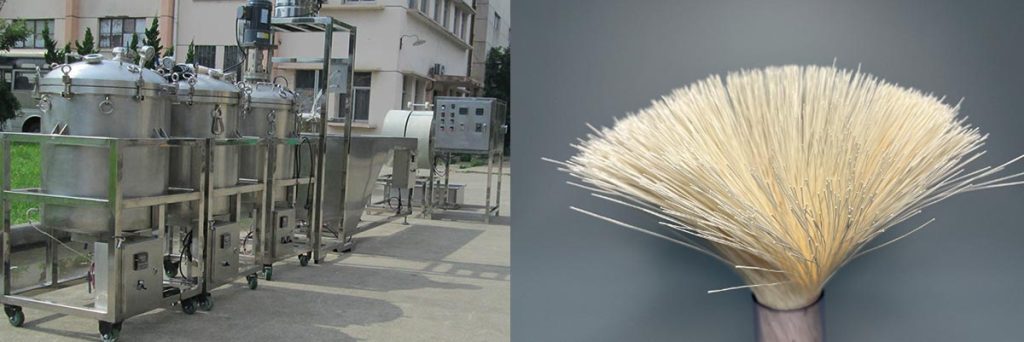
The quality of hollow fiber membranes depends on precise control at every stage of the hollow fiber membrane manufacturing process. Choices in polymer composition, air gap, and bath temperature shape how each hollow fiber membrane performs and lasts. Even small changes in spinning parameters can alter membrane structure, affecting separation efficiency and overall performance. For example, optimizing key variables such as air gap distance and AC–MgO concentration can lead to higher permeability and reliability, as shown below:
| Evidence Description | Key Findings |
|---|---|
| The optimization process predicted a maximum PWP of 56.715 L/(m2.h.bar) with specific optimal parameters. | Demonstrates the effectiveness of optimization in achieving high permeability values. |
| The experimental permeability measured was 52.49 L/(m2.h.bar) with a low prediction error of 7.45%. | Indicates the reliability and accuracy of the optimization model. |
| Parameters like air gap distance and AC–MgO concentration significantly influenced membrane performance. | Highlights critical factors in optimizing membrane structure and performance. |
These findings highlight why manufacturers must understand and optimize each step to produce high-quality hollow fiber membranes.
Key Takeaways
- Control every stage of the hollow fiber membrane manufacturing process to ensure high quality and performance.
- Select pure polymers and optimize spinning parameters to improve membrane structure and reduce defects.
- Use surface modification techniques to enhance fouling resistance and maintain consistent performance in water treatment.
- Implement precise mechanical testing to verify membrane reliability and optimize separation efficiency.
- Focus on continuous process improvement to increase customer satisfaction and reduce issues like fouling.
Raw Materials in Hollow Fiber Membrane Manufacturing
Polymer Composition and Purity
The selection of polymer type and its purity plays a crucial role in the hollow fiber membrane manufacturing process. Different polymers create unique structures that directly affect separation and filtration. For example, P84 co-polyimide membranes deliver high selectivity performance, with selectivity coefficients of 285-300 for He/N2 and 45-50 for CO2/N2. These values show how polymer choice influences separation efficiency and the removal of contaminants from water or air. The purity of the polymer also matters. Impurities can disrupt chain entanglement, leading to inconsistent pore formation and reduced membrane performance. Asymmetric hollow fiber membranes often show plasticization at CO2 pressures above 7-8 bar, which impacts their durability in water treatment and other applications. The critical polymer concentration for proper chain entanglement during spinning is around 28.5 wt%. This concentration ensures the membrane forms a stable structure, which is essential for reliable separation.
- Key impacts of polymer composition and purity:
- High selectivity for specific gas pairs
- Control over porosity and structure
- Resistance to plasticization under pressure
Material preparation, including the content of HBPE and other polymers, determines the final properties of hollow fiber membranes. Careful optimization of these variables leads to improved efficiency and consistent performance in advanced separation technology.
Additives and Pre-Treatment
Additives and pre-treatment steps enhance the function and lifespan of hollow fiber membranes. Manufacturers use surface modification techniques to improve fouling resistance and maintain high performance. The table below summarizes common approaches and their effects:
| Evidence Type | Description |
|---|---|
| Surface Modification Techniques | Hydrophilic coatings, grafting of anti-fouling polymers, and nano-scale surface roughness patterns are used to minimize fouling and enhance performance. |
| Performance Improvement | Membranes maintain consistent flux rates and longer intervals between cleaning cycles due to these modifications. |
| Strengths | Excellent chemical stability, superior resistance to biological fouling, and consistent performance in high-turbidity applications. |
| Weaknesses | Higher production costs and potential decreased mechanical strength in certain configurations. |
These manufacturing techniques help hollow fiber membranes achieve reliable separation and filtration in water treatment. Additives and pre-treatment steps support the removal of contaminants, increase durability, and ensure the membrane remains effective over time.
Spinning Process and Key Variables
Hollow Fiber Spinning Machine Role
The hollow fiber spinning machine stands at the center of the hollow fiber membrane manufacturing process. This machine uses a Dope and Bore Fluid Feeding System with regulated pumps. These pumps deliver the polymer dope and bore fluid with high precision. Consistent feeding ensures uniform fiber diameter and wall thickness. Advanced sensors and PLC control systems monitor flow rates. These systems maintain accuracy and reproducibility. Uniform fiber dimensions improve membrane performance in separation and filtration applications. The spinning machine’s technology allows manufacturers to produce hollow fiber membranes with reliable quality. Precision in the spinning process supports selectivity performance and durability.
Note: The hollow fiber spinning machine’s advanced control features help reduce defects and maintain consistent fiber structure. This reliability is essential for water treatment and other demanding applications.
Spinning Parameters (Bath Temperature, Air Gap, Bore Fluid)
Spinning parameters shape the internal and external structure of hollow fiber membranes. Bath temperature affects the rate of phase inversion. Higher temperatures speed up coagulation, which influences pore formation and membrane morphology. Air gap distance plays a critical role in mechanical properties and defect rates. Longer air gaps allow fibers to stretch and expose them to air before entering the coagulation bath. This exposure increases the thickness of finger-like structures and enhances water permeability.
- Increasing air gap distance from 2 cm to 12 cm and 42 cm raises the thickness of the finger-like structure from 30 μm to 43 μm and 60 μm.
- Greater pore diameters appear with longer air gaps, improving permeability and separation efficiency.
- The thickness of the finger-like structured layer changes from 38 μm to 60 μm for different samples.
Bore fluid composition also impacts membrane morphology and performance. The table below summarizes how different bore fluids affect membrane structure and separation results:
| Bore Fluid Composition | Resulting Membrane Morphology | Performance Impact |
|---|---|---|
| 100% Distilled Water | Large macrovoid structure with tiny finger-like morphology | Highest FFA removal of 16.54% |
| 0-40% NMP | Interconnected double-layers of finger-like morphology | Varies with NMP concentration |
| Ethanol Ratio in Bore Fluid | Membrane Characteristics | Performance Impact |
|---|---|---|
| 100/0 | Lowest performance | Poor separation |
| 25/75 | Best performance | Effective separation |
| Bore Fluid Characteristics | Effect on Membrane Structure |
|---|---|
| Varying dope concentration | Affects porous structure and surface morphology |
| Bore fluid flow rate | Influences dimension of hollow fibers |
Manufacturers adjust these spinning parameters to optimize membrane efficiency and selectivity performance. Careful control of bath temperature, air gap, and bore fluid ensures hollow fiber membranes achieve reliable separation and filtration.
Fiber Take-Up Velocity and Structure
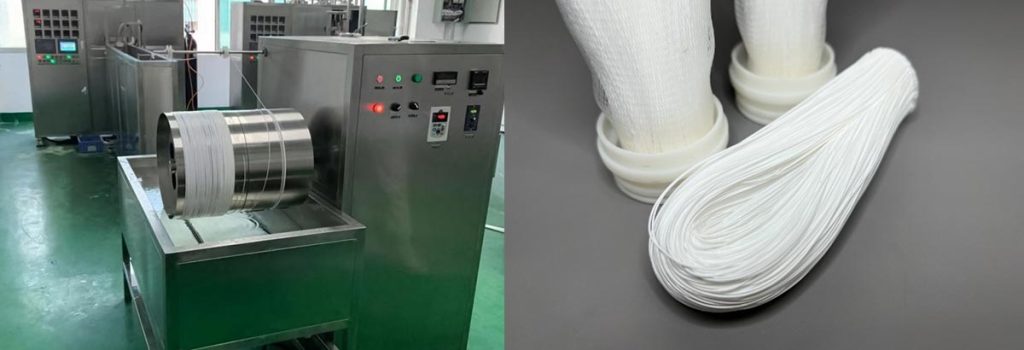
Fiber take-up velocity determines the final structure and mechanical strength of hollow fiber membranes. Faster take-up speeds stretch the fibers, resulting in thinner walls and smaller diameters. Slower speeds produce thicker fibers with greater mechanical stability. The spinning machine’s control system allows precise adjustment of take-up velocity. This flexibility helps manufacturers tailor membrane properties for specific separation and filtration needs.
Tip: Adjusting take-up velocity can improve membrane durability and reduce fiber breakage during production.
Advanced spinning machines contribute to reproducibility and scalability in hollow fiber membrane manufacturing. The table below highlights key techniques that support consistent quality and high-volume production:
| Evidence Description | Key Points |
|---|---|
| Techniques for scaling up hollow fiber spinning processes | Optimizing process parameters ensures consistent fiber quality while increasing production volume. |
| Multi-spinneret systems | Enable simultaneous production of multiple hollow fibers, increasing throughput and maintaining consistent properties. |
| Continuous production techniques | Reduce downtime and increase output through uninterrupted processes. |
| Specialized quality control methods | Ensure consistent fiber quality through automated monitoring and statistical process control. |
Manufacturing techniques such as multi-spinneret systems and continuous production technology help scale up the process. These methods maintain membrane quality and support efficient removal of contaminants in water treatment. Optimization of spinning variables leads to improved efficiency and reliable performance in advanced separation technology.
Pore Size Control in Hollow Fiber Membranes
Pore Formation Methods
Manufacturers use several methods to control pore size during the hollow fiber membrane manufacturing process. The phase inversion technique, especially the non-solvent induced phase separation method, stands out as the most common approach. This method mixes a polymer solution with a non-solvent, which triggers the formation of a porous structure. Water-soluble polymeric pore formers, such as polyethylene glycol and polyvinyl alcohol, help regulate the demixing process at the interface. These materials enhance pore size uniformity and allow for targeted pore size distributions. However, maintaining consistent pore sizes remains challenging due to concentration changes during the process. Surfactant-assisted interfacial polymerization also improves pore size uniformity in polyamide hollow fiber membranes. This mechanism regulates trans-interface transport and boosts the diffusion of reactive monomers, leading to a more homogeneous pore structure. Monte Carlo simulations show that a lower energy barrier results in faster and more uniform flux, which is vital for achieving consistent pore sizes.
Tip: Manufacturers can achieve better separation efficiency and filtration performance by optimizing pore formation methods and using advanced manufacturing techniques.
Uniformity and Performance Impact
Pore size uniformity directly affects the performance of hollow fiber membranes in separation and filtration applications. Industry benchmarks set acceptable pore sizes between 0.03 and 2 microns, depending on the membrane type. Uniform pore size distribution improves selectivity and reduces fouling, which is crucial for water treatment and the removal of contaminants. The following points highlight the impact of pore size control:
- Controlling pore size and distribution is essential for achieving high selectivity in hollow fiber membranes.
- Phase inversion under controlled conditions and thermally induced phase separation enhance separation performance.
- Optimizing pore structure leads to well-defined molecular sieving effects, improving the membrane’s ability to separate compounds based on size and shape.
Uniform pore sizes allow for consistent material transport and efficient separation. This optimization supports advanced technology in water treatment and ensures reliable membrane performance. Manufacturers who focus on pore size control achieve higher efficiency and better removal of contaminants, making their hollow fiber membranes suitable for demanding filtration applications.
Surface Modification and Fouling Resistance
Surface Treatment Techniques
Surface treatment techniques play a vital role in thehollow fiber membrane manufacturing process. Manufacturers use these methods to improve the hydrophilicity and fouling resistance of hollow fiber membranes. Hydrophilic surface-modified membranes show reduced fouling compared to standard hydrophobic membranes. These modifications help maintain high performance in water treatment systems. The following list highlights the main effects of surface modification:
- Surface modification techniques create fouling-resistant membranes.
- Hydrophilic membranes reduce fouling and support consistent separation.
- These treatments improve performance in wastewater applications.
Manufacturing techniques such as plasma treatment, chemical grafting, and selective layer coatings allow precise control over membrane properties. These methods help optimize the removal of contaminants and support efficient filtration. Surface treatments also enhance the interaction between the membrane and water, which increases separation efficiency.
Tip: Surface modification improves membrane performance and durability, making it essential for advanced water treatment technology.
Enhancing Selectivity and Durability
Surface modification methods enhance the selectivity and durability of hollow fiber membranes. Plasma treatment, chemical grafting, and selective layer coatings create a selective barrier that interacts with specific molecules. This barrier improves separation and supports consistent membrane performance. Surface treatments also reduce fouling, which is crucial for maintaining long-term durability and selectivity.
Manufacturers focus on optimization during the hollow fiber membrane manufacturing process to achieve high efficiency and reliable removal of contaminants. Enhanced selectivity leads to better separation results and supports advanced technology in water treatment. Surface modification ensures that hollow fiber membranes maintain their structure and performance over time.
- Surface treatments help maintain membrane durability.
- Selective barriers improve separation and filtration.
- Reduced fouling supports consistent performance and efficiency.
Manufacturing techniques that include surface modification contribute to the production of high-quality hollow fiber membranes. These methods help optimize the process and support the removal of contaminants from water, ensuring reliable membrane performance.
Post-Treatment and Quality Testing
Drying, Annealing and Curing
Post-treatment steps in the hollow fiber membrane manufacturing process determine the final properties and stability of hollow fiber membranes. Drying removes residual solvents and water from the membrane, which prevents pore collapse and preserves separation efficiency. Annealing involves heating the membrane to a controlled temperature. This process relaxes internal stresses and improves mechanical strength. Curing solidifies the polymer structure, enhancing durability and resistance to deformation during filtration.
Manufacturers select drying methods based on the material and desired membrane characteristics. Air drying, vacuum drying, and controlled humidity drying each offer unique advantages. Annealing temperatures and times vary depending on the polymer composition. Proper curing ensures the membrane maintains its structure during separation and water treatment. These post-treatment steps support advanced technology and reliable performance in demanding applications.
Tip: Careful control of drying, annealing, and curing helps maintain pore structure and boosts membrane performance for separation and filtration.
Mechanical Testing and Reliability
Mechanical testing protocols assess the reliability and field performance of hollow fiber membranes. Manufacturers use tests such as tensile strength, elongation, and burst pressure to evaluate membrane durability. Bubble-point testing stands out as a key method for measuring pore integrity and separation capability. Higher bubble-point pressures indicate improved retention of particles and microorganisms, which is essential for water treatment and pharmaceutical applications.
Quality testing protocols correlate with field performance and failure rates. Integrity acceptance criteria ensure that each hollow fiber membrane meets performance standards before use. Variability in testing conditions can affect the relationship between laboratory results and actual field performance. The following points highlight the importance of mechanical testing:
- Bubble-point testing links laboratory results to real-world performance and failure rates.
- Higher bubble-point pressures improve separation and retention of contaminants.
- Integrity criteria guarantee membranes meet standards for water treatment and filtration.
- Testing variability influences the accuracy of performance predictions.
Manufacturers rely on mechanical testing to verify membrane reliability and optimize separation efficiency. These protocols support the production of high-quality hollow fiber membranes that deliver consistent performance in advanced water treatment technology.
Conclusion
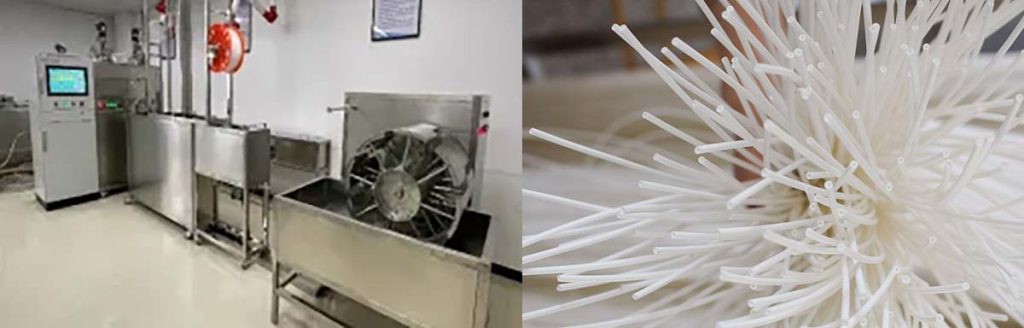
Optimizing every stage of the hollow fiber membrane manufacturing process leads to reliable hollow fiber membranes with superior separation and performance. Manufacturers select pure polymers and adjust spinning variables to improve membrane structure and reduce defects. The hollow fiber spinning machine provides precise control, which enhances water filtration and separation efficiency. Continuous process improvement increases customer satisfaction and reduces issues like fouling and fiber breakage. The table below shows how tailored properties and phase inversion control contribute to better performance and reliability in separation applications.
| Evidence Type | Description |
|---|---|
| Phase Inversion Control | Optimizing parameters like polymer concentration and solvent selection enhances membrane properties. |
| Tailored Properties | Custom membranes meet specific application requirements, improving efficiency. |
| Customer Satisfaction | Higher reliability in filtration applications leads to increased customer satisfaction. |
Manufacturers who monitor defects such as mechanical integrity issues and pore uniformity problems during separation achieve higher performance and longer-lasting hollow fiber membranes for water treatment.
FAQ
What Makes Hollow Fiber Membranes Ideal for Water and Wastewater Treatment?
Hollow fiber membranes offer high surface area and efficient flow. They support advanced water and wastewater treatment by removing particles and microorganisms. Their structure allows for easy cleaning and long service life.
How Do Hollow Fiber Membranes Achieve Superior Contaminant Removal?
Manufacturers design hollow fiber membranes with precise pore sizes. This design ensures superior contaminant removal by blocking bacteria, viruses, and suspended solids. The result is cleaner water for many applications.
What Is the Role of Hollow Fiber Membranes in Membrane Filtration Systems?
Hollow fiber membranes serve as the core component in membrane filtration systems. They provide high throughput and consistent performance. These systems deliver reliable results in industrial and municipal water treatment.
How Does Contaminant Rejection Work in Hollow Fiber Membranes?
Contaminant rejection depends on the membrane’s pore size and surface properties. The membrane blocks unwanted substances while allowing water to pass. This process ensures high-quality output for safe drinking water.
How Does Hollow Fiber Membrane vs. Other Membrane Technologies Compare?
Hollow fiber membrane vs. other membrane technologies shows higher packing density and easier cleaning. These features make hollow fiber membranes a preferred choice for many filtration needs.