Recent Advances in Hollow Fiber Membrane Spinneret Applications for Wastewater Reuse
By LydiaPosted on July 18, 2025Category: Hollow Fiber
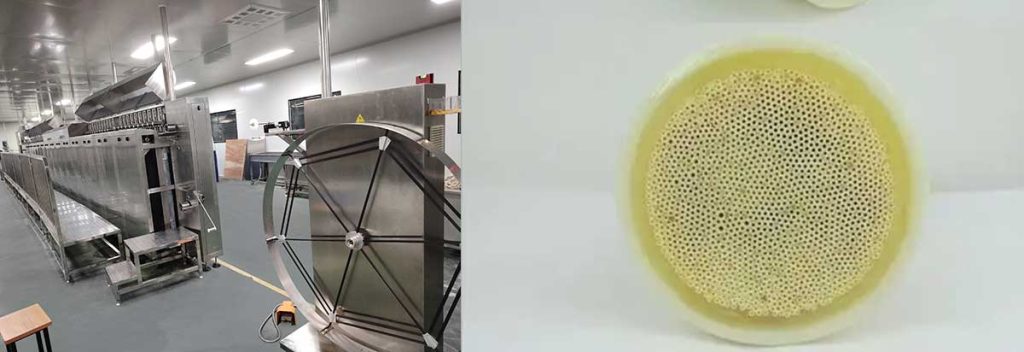
Recent advances in hollow fiber membrane spinneret have transformed wastewater treatment and industrial wastewater recycling. The global market for hollow fiber membrane spinneretreached nearly USD 12.79 billion in 2023, with wastewater treatment accounting for over 85% of this value, reflecting the essential role these membranes play in recycling processes. Hollow fiber membranes deliver high water quality by efficiently removing contaminants, bacteria, and turbidity, while their modular design and antifouling properties lower operational costs and simplify maintenance. Enhanced performance from innovations in spinneret design, advanced polymers, and hollow fiber spinning machine scale-up has improved system reliability and enabled significant water reuse across diverse industries.
Key Takeaways
Hollow fiber membranes improve wastewater reuse by efficiently removing contaminants and lowering maintenance costs through advanced spinneret designs and materials.
Precise control of fabrication parameters, like polymer choice and spinning conditions, allows engineers to optimize membrane strength, water flow, and contaminant rejection.
PVDF membranes stand out for their durability, chemical resistance, and high filtration performance, making them ideal for industrial wastewater treatment.
Scaling up production with hollow fiber spinning machine ensures consistent membrane quality and supports large-scale water recycling projects.
Ongoing research focuses on reducing fouling, enhancing membrane customization, and developing sustainable materials to boost long-term wastewater treatment efficiency.
The structure of the membrane, which typically features a thin, dense selective layer for high contaminant rejection, supported by a porous substrate for mechanical strength.
Braid reinforcement, such as polyester or PET, which significantly increases pressure tolerance and enables operation at higher pressures.
Polymer blends and the addition of hydrophilic copolymers or nanoparticles, which enhance antifouling properties and operational durability.
Optimization of spinning parameters, including polymer concentration and extrusion velocity, which affects wall thickness and lumen size, balancing permeability and strength.
The use of tubular braid supports, allowing for thinner selective layers and improved flux without sacrificing mechanical integrity.
Advanced spinneret designs, such as single orifice and tri-bore configurations, further enhance the performance of hollow fiber membranes. Tri-bore PVDF hollow fiber membranes increase mechanical strength and liquid entry pressure, maximizing surface area and efficiency in membrane modules. However, designers must carefully balance pore structure and application requirements. More open structures boost water flux but risk membrane wetting, while denser structures improve durability at the expense of permeability. The integration of braid reinforcement and optimized interfacial bonding, as seen in PAN-based hollow fiber membrane modules, can achieve tensile strengths exceeding 80 MPa, supporting long-term industrial operation.
Material selection also shapes module performance. PVDF offers an attractive balance of cost, permeability, and mechanical properties, making it suitable for large-scale production of hollow fiber spinning machine. However, environmental concerns related to PFAS emissions and recycling challenges persist. Silicon carbide, a ceramic alternative, provides unmatched durability and longevity but at a higher cost and with less economic appeal for widespread adoption.
Fabrication Methods
The fabrication of hollow fiber membrane spinneret relies on precise control of process parameters to achieve the desired membrane structure and performance. The dry–wet phase inversion spinning technique dominates industrial production, especially for PVDF hollow fiber membrane. This method involves extruding a polymer solution through a spinneret, followed by controlled phase separation in a coagulation bath. The process allows for fine-tuning of wall thickness, fiber diameter, porosity, and the formation of a selective skin layer, all of which directly affect water flux and contaminant retention in the final membrane module.
Aspect
Details
Fabrication Method
Dry–wet phase inversion spinning technique
Process Description
Extrusion of polymer solution through a spinneret; control of polymer extrusion velocity, bore fluid flow, air gap, coagulation bath conditions
Multi-nozzle spinnerets for dual-layer membranes; corrugated spinneret nozzles for developed inner/outer surfaces
Impact on Membrane Efficiency
Adjusting spinning parameters changes wall thickness, fiber diameter, porosity, and skin layer, directly affecting water flux and retention
Impact on Durability
Polymer choice and membrane structure influence mechanical strength and longevity; dual-layer membranes improve mechanical properties
Modifications and Innovations
Dual-layer membranes with active and support layers; corrugated membranes increase water flux; degradable polymers being developed for environmental sustainability
Challenges and Future Directions
Need for degradable membranes to reduce environmental impact; ongoing development of new fabrication techniques to enhance performance
Recent innovations in spinneret fabrication have enabled higher throughput and improved membrane quality. Coaxial spinnerets now allow the production of core–shell fibers, combining distinct core and shell materials for enhanced mechanical strength and tunable porosity. Template-assisted electrospinning produces membranes with hierarchical pore structures, increasing both flux and selectivity in wastewater treatment modules. Adjusting polymer type, fiber diameter, and phase separation conditions enables engineers to tailor membrane properties for specific industrial needs.
Despite the advantages of electrospinning and stretching techniques, these methods face challenges such as low mechanical strength, low throughput, and high energy consumption. The hollow fiber spinning machine addresses these limitations by providing precise control over spinning parameters, supporting the large-scale production of PVDF hollow fiber membrane with consistent quality. Multi-material spinneret designs and hybrid fabrication techniques continue to push the boundaries of module performance, durability, and sustainability.
Hollow Fiber Membranes Performance
Flux and Selectivity
Hollow fiber membranes deliver outstanding performance in water filtration and industrial wastewater recycling. Engineers focus on flux optimization to maximize water throughput while maintaining high rejection rates for contaminants. The choice of membrane material, such as PVDF, and the design of the module directly influence flux and selectivity. PVDF hollow fiber membrane, for example, achieves flux rates up to 70.48 L/m²·h with 99.7% oil rejection in oily wastewater. In membrane distillation modules, PVDF provides nearly 100% permeate recovery and 99.9% salt rejection, making it ideal for challenging water filtration processes.
Wastewater Type
Membrane Material(s)
Membrane Process
Typical Flux Rate (L/m²·h)
Selectivity / Removal Efficiency
Oily wastewater
PVDF
Ultrafiltration (UF)
70.48
99.7% oil rejection
Oilfield wastewater
PVDF
Membrane Distillation (MD)
N/A
~100% permeate recovery, 99.9% salt rejection
Seawater, wastewater
PES, Polyamide
Forward Osmosis (FO), PRO
40.3 (FO)
Power density up to 10.6 W/m² (PRO)
Membrane flux and selectivity depend on spinneret design and fabrication parameters. Adjusting bore fluid composition or dope flow rate during hollow fiber spinning machine can increase pure water flux from 2.6 to 8.1 L/m²·h·bar and porosity from 62% to 86.3%. However, higher porosity and larger pore size may reduce salt rejection and liquid entry pressure, requiring careful balance for optimal module performance.
Innovative spinneret designs, such as rotating needle spinnerets, create helical ridges inside hollow fiber membranes. These features enhance turbulence and mass transfer, leading to significant improvements in flux optimization and selectivity. Larger spinneret dimensions and optimized spinning parameters also produce thinner selective layers, increasing salt rejection and contaminant removal in water filtration modules.
Antifouling and Durability
Hollow fiber membranes face several fouling mechanisms in industrial water filtration, including inorganic, organic, biological, and colloidal fouling. These processes reduce membrane flux and salt rejection, impacting module efficiency. Engineers mitigate fouling by using pre-treatment, surface modifications, and advanced cleaning techniques. PVDF hollow fiber membrane, especially which produced by hollow fiber spinning machine, offer strong resistance to fouling due to their chemical stability and robust structure.
Enhanced filtration capabilities and durability; increased resistance to fouling in complex industrial effluents
Surface Modifications
Special coatings and materials
Resist clogging and fouling, extending membrane life
Advanced Cleaning Techniques
Optimized cleaning methods
Reduce fouling accumulation, lower maintenance frequency
Ceramic and Composite Membranes
High chemical and thermal stability
Suitable for harsh industrial conditions, enhancing membrane lifespan
Tip: Regular module cleaning and real-time control systems help maintain high flux optimization and salt rejection, reducing downtime and operational costs.
Bio-inspired hollow fiber membranes mimic natural filtration processes, improving selectivity and reducing fouling. Module design improvements, such as efficient water flow paths, further enhance operational durability. PVDF and ceramic modules withstand harsh chemicals and high temperatures, ensuring long-term performance in demanding water filtration environments. These advances in antifouling and durability support reliable, cost-effective filtration processes for industrial wastewater reuse.
Hollow Fiber Spinning Machine Scale-Up
Process Optimization
Scaling up the hollow fiber spinning machinerequires careful optimization of multiple parameters. Engineers focus on batch size, membrane module dimensions, and spinning conditions to ensure reproducibility from laboratory to industrial scale. For example, batch sizes increase from 1.5 kg in the lab to 20 kg or even 50 kg in industrial settings, while maintaining consistent membrane quality. The hollow fiber spinning machine enables this transition by allowing precise control over dope solution flow rate, viscosity, and bore fluid composition. Computational fluid dynamics simulations show that controlling these variables prevents uneven wall thickness and weak spots, which can compromise membrane integrity.
Key spinning parameters for optimization include dope extrusion rate, air gap length, coagulation bath temperature, bore fluid ratio, and post-treatment time. Maintaining a 1:1 ratio between dope extrusion rate and bore fluid flow rate produces well-rounded asymmetric hollow fiber membranes. Increasing the air gap distance during hollow fiber spinning can improve flux by creating thinner, more porous skin layers, but may reduce rejection rates. Engineers must balance these factors to achieve high-performance membranes suitable for sustainable water supply.
Parameter/Aspect
Details/Outcome
Batch size scale-up
From 1.5 kg (lab) to 20–50 kg (industrial) with reproducibility
Module sizes
0.5-inch and 2-inch modules, various lengths
Flux performance
>10 L/m²/h (0.5-inch); improved >5 L/m²/h (2-inch) after optimization
Salt rejection
Consistently ≥99.9%
Application
Desalination, resource recovery, zero liquid discharge
Industrial Implementation
The hollow fiber spinning machine plays a central role in industrial membrane production. Automation technologies, such as programmable logic controllers, robotics, and sensors, maintain consistent fabrication parameters during scale-up. These systems enable real-time monitoring and adjustment of spinning speeds, polymer flow rates, temperature, and pressure. High-precision feedback loops reduce variability and defect rates, ensuring uniform membrane structure and performance.
Engineers use advanced fiber spinning technology to adapt membrane chemistry and spinning processes from lab to industrial scale. The hollow fiber spinning machine allows for the production of modules with different sizes and geometries, meeting diverse industrial needs. Process optimization ensures that each membrane meets strict quality standards for flux, selectivity, and durability. By tightly controlling process parameters, the hollow fiber spinning machine delivers reliable, scalable, and cost-effective solutions for industrial wastewater recycling.
Process Parameter
Description / Importance
Dope solution composition
Determines polymer concentration and affects membrane morphology
Influences phase inversion kinetics and membrane structure; controlled via temperature
Dope solution flow rate
Affects fiber formation and uniformity
Bore fluid composition
Controls inner fiber structure and lumen formation
Bore fluid temperature
Impacts phase separation and fiber morphology
Bore fluid flow rate
Influences fiber dimensions and internal morphology
Air gap distance
Affects solvent evaporation and fiber skin formation
External coagulation bath composition
Determines phase inversion environment and membrane properties
External coagulation bath temperature
Controls coagulation speed and membrane morphology
Spinneret design and dimensions
Critical for fiber geometry and uniformity
Draw ratio
Alters fiber geometry and morphology by stretching nascent fiber
The hollow fiber spinning machine, through continuous optimization, supports the production of high-quality membranes for applications such as desalination, resource recovery, and zero liquid discharge. This approach ensures that industrial wastewater recycling remains sustainable and efficient.
Industrial Wastewater Recycling Applications
Case Studies
Industrial sectors have adopted advanced membrane modules for wastewater treatment and water recovery. Many industries, such as textiles, chemicals, and municipal utilities, use reinforced braided hollow fiber modules. These modules, often produced by a hollow fiber spinning machine, deliver high mechanical strength and support high-pressure processes like nanofiltration and reverse osmosis. Reinforced hollow fiber nanofiltration modules can double the performance of traditional spiral-wound modules.
A notable example comes from the textile industry. Engineers used hydrophobic PVDF hollow fiber composite membranes coated with a porous ZIF-71 layer to treat wastewater containing Congo red dye. The module achieved dye rejection rates above 99.9% and maintained a permeate flux of 13.15 kg·m−2·h−1 under optimized conditions. The team addressed fouling during 100 hours of continuous filtration by combining forward washing, back flushing, and chemical desorption. This cleaning protocol restored membrane performance and extended module life. The case demonstrates the effectiveness of PVDF hollow fiber modules in challenging water filtration processes, especially for dye removal.
PVDF modules also play a key role in direct contact membrane distillation, supporting high water recovery and salt rejection in industrial applications.
Best Practices
Engineers have identified several best practices to optimize membrane module performance and longevity in wastewater treatment:
Ensure compatibility between membrane material and cleaning agents.
Use real-time monitoring to optimize cleaning frequency and resource use.
Combine cleaning steps to minimize downtime and resource consumption.
These practices help maintain high water quality, maximize resource recovery, and ensure reliable operation of hollow fiber spinning machine-produced modules in industrial wastewater recycling.
Recycling Challenges and Future Trends
Technical Barriers
Industrial adoption of hollow fiber spinning machine for wastewater reuse faces several technical barriers. Many facilities struggle with persistent fouling, which reduces water flux and increases cleaning frequency. High salt rejection remains essential for direct contact membrane distillation, but maintaining consistent rejection rates over time proves difficult. Engineers often encounter challenges with module scale-up, as larger modules can increase fouling and operational instability. The hollow fiber spinning machine must deliver membranes with uniform pore structure to support reliable distillation and zero liquid discharge. However, optimization of spinning parameters for high salt rejection and water flux is complex. Custom-designed membranes tailored for specific wastewater compositions are still rare, and commercial modules may not meet the demands of diverse industrial water streams. Capital and operational costs for large-scale hollow fiber spinning machine deployment remain significant, especially when aiming for zero liquid discharge and high resource recovery.
Research Directions
Researchers continue to pursue new strategies to overcome these barriers and advance hollow fiber spinning machine applications. Several promising directions include:
3D printing technology: This approach enables precise membrane surface modification, supporting energy-efficient direct contact membrane distillation and easier maintenance. However, current printer resolution limits its use for nanometer-scale salt rejection in reverse osmosis.
Membrane surface modification with nanomaterials: Scientists incorporate functional nanomaterials during dope preparation to enhance separation performance and fouling resistance. This method supports higher water flux and improved rejection in direct contact membrane distillation.
Development of ceramic membranes: Green, cost-effective ceramics offer robust performance for advanced distillation and zero liquid discharge. These membranes withstand harsh conditions and maintain high salt rejection.
Custom-designed membranes: Tailoring membranes for specific wastewater types improves lifespan, resource recovery, and discharge quality. This approach supports better optimization of salt rejection and water flux.
Fouling mitigation strategies: Integrated cleaning methods and real-time monitoring extend membrane life and maintain high rejection rates in direct contact membrane distillation.
Technology transfer and cost management: Training technical personnel and managing scale-up risks help reduce costs and support broader adoption of hollow fiber spinning machine for zero liquid discharge.
Emerging Research Direction
Description and Purpose
Challenges Addressed / Notes
3D Printing Technology
Enables precise membrane surface modification and fabrication; aims to reduce capital and operational costs via energy-efficient design and ease of maintenance.
Still in infancy; economic concerns due to material consumption costs; technical limitations in printer resolution, especially for nanometer scale needed in RO applications.
Membrane Surface Modification with Nanomaterials
Use of functional inorganic nanomaterials and nanocomposites to enhance separation performance of hollow fiber membranes.
Modification of hollow fiber membranes is more complex than flat sheets; internal surface modification is challenging; incorporation during dope preparation is a practical approach.
Development of Ceramic Membranes
Focus on green, inexpensive materials to create robust, reliable membranes suitable for emerging contaminants and advanced processes like forward osmosis and membrane distillation.
Growing interest as an alternative due to robustness and reliability.
Custom-Designed Membranes
Designing membranes tailored to specific wastewater compositions to improve lifespan and reduce waste.
Commercial membranes often unsuitable for diverse industrial wastewaters; need for high permeability, mechanical strength, durability, and chemical stability.
Fouling Mitigation Strategies
Combined cleaning methods and membrane modifications, supported by real-time fouling behavior investigation and monitoring.
Fouling remains a major problem; integrated approaches are promising to extend membrane life and maintain performance.
Technology Transfer and Cost Management
Emphasis on training technical personnel, managing scale-up risks, and reducing capital and operational costs for industrial adoption.
Larger membrane modules increase fouling and operational instability; cost concerns dominate industry acceptance; capital costs are significant.
Note: Continued optimization of hollow fiber spinning machine, combined with advances in direct contact membrane distillation and salt rejection, will drive future progress in water reuse, resource recovery, and zero liquid discharge.
Conclusion
Recent advances in hollow fiber spinning machine have transformed industrial wastewater recycling. Engineers now achieve higher water quality and reliability. The hollow fiber spinning machine enables precise control over membrane fabrication, supporting efficient distillation. Researchers continue to optimize the hollow fiber spinning machine for better distillation and water recovery.