


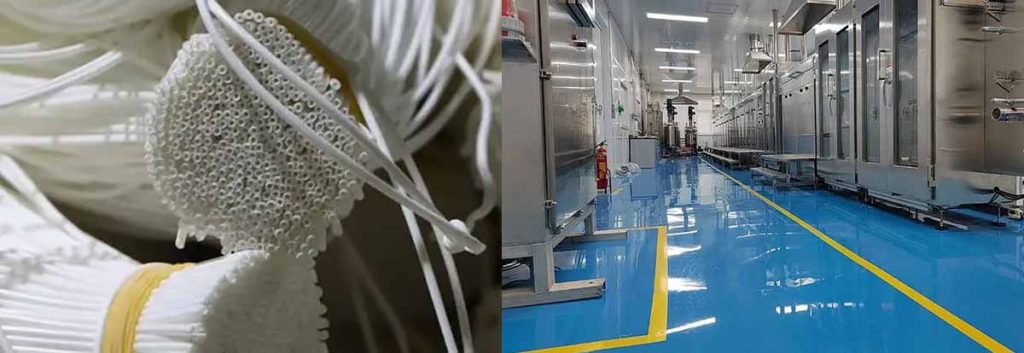
Preventing fouling in hollow fiber ultrafiltration remains essential for maintaining reliable wastewater and water treatment processes. Fouling reduces membrane efficiency and forces operators to increase cleaning frequency, raising operational costs and causing system downtime. Studies show that irreversible fouling forms a tough matrix on the membrane surface, often requiring chemical cleaning and leading to higher expenses for membrane replacement and sludge disposal. Understanding both reversible and irreversible fouling helps improve membrane performance. Membrane quality and the hollow fiber spinning machine play a critical role in minimizing fouling when treating wastewater in water treatment systems.
- Irreversible fouling demands chemical cleaning, increasing costs and risking membrane damage.
- Frequent fouling events shorten membrane lifespan in wastewater and water treatment systems.
Key Takeaways
- Regular maintenance routines help reduce fouling and extend membrane life in wastewater treatment.
- Optimizing operating conditions, like transmembrane pressure and crossflow velocity, minimizes fouling rates.
- Feed water pretreatment is essential for improving membrane performance and reducing cleaning frequency.
- Identifying early signs of fouling allows for timely intervention, protecting membrane efficiency and reducing costs.
- Advanced membrane technologies, such as hydrophilic coatings, enhance fouling resistance and improve overall system reliability.
Key Prevention Strategies for Hollow Fiber Ultrafiltration
Proactive Maintenance
Operators can minimize fouling in hollow fiber ultrafiltration by adopting proactive maintenance routines. Regular maintenance ensures that the process remains efficient and reliable, especially in wastewater treatment. The following practices help reduce the risk of fouling and extend membrane life:
- Optimizing air scouring techniques improves cleaning efficiency and reduces energy use. Adjusting bubble size and air flow rate can enhance the removal of foulants from the membrane surface.
- Implementing advanced monitoring and control systems allows operators to track performance metrics. Early detection of fouling enables timely adjustments to the process.
- Utilizing innovative membrane materials and configurations increases resistance to fouling. New designs and materials support longer operational cycles and better performance in challenging wastewater environments.
Routine monitoring plays a vital role in early intervention. Operators should check transmembrane pressure (TMP) frequently. For clean membranes, TMP should remain between 10-50 mbar. When TMP reaches 80-100 mbar, cleaning becomes necessary. If TMP exceeds 120 mbar, fouling difficulties may arise, requiring more intensive maintenance.
Optimized Operating Conditions
Optimizing operating conditions is essential for effective fouling prevention in hollow fiber ultrafiltration. The process parameters, such as transmembrane pressure and crossflow velocity, directly influence fouling rates and membrane performance. The table below summarizes their impact:
| Operating Condition | Influence on Fouling Rates |
|---|---|
| Transmembrane Pressure | Significant factor affecting permeate flux and fouling resistance. |
| Crossflow Velocity | Crucial for controlling fouling, especially with varying wastewater characteristics. |
| Optimal Conditions | Narrow hollow fibers and high crossflow velocities minimize fouling in waters with significant fouling. |
Industry standards recommend continuous backflushing and maintaining optimal operational parameters. These strategies help sustain membrane performance and reduce fouling in wastewater treatment. Advancements in membrane technology, such as surface modifications, further enhance fouling resistance and cleaning efficiency.
Tip: Early intervention and regular monitoring of process parameters can prevent irreversible fouling and reduce maintenance costs in wastewater applications.
Fouling in Hollow Fiber Ultrafiltration
What Is Membrane Fouling?
Membrane fouling occurs when substances accumulate on the membrane surface during wastewater treatment. This process increases filtration resistance and reduces system efficiency. Operators often measure membrane fouling using electrical impedance and zeta potential. These techniques help monitor fouling behaviors in real time. The table below summarizes the definition and measurement methods:
| Aspect | Description |
|---|---|
| Definition | Membrane fouling is characterized by the accumulation of foulants on the membrane surface, increasing filtration resistance and affecting performance. |
| Measurement Techniques | Electrical impedance (EI) and zeta potential (ZP) are used to monitor fouling behaviors in situ. |
Causes of Fouling
Fouling mechanisms in hollow fiber ultrafiltration arise from several sources in wastewater. The main causes include:
- Particulate and colloidal fouling: Suspended solids block the membrane.
- Biological and microbial fouling: Microorganisms grow on the membrane surface.
- Scaling or precipitation fouling: Crystallized salts and inorganic materials deposit on the membrane.
- Organic fouling: Carbon-based materials accumulate on the membrane.
Researchers have identified additional fouling mechanisms, such as cake layer formation, hydrophobic adhesion, and pore plugging. These processes lead to the buildup of materials on the membrane, which disrupts normal operation in wastewater treatment.
Impact on System Performance
Membrane fouling significantly affects the long-term performance of hollow fiber ultrafiltration. The table below outlines the main impacts:
| Impact of Fouling on Hollow Fiber Ultrafiltration | Description |
|---|---|
| Reduced Permeability | Fouling leads to decreased permeability of the hollow fiber membranes, affecting the overall efficiency of the system. |
| Increased Flow Resistance | Accumulation of foulants increases flow resistance, requiring higher pressure to maintain flow rates. |
| Higher Operational Costs | Increased energy demand due to fouling can account for 30-40% of operational expenses. |
| Need for Frequent Maintenance | Fouling necessitates more frequent maintenance, impacting the reliability of water treatment processes. |
Operators notice that membrane fouling increases flow resistance and energy consumption. The need for frequent cleaning and maintenance raises operational costs. Quick action and optimized cleaning routines help maintain stable wastewater treatment operations. Membrane fouling affects both performance and economics, making it a critical concern for any system handling wastewater.
Types of Fouling in Hollow Fiber Membranes
Organic Fouling
Organic fouling remains a major challenge in hollow fiber membranes used for wastewater separation. This type of membrane fouling happens when carbon-based materials build up on the membrane surface. Operators often see cake layer formation, hydrophobic adhesion, and pore plugging as the main fouling mechanisms. Natural organic matter, extracellular polymeric substances, and soluble microbial products serve as common sources. Algal extracellular organic matter also contributes to membrane fouling in water and wastewater separation. These organic compounds can block the pores of hollow fiber membranes, reducing separation efficiency and increasing cleaning needs.
- Accumulation of carbon-based materials
- Cake layer formation and pore plugging
- Sources: natural organic matter, extracellular polymeric substances, soluble microbial products, algal extracellular organic matter
Inorganic and Scaling Fouling
Inorganic fouling and scaling occur when minerals and salts deposit on hollow fiber membranes during wastewater separation. These deposits can form hard scales that resist removal. The table below lists typical inorganic foulants and scaling agents found in hollow fiber membranes:
| Inorganic Foulant/Scaling Agent | Description |
|---|---|
| Barium sulphate (BaSO4) | A common scale that forms under certain conditions. |
| Calcium sulphate (CaSO4) | Forms when calcium ions react with sulfate. |
| Calcium carbonate (CaCO3) | Precipitates from calcium and carbonate ions in solution. |
Covalent interactions and metal-organic complexation can strengthen the attachment of these foulants to the membrane. Functional groups on foulant particles may bridge with the membrane surface, making separation more difficult.
Biological Fouling
Biological fouling, also called biofouling, develops when microorganisms grow on hollow fiber membranes. This process often starts with bacteria attaching to the membrane surface in wastewater separation. Over time, these organisms form a biofilm that reduces membrane performance and separation efficiency. Biofouling can lead to frequent cleaning and shorter membrane life. Operators can prevent biofouling by using pre-treatment methods, regular monitoring, and advanced membrane materials with antifouling properties.
- Microorganisms attach and grow on the membrane
- Biofilm formation reduces separation efficiency
- Prevention: pre-treatment, monitoring, antifouling membrane materials
Reversible vs. Irreversible Fouling

Hollow fiber membranes experience both reversible and irreversible fouling during wastewater separation. Reversible fouling occurs when particles attach loosely to the membrane and can be removed by backwashing or applying strong shear force. Irreversible fouling happens when particles form a strong bond with the membrane, making removal by physical cleaning impossible. Continuous filtration can cause reversible fouling to become irreversible if a dense fouling layer forms. Operators must identify the type of membrane fouling to choose the right cleaning strategy and maintain effective separation.
Note: The complexity of fouling in hollow fiber membranes depends on many factors, including the type of wastewater and the separation process used. Studies show that organic nitrogen compounds often act as major foulants, but the frequency of each fouling type in practice remains unclear.
Effects of Membrane Fouling
Reduced Flux and Increased Pressure
Membrane fouling creates serious challenges for wastewater treatment. When foulants build up on the membrane surface, they block the flow of water. This blockage reduces the flux, which means less water passes through the membrane in a given time. Operators notice that the system must work harder to maintain the same flow. Pumps need to increase pressure to push water through the clogged membrane. This higher pressure leads to greater energy consumption and higher operational costs.
- Fouling increases flow resistance in hollow fiber membranes.
- Accumulation of foulants requires higher pressure to maintain desired flow rates.
- Increased hydraulic resistance forces pumps to work harder, raising energy consumption and operational costs.
Membrane fouling also affects performance by making the system less efficient. As the pressure rises, the risk of damaging the membrane increases. Operators must monitor the system closely to avoid permanent loss of membrane performance. In wastewater applications, these effects can disrupt treatment goals and reduce overall system reliability.
Cleaning Frequency and Membrane Lifespan
Frequent cleaning becomes necessary when membrane fouling occurs often. Operators must remove foulants to restore membrane performance and keep the system running smoothly. However, aggressive cleaning methods, such as strong air scouring or chemical treatments, can damage the hollow fiber membrane over time. This damage shortens the lifespan of the membrane and increases replacement costs.
The relationship between fouling, cleaning, and membrane lifespan is complex. The table below summarizes key factors:
| Key Factors | Description |
|---|---|
| Fouling Control | Current air scouring methods show limited effectiveness in removing certain types of foulants, particularly those embedded within membrane pores or strongly adhered to the surface. |
| Energy Consumption | More aggressive physical cleaning methods may improve fouling removal but often increase energy demands and potentially damage membrane integrity over time. |
| Membrane Lifespan | Finding the optimal balance between effective fouling control and sustainable operation continues to be a critical research focus. |
Operators in wastewater treatment must balance cleaning frequency with membrane protection. Too much cleaning can reduce membrane lifespan, while too little cleaning allows fouling to lower performance. Careful monitoring and smart cleaning strategies help maintain high membrane performance and extend the life of the system.
Prevention and Mitigation Methods
Feed Water Pretreatment
Feed water pretreatment stands as a primary solution for reducing fouling in hollow fiber ultrafiltration. Operators use several methods to improve membrane performance and extend system life. The table below summarizes the most effective pretreatment options:
| Method | Effectiveness |
|---|---|
| Hydraulic Backwashing | Removes high molecular weight organic foulants. |
| CO2 Scouring | Can replace pretreatment and removes low molecular weight organic fouling. |
| Chemical Backwashing | Effective in removing low molecular weight organic fouling. |
Operators often choose backflushing as a significant advancement in fouling removal. They apply this process every 15 to 30 minutes. This periodic solution enhances economic operation in large-scale wastewater purification systems. By removing foulants before they reach the membrane, pretreatment reduces cleaning frequency and improves direct membrane filtration efficiency.
Tip: Consistent feed water pretreatment helps maintain stable membrane performance and supports long-term system operation.
Cleaning Techniques for Hollow Fiber Membranes
Cleaning techniques play a crucial role in fouling removal and maintaining high membrane performance. Operators select different cleaning methods based on the type of foulant present in the wastewater. The table below compares the efficiency of common cleaning techniques:
| Cleaning Technique | Efficiency in Removing Foulants |
|---|---|
| Hydraulic Backwashing | Removes only high molecular weight organic foulants. |
| Chemical Cleaning | Can remove low molecular weight organic fouling. |
| CO2 Nucleation Backwashing | Exhibited better efficiency than CO2 scouring. |
| CEBW (Chemical Enhanced Backwashing) | Achieved 95% removal efficiency. |
Operators use hydraulic backwashing to target large organic molecules. Chemical cleaning addresses low molecular weight organic fouling. CO2 nucleation backwashing offers improved results compared to standard CO2 scouring. Chemical enhanced backwashing (CEBW) achieves up to 95% fouling removal efficiency, making it a preferred solution for challenging wastewater applications.
Operators must select cleaning techniques that match the specific fouling type in their system. Regular cleaning ensures consistent membrane performance and supports direct membrane filtration in wastewater treatment.
Surface Modification and Advanced Solutions
Surface modification technologies provide advanced solutions for minimizing fouling and improving membrane performance. Leading companies have developed innovative coatings and treatments for hollow fiber membranes. The table below highlights some of these technologies:
| Company | Technology Description | Effectiveness | Additional Features |
|---|---|---|---|
| Toray | Hydrophilic polymer coating with PVA and PEG, creating a hydration layer | Maintains up to 85% of initial flux after extended operation | Incorporates silver nanoparticles for antimicrobial properties |
| Kuraray | EVAL™ platform with plasma treatment and grafting of hydrophilic polymers | Up to 60% longer intervals between chemical cleaning cycles | Introduces antimicrobial peptides targeting biofilm-forming microorganisms |
These surface modifications help reduce organic and biological fouling. Toray’s hydrophilic coatings maintain high flux and add antimicrobial protection, which supports biofouling control. Kuraray’s plasma treatment extends the time between cleaning cycles and targets biofilm-forming microorganisms, further enhancing biofouling control. Operators can combine these advanced solutions with optimized cleaning techniques for the best results in wastewater treatment.
The hollow fiber spinning machine and hollow fiber spinneret play a key role in producing membranes that accept these advanced surface modifications. High-quality fabrication ensures that the membrane structure supports long-term performance and effective fouling removal.
Role of Hollow Fiber Spinning Machine in Membrane Quality
The hollow fiber spinning machine determines the quality and characteristics of the final membrane product. Spinning parameters, material composition, and membrane morphology all influence fouling resistance and long-term performance. Operators rely on precise control of the spinning process to produce membranes that withstand harsh cleaning and challenging wastewater conditions.
PVDF hollow fiber membranes show strong stability against aggressive cleaning chemicals and high temperatures. This stability supports their use in demanding membrane treatment process applications. The hollow fiber spinneret shapes the internal and external structure of the membrane, which affects its compatibility with advanced solutions and cleaning techniques.
PES-SS membranes demonstrate excellent blood compatibility and fouling resistance, making them suitable for long-term use in medical and industrial wastewater systems. The absence of elution from the fibers ensures safe and reliable operation. High-quality membranes produced by advanced spinning machines deliver consistent performance, reduce fouling, and support efficient direct membrane filtration.
Note: Careful selection of spinning parameters and membrane materials leads to better fouling resistance and longer system life. Operators should work closely with membrane manufacturers to optimize settings of the hollow fiber spinning machine for their specific wastewater application.
Troubleshooting Fouling Issues
Identifying Early Signs of Fouling
Operators in wastewater treatment facilities must recognize early signs of fouling to protect membrane performance. A sudden increase in transmembrane pressure often signals the start of fouling. Reduced permeate flow and higher energy consumption also indicate that the membrane faces blockage. Changes in water quality, such as increased turbidity or total organic carbon, suggest that the system struggles to maintain separation efficiency. Regular monitoring of these parameters helps operators detect fouling before it causes severe damage to the membrane or disrupts the wastewater treatment process.
Step-By-Step Troubleshooting Guide
A structured approach helps operators address fouling in hollow fiber ultrafiltration. The following steps guide the troubleshooting process:
- Identify the foulant. Operators use advanced techniques like Chromatic Elemental Imaging to analyze the membrane surface and determine the composition of the foulant material.
- Evaluate pretreatment processes. After identifying the foulant, operators reassess and adjust pretreatment methods to prevent similar fouling in future wastewater cycles.
- Implement targeted cleaning agents. Operators select cleaning agents that specifically target the identified foulants, such as sulfates or silica, to restore membrane function.
- Monitor system performance. After cleaning, operators continuously monitor the system to ensure that fouling does not recur and that the membrane maintains optimal performance in wastewater treatment.
Tip: Consistent documentation of each troubleshooting step helps operators track patterns and improve future responses to fouling events.
When to Seek Expert Support?
Persistent fouling in a wastewater membrane system may require expert intervention. Operators should review key performance indicators to decide when to consult specialists. The table below summarizes critical thresholds:
| Parameter | Indicator | Action Required |
|---|---|---|
| TMP | >0.5–1.0 bar | Seek expert support for fouling |
| Permeability | Drop >10–15% | Seek expert support for fouling |
| SDI | >5 | Seek expert support for fouling |
| Recovery | <80% | Seek expert support for fouling |
| Turbidity | >1 NTU | Backwash/alkaline CIP |
| TOC | >3 mg/L | NaOH + surfactant CIP |
| Biofouling | Presence detected | NaOCl + alkaline CIP |
| Scaling | Presence detected | Acid CIP |
Operators who observe these indicators in their wastewater membrane system should contact membrane manufacturers or technical experts. Timely support can prevent irreversible damage and restore system reliability.

Conclusion
Industry experts highlight that effective fouling prevention in hollow fiber ultrafiltration depends on advanced membrane design, regular maintenance, and proper wastewater pretreatment. Operators use surface modifications, such as hydrophilic coatings and anti-fouling polymers, to reduce foulant adhesion and extend membrane lifespan. The table below summarizes leading strategies:
| Strategy | Description |
|---|---|
| Hydrophilic coating | Reduces foulant adhesion on the membrane surface |
| Grafting anti-fouling polymers | Improves cleaning efficiency and membrane durability |
| Nanoparticle incorporation | Minimizes fouling and enhances wastewater treatment performance |
Routine maintenance and pretreatment, including coagulation and flocculation, help maintain optimal system conditions and reduce cleaning cycles. Operators benefit from real-time monitoring to detect fouling early. Recent advancements in membrane technology, such as novel materials and optimized fiber geometry, further improve wastewater system reliability. For persistent fouling, consulting membrane or hollow fiber spinning machine ensures access to the latest innovations and troubleshooting support.