


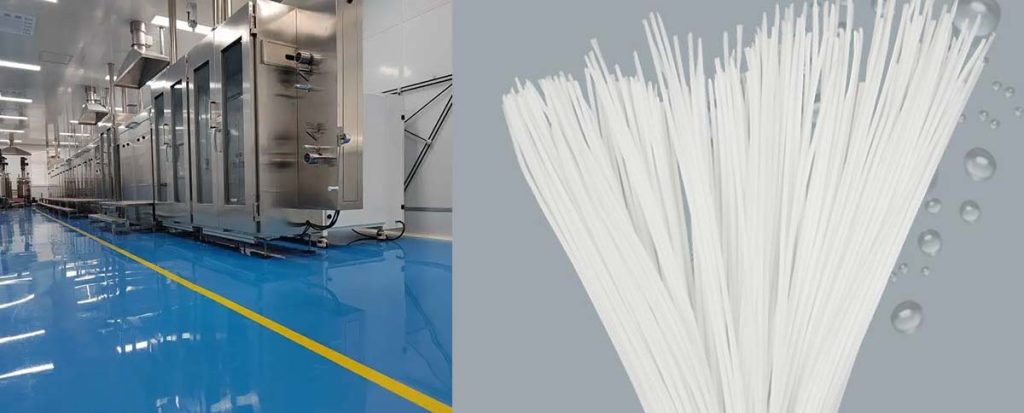
Polysulfone hollow fiber membrane plays a vital role in biotechnology because it combines exceptional mechanical strength, chemical stability, and thermal resistance with outstanding filtration performance. Manufacturers use hollow fiber spinning machine to produce these membranes for critical processes in medical and healthcare, food and beverage, and industrial processing. Polysulfone hollow fibers maintain integrity under demanding conditions, making them indispensable for blood purification devices, clarification systems, and separation units. The unique structure of hollow fiber membranes allows efficient and reliable operation, supporting the growing needs of biotechnology sectors.
Key Takeaways
- Polysulfone hollow fiber membrane offers strong mechanical strength, chemical resistance, and thermal stability, making them reliable for tough biotechnology processes.
- The membrane provides excellent filtration performance with adjustable pore sizes, supporting efficient cell retention and nutrient exchange in bioreactors.
- The high biocompatibility reduces risks like blood clotting, improving safety and outcomes in medical uses such as hemodialysis.
- Advanced manufacturing with hollow fiber spinning machine ensures consistent quality and scalable production for drug delivery and vaccine manufacturing.
- Effective fouling control and cleaning methods help maintain membrane performance, extending lifespan and reducing costs in large-scale bioprocessing.
Key Properties
Mechanical Strength
Polysulfone hollow fibers display remarkable mechanical strength, which is essential for demanding biotechnology applications. These fibers withstand high pressures and repeated cycles in filtration and separation processes. The robust structure of the polysulfone hollow fiber membrane ensures long-term durability, even during large-scale production in the pharmaceutical industry. Manufacturers rely on hollow fiber spinning machine to produce membranes with consistent wall thickness and uniform pore distribution. This mechanical resilience supports the use of hollow fiber filters in biopharmaceutical process steps, where stability and reliability are critical.
Chemical & Thermal Stability
Polysulfone hollow fibers offer broad chemical resistance, making them suitable for a wide range of biotechnology applications. These membranes remain stable in polar solvents such as alcohols, ketones, and esters, as well as in non-polar solvents like hydrocarbons. They resist acids, bases, and many common chemicals, maintaining their structure under typical biotechnological conditions. However, prolonged exposure to chlorinated hydrocarbons or strong oxidizing agents may cause swelling or degradation. Polysulfone membranes also tolerate various sterilization methods, including thermal, steam-thermal, ethylene oxide, and ionizing radiation, without losing integrity. This stability allows for repeated cleaning and sterilization, which is vital for water purification, vaccine production, and other sensitive processes.
Note: The chemical and thermal stability of polysulfone hollow fiber membrane enables their use in environments where other materials might fail, ensuring consistent performance in both laboratory and industrial settings.
Filtration Performance
Filtration efficiency stands as a defining feature of polysulfone hollow fiber membrane. The membrane typically has nominal pore sizes ranging from several hundred kilo-Daltons up to 0.65 micrometers, which suits them for perfusion cell culture systems and cell retention. The mean pore sizes, often between 26.8 nm and 33.2 nm, can be adjusted during fabrication by modifying the polyethylene glycol content. This flexibility allows for precise control over permeability and selectivity, balancing high filtration rates with low protein leakage. In bioreactor applications, polysulfone hollow fibers modified with charcoal-carbon nanomaterials achieve pure water flux rates of about 196.3 liters per square meter per hour. Such high water permeability supports efficient mass-transfer, which is crucial for cell growth, oxygenation, and nutrient delivery in hollow fiber bioreactors.
- Filtration Performance Table
| Property | Typical Value/Range |
|---|---|
| Nominal Pore Size | 100 kDa – 0.65 μm |
| Mean Pore Size | 26.8 nm – 33.2 nm |
| Pure Water Flux | ~196.3 LMH (liters/m²/hour) |
| Mass-Transfer Efficiency | High |
The advanced design of hollow fiber spinning machine ensures that each membrane achieves optimal pore structure and uniformity, supporting consistent filtration and mass-transfer in every batch.
Biocompatibility
Polysulfone hollow fibers have become the material of choice for many medical and cell culture applications due to their excellent biocompatibility. In hemodialysis, polysulfone hollow fiber membrane demonstrates low platelet activation, which reduces the risk of blood clotting and inflammation. Products like TORAYLIGHT NV, which use hydrophilic polysulfone hollow fibers with a special polymer coating, show even lower platelet activation and improved hemodynamic stability during dialysis. These benefits translate into fewer complications and better outcomes for patients.
- Key biocompatibility highlights:
- Widely used in hemodialysis for chronic renal failure patients.
- Hydrophilic polysulfone hollow fibers reduce platelet activation and improve clinical outcomes.
- In vitro studies show enhanced cell viability and proliferation when using polysulfone/graphene oxide composite membranes.
- Lower protein adsorption and platelet adhesion minimize inflammatory responses.
Surface modifications, such as air plasma treatment, further enhance the biocompatibility of polysulfone hollow fibers. These treatments introduce hydrophilic functional groups, increasing water absorption and reducing protein fouling. Nitrogen plasma treatment also enlarges pore size and broadens pore distribution, which stabilizes with longer exposure. Blending polysulfone with additives like polyvinylpyrrolidone or vitamin E derivatives improves hydrophilicity and reduces oxidative stress, making these membranes even more suitable for blood-contacting and cell culture applications.
Tip: Hydrophilic polysulfone hollow fibers, produced with hollow fiber spinning machine, offer superior performance in both filtration and biocompatibility, supporting the development of safer and more effective biopharmaceuticals.
Main Uses in Biotechnology
Blood Purification
Blood purification stands as one of the most important applications for polysulfone hollow fiber membrane in biotechnology. These membranes provide high hydraulic permeability and excellent sieving coefficients, which support efficient removal of toxins and waste from blood. The hydrophilic nature of polysulfone hollow fibers reduces bubble formation and embolism risk, making them safer for patients. Clinical studies show that devices using these membranes, such as the FX CorAL dialyzer, deliver consistent dialysis performance with low rates of adverse events. The negative surface charge and asymmetric structure of the membrane help reduce protein adhesion and clotting, improving blood compatibility. Hollow fiber spinning machine allows scalable production of these membranes, supporting both reusable and single-use blood purification devices.
| Feature/Property | Polysulfone Hollow Fiber Membranes | Other Membrane Materials |
|---|---|---|
| Water Contact Angle | 81.3° (hydrophilic) | 94.5° (hydrophobic) |
| Blood Compatibility | High | Lower |
| Risk of Embolism | Low | Higher |
| Mechanical Stability | Strong | Weaker |
Note: Homogeneous blood and dialysate flow in hollow fiber bundles ensures reliable toxin removal and supports high blood flow rates, which is essential for treating end-stage kidney disease.
Biopharmaceutical Production
Polysulfone hollow fiber membrane systems play a central role in the production of biopharmaceuticals, including monoclonal antibodies and vaccines. These membranes support high cell density cultures in hollow fiber bioreactors, enabling continuous harvesting and efficient cell retention. The high surface area to volume ratio allows rapid nutrient and waste exchange, which is critical for large-scale production. Companies use hollow fiber spinning machine to produce membranes with precise pore sizes, supporting selective retention of valuable biomolecules. The pharmaceutical industry benefits from the chemical resistance and mechanical strength of polysulfone, which ensures durability during long production runs.
| Role/Feature | Description |
|---|---|
| Filtration Performance | High accuracy, supports high cell density and continuous harvest |
| Process Application | Used in perfusion bioreactors for antibody and vaccine production |
| Advantages | Less prone to clogging, supports higher yields than centrifugation |
| Industry Use | Enables yields >86 g/L in 30 days (e.g., WuXi Biologics) |
Cell & Gene Therapy
Cell and gene therapy manufacturing relies on polysulfone hollow fiber membrane for gentle, efficient processing of sensitive cell products. Hollow fiber bioreactors create a closed, automated environment that supports high-density expansion of cells like CAR-T cells. The membrane structure allows for laminar flow and low shear rates, preserving cell viability and potency. These membranes enable efficient nutrient delivery and waste removal, supporting continuous perfusion and precise control of the extracellular environment. The ability to customize porosity and permeability through hollow fiber spinning machine makes these membranes ideal for cell retention and viral vector purification. Compared to flat-sheet membranes, hollow fiber membranes offer superior concentration and diafiltration for active virus particles, supporting robust drug delivery systems.
- Polysulfone hollow fiber membrane supports high cell densities and continuous expansion.
- Closed systems reduce contamination risk and batch variability.
- Tunable membrane properties enable efficient cell retention and product recovery.
Gas Separation
Gas separation represents another key application in biotechnology, especially for oxygenation and carbon dioxide removal in bioreactor systems. Polysulfone hollow fiber membrane, especially when modified with amine-functionalized nanofillers, shows improved selectivity and permeability for gases like CO2 and O2. These membranes enable bubbleless membrane oxygenation, which is critical for shear-sensitive cell cultures. The hydrophilic nature of polysulfone allows oxygen transfer through liquid-filled pores, supporting efficient oxygenation and mass-transfer in water-based bioprocesses. Membrane-based contactors using polysulfone hollow fibers provide stable, long-term operation due to their chemical and mechanical stability. The high surface area to volume ratio and modular design support flexible scale-up for large-scale production.
| Property | Value/Description |
|---|---|
| CO2 Permeability | 4.25 barrer |
| CO2/N2 Selectivity Improvement | 89.75% increase compared to neat PSf membrane |
| Mechanism | Facilitated CO2 transport via amine groups |
Tip: Membrane-based contactors using polysulfone hollow fiber membrane enable precise oxygenation and gas exchange, supporting advanced drug delivery systems and efficient bioreactor operation in biotechnology applications.
Benefits Over Other Membranes
Robustness
Polysulfone hollow fiber membrane stands out in biotechnology due to the exceptional robustness. Compared to polyethersulfone and cellulose-based membranes, polysulfone hollow fibers maintain structural integrity under high pressure and repeated use. This durability supports demanding applications such as drug delivery systems, water purification, and large-scale production of biopharmaceuticals. The following table highlights key differences in membrane properties:
| Property | Polysulfone Hollow Fiber Membranes | Polyethersulfone Membranes | Cellulose Nanocrystal-Reinforced PES Membranes |
|---|---|---|---|
| Morphology | Hollow fiber structure | Dense, homogeneous surface | Cylindrical pores, increased porosity |
| Porosity | Not specified | Lower baseline | Increased with CNCs, reduced by TEOS |
| Hydrophilicity | Not directly measured | Less hydrophilic | Improved with CNCs |
| Mechanical Strength | High, composite formation possible | Baseline | Enhanced with CNCs and TEOS |
| Robustness Summary | Well-studied, highly durable | Baseline | Improved with additives |
Polysulfone hollow fiber membrane resists degradation from harsh chemicals and temperature changes. The mechanical strength reduces the frequency of maintenance and replacement, which lowers operational costs in industrial drug delivery and water treatment applications. Membrane modifications, such as amine functionalization, further enhance antifouling properties and extend lifespan.
Note: The robust nature of polysulfone hollow fiber membrane aligns with green manufacturing trends by minimizing waste and supporting sustainable drug delivery systems.
Scalability
Scalability remains a critical advantage for polysulfone hollow fiber membrane in biotechnology. Advanced hollow fiber spinning machine techniques, such as co-extrusion and dry-jet wet spinning, enable the efficient production of defect-free membranes. These methods support large-scale production for applications in vaccine production, drug delivery, and hollow fiber bioreactors. Manufacturers can incorporate functional additives, like amine-functionalized bimetallic MOFs, to improve tensile strength and selectivity for gas separation and water treatment.
- Polysulfone hollow fiber membrane produced with advanced spinning machines shows enhanced mechanical strength.
- The fabrication process allows for consistent quality, supporting reliable drug delivery systems and biopharmaceutical process applications.
- Improved membrane performance enables efficient cell retention, mass-transfer, and oxygenation in hollow fiber bioreactors.
Scalable production ensures that biotechnology companies can meet growing demands for drug delivery and water purification without sacrificing membrane quality.
Cost-Effectiveness
Cost-effectiveness defines another key benefit of polysulfone hollow fiber membrane. The long lifespan and resistance to fouling reduce the need for frequent replacement, which saves money in drug delivery and water treatment operations. The durability of these membranes means fewer interruptions in production, supporting continuous delivery of biopharmaceuticals and other critical drugs. Compared to other membrane materials, polysulfone hollow fibers offer a balance of performance and affordability, making them ideal for a wide range of applications in biotechnology.
Membrane-based contactors using polysulfone hollow fiber membrane provide reliable oxygenation and mass-transfer for drug delivery systems. The combination of robust mechanical properties, scalable production with hollow fiber spinning machine, and low maintenance requirements delivers significant economic value to the pharmaceutical industry.
Tip: Choosing polysulfone hollow fiber membrane for drug delivery systems and water purification applications ensures long-term savings and reliable performance in biotechnology.
Challenges & Solutions
Fouling Control
Fouling remains a major challenge for polysulfone hollow fiber membrane systems in biotechnology. During bioprocessing, membranes experience flux decline due to several fouling mechanisms. These include adsorption, deposition, and cake formation. Organic, inorganic, and biological fouling types often occur, leading to gel formation, pore blockage, and reduced filtration efficiency. Operators must understand these mechanisms to maintain optimal membrane performance in applications like drug production and cell retention.
To address fouling, researchers have developed several strategies. Physical methods such as heat and plasma treatments help reduce foulant buildup on the membrane surface. Hydrophilization, achieved by adding hydrophilic additives like polyvinylpyrrolidone or polyethylene glycol during membrane fabrication, increases surface hydrophilicity. This modification inhibits contaminant adhesion and improves hydraulic permeability. Incorporating hydrophilic nanoparticles or grafting hydrophilic polymers onto the membrane further enhances fouling resistance. These advances, supported by hollow fiber spinning machine, ensure reliable operation in large-scale production and biopharmaceutical process steps.
Cleaning Methods
Effective cleaning protocols are essential for maintaining the performance of polysulfone hollow fiber membrane in biotechnology. Operators commonly use alkaline cleaning agents such as caustic soda (NaOH) for sanitization. A typical protocol involves treating the membrane with 0.5 N NaOH at 45°C for 30 minutes. This process increases the net negative charge on the membrane and helps restore permeability. However, alkaline agents alone may not fully recover flux.
Acidic cleaning agents, such as oxalic acid and sodium hypochlorite, can remove stubborn fouling more effectively. Combining surfactants like SDS and chelating agents such as EDTA with chemical cleaning improves results. Physical methods, including air flushing and backwashing, provide additional support but cannot address irreversible fouling alone. Chemical cleaning remains critical for restoring membrane selectivity and ensuring consistent filtration in drug delivery and vaccine production.
Tip: Standardized cleaning protocols help maintain membrane function and extend the lifespan of hollow fiber membranes in biopharmaceuticals and other biotechnology applications.
Regulatory Aspects
Regulatory compliance plays a significant role in the use of polysulfone hollow fiber membrane for biotechnology. Agencies require strict validation of cleaning and fouling control methods to ensure product safety, especially in drug and vaccine production. Membrane-based contactors and hollow fiber bioreactors must meet standards for aseptic operation and material biocompatibility. Advances in hollow fiber spinning machine support the production of membranes that meet these regulatory demands. Manufacturers must document all cleaning procedures and demonstrate consistent membrane performance throughout the product lifecycle. Meeting these requirements ensures safe and effective drug delivery and supports the growth of the pharmaceutical industry.

Conclusion
Polysulfone hollow fiber membrane remains essential in biotechnology. The strength, stability, and filtration support a wide range of applications, from drug delivery systems to hollow fiber bioreactors. Membranes enable efficient cell retention, oxygenation, and mass-transfer in large-scale production. Ongoing innovations, such as the use of nanofillers and hollow fiber spinning machine, continue to expand the performance and application range of membranes. The table below highlights future trends that will shape biotechnology:
| Innovation | Effect on Membranes | Application Impact |
|---|---|---|
| Nanofillers (e.g., ZIF-8) | Improved selectivity, anti-fouling, durability | Broader biotechnology applications, better separations |
| Mixed Matrix Membranes | Enhanced stability and permeability | More efficient bioreactor and environmental uses |
| Tailored Morphology | Optimized flux and separation | Multifunctional membranes for diverse applications |
These advances will drive greater efficiency, scalability, and product quality in biotechnology applications.