


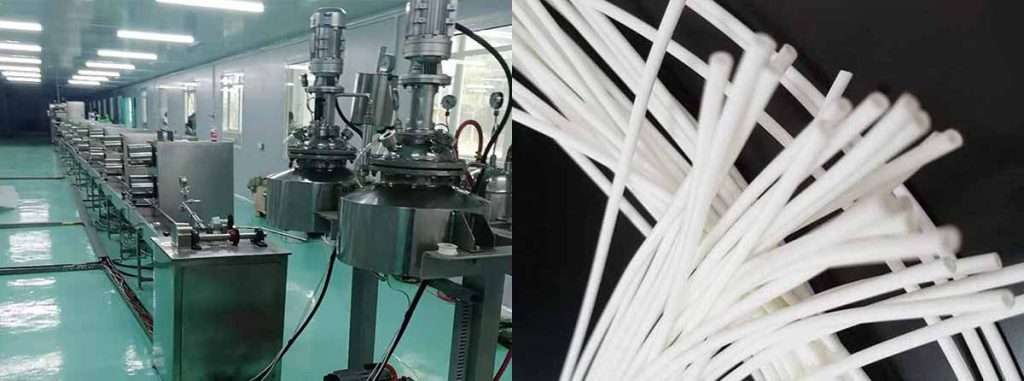
Recent breakthroughs in hollow fiber spinneret design have transformed the production of hollow-fiber membranes for bioreactor applications. Engineers now achieve precise pore size control, which directly affects membrane performance. Advanced materials like PVDF and PES improve the consistency of hollow-fiber membranes. The table below shows how membrane diameter and thickness vary with material type, highlighting improved uniformity:
| Membrane | Diameter (mm) | Standard Deviation (mm) | Thickness (mm) | Standard Deviation (mm) |
|---|---|---|---|---|
| PES | 2.13 | 0.10 | 0.14 | 0.01 |
| PVDF | 2.28 | 0.30 | 0.15 | 0.02 |
| 10PVDF | 1.98 | 0.13 | 0.12 | 0.01 |
| 20PVDF | 2.00 | 0.47 | 0.14 | 0.01 |
| 30PVDF | 2.14 | 0.03 | 0.14 | 0.01 |
| 40PVDF | 1.91 | 0.20 | 0.15 | 0.03 |
| 60PVDF | 1.65 | 0.11 | 0.11 | 0.01 |
| 70PVDF | 2.29 | 0.18 | 0.13 | 0.04 |
| 80PVDF | 2.14 | 0.13 | 0.14 | 0.01 |
| 90PVDF | 2.08 | 0.21 | 0.12 | 0.02 |
Innovative manufacturing technique and hollow fiber spinning machine enable these advances, leading to hollow-fiber membranes with improved pore structure and enhanced bioreactor efficiency.
Key Takeaways
- Recent advancements in hollow fiber spinneret design enhance membrane performance for bioreactor applications.
- Engineers achieve precise pore size control, improving separation efficiency and membrane durability.
- Advanced materials like PVDF and PES increase chemical stability, extending the lifespan of membranes.
- Innovative manufacturing techniques enable scalable production, meeting the growing demand for high-quality membranes.
- Ongoing research focuses on sustainable materials and technologies to address challenges in membrane efficiency.
Spinneret Design Basics
Role in Membranes
Hollow fiber spinneret serves as the foundation for producing high-performance membranes. Engineers design spinnerets with concentric precision, which maintains exact alignment between the inner and outer components. This alignment prevents uneven wall thickness and ensures consistent fiber geometry. Orifice size in the spinneret determines the outer diameter, lumen diameter, and wall thickness of each membrane. These factors directly influence permeability, strength, and overall membrane separation efficiency.
Material compatibility also plays a vital role. Spinnerets made from corrosion-resistant materials such as stainless steel or titanium withstand harsh chemical environments and maintain durability. The table below summarizes key design features:
| Key Design Feature | Description |
|---|---|
| Concentric Precision | Maintains exact alignment for consistent fiber geometry and wall thickness. |
| Orifice Size | Controls membrane diameter, lumen size, and wall thickness for optimal separation performance. |
| Material Compatibility | Uses corrosion-resistant materials to ensure long-term membrane reliability. |
Spinneret configuration, rheological behavior, and flow angles influence the structure and function of membranes. Dual-layer spinnerets enable the creation of composite membranes with distinct properties, enhancing membrane separation capabilities. Bore fluid type and spinning process parameters affect porosity and wall thickness, which determine the transport and separation characteristics of membranes.
Tip: Engineers adjust spinneret design and spinning parameters to optimize membrane structure for specific separation tasks.
Bioreactor Applications
Hollow fiber membranes produced with advanced spinneret designs support a wide range of bioreactor applications. These membranes provide controlled environments for cell expansion, biologics production, tissue engineering, and regenerative medicine. Spinneret design ensures that membranes possess the necessary porosity, diameter, and wall thickness for efficient nutrient and gas exchange.
- Cell expansion uses membranes to grow therapeutic proteins, cells for therapy, and vaccines.
- Biologics production relies on hollow fiber membranes to maintain a stable environment for monoclonal antibody growth.
- Tissue engineering benefits from membranes that create three-dimensional cell cultures.
- Regenerative medicine depends on membranes for expanding stem cells and developing advanced therapies.
Membrane separation processes in bioreactors depend on the precise structure provided by spinneret design. Engineers select spinneret features to match the requirements of each application, ensuring optimal membrane performance and reliable separation.
Innovations in Hollow Fiber Spinneret Design
Advanced Materials
Researchers have introduced advanced materials into hollow fiber spinneret design, transforming hollow-fiber membrane fabrication. These materials include polyvinylidene fluoride (PVDF), polyethersulfone (PES), and biopolymers. The hollow fiber spinning machine enables simultaneous creation of composite fibers, reducing costs and increasing efficiency. Advanced materials allow the preparation of composite fibers with non-electrospinnable polymers, facilitate core-sheath fibers for controlled drug delivery, and protect bioactive agents from chemical modifications.
The table below compares traditional and advanced materials in membrane production:
| Feature | Traditional Materials | Advanced Materials |
|---|---|---|
| Production Process | Two-stage process | Simultaneous creation |
| Cost | Higher | Half the price |
| Efficiency | Lower | Higher throughput |
| Waste Minimization | Less optimized | Optimized processes |
The newly developed asymmetric hollow fiber membrane substrate demonstrates improved oxygen permeation and mechanical strength. By using different materials and microstructures in various layers, engineers achieve a balance between robustness and gas transport efficiency. Dense, crosslinked membranes offer gas selectivity and durability, while entirely crosslinked membranes provide resistance to harsh solvents and high water flux. These innovations support advanced filtration and purification technologies.
Note: Advanced materials in hollow fiber spinneret design enhance chemical and mechanical stability, making membranes suitable for demanding applications.
Channel-Type Spinnerets
Channel-type spinnerets represent a major innovation in hollow fiber spinneret. Engineers adjust entrance angles and channel diameters to control shear power, velocity, and pressure during hollow-fiber membrane fabrication. A lower entrance angle, such as 8°, increases shear power and promotes efficient solution flow, resulting in improved membrane performance. Smaller exit channel diameters enhance cooling of the fluid filament, which improves membrane quality.
- Lower entrance angles increase shear power and solution flow.
- Smaller channel diameters improve cooling and membrane structure.
- Polyethylene glycol (PEG) addition increases permeability and porosity.
- Variations in spinneret design affect flow dynamics and mechanical properties.
The hollow fiber spinning machine allows precise control over these parameters, leading to membranes with optimized pore size distribution and selectivity. Slot-shaped pores, created by innovative spinneret designs, yield higher permeate flux compared to circular pores at the same rejection ratios. Engineers use performance models to predict how pore size and shape influence permeability and selectivity.
Static Mixers
Static mixers have become essential components in hollow fiber spinneret design. They improve melt homogeneity and uniformity, which are crucial for membrane performance. The hollow fiber spinning machine integrates static mixers to ensure a homogeneous melt, resulting in better processability and mechanical properties of spun fibers.
| Evidence | Description |
|---|---|
| Role of Static Mixers | Static mixers improve melt homogeneity and uniformity, which are crucial for membrane performance. |
| Importance of Homogeneous Melt | A homogeneous melt is essential for good processability and mechanical properties of spun fibers. |
| Mixing in Extruders | Mixing in a single-screw extruder is poor, necessitating the use of static mixers for better melt stream uniformity. |
| Evidence | Description |
|---|---|
| Stability of Polymer Outflow | The stability of polymer outflow in the spinneret is key to determining the quality of the nanofiber membrane. |
| Flow Distribution Uniformity | Uniform flow distribution is critical for ensuring the performance of multi-needle electrospinning. |
| Simulation of Polymer Flow | Finite element analysis simulates polymer flow, providing guidance for optimizing spinneret design. |
Membranes produced with static mixers show enhanced ozone mass transfer coefficients, up to 70% higher than conventional hollow fiber membranes. The specific photocatalytic degradation rate of methylene blue improves by 50% with static mixer membranes. These membranes integrate the functions of a membrane contactor and a static mixer, and the PVDF matrix can be enhanced with TiO2 particles for photocatalytic applications.
Blend Solutions
Blend solutions, such as PVDF/PES, have revolutionized hollow-fiber membrane fabrication. Engineers blend polymers to alter membrane characteristics, including selectivity, plasticization, and mechanical properties. The hollow fiber spinning machine enables precise mixing of blend solutions, resulting in membranes with improved solute rejection and water flux.
- Blending PVDF into PEI spinning dope enhances surface properties and CO2 removal performance.
- The concentration of surface modifying macromolecules affects hydrophobicity and gas permeability.
- Blending polymers changes membrane selectivity and plasticization, impacting overall performance.
- PVDF/PMMA blends show enhanced elastic properties compared to pure PVDF membranes.
- PVC blends improve mechanical properties and separation performance.
Engineers use blend solutions to tailor membrane properties for specific applications, such as gas separation, water purification, and bioreactor processes. Variations in pore sizes and shapes, achieved through blend solutions and spinneret design, significantly affect membrane performance, including permeability and selectivity.
Tip: Engineers optimize blend solutions and spinneret parameters to produce membranes with desired pore size distribution and mechanical strength.
Hollow Fiber Spinning Machine Advances
Manufacturing Precision
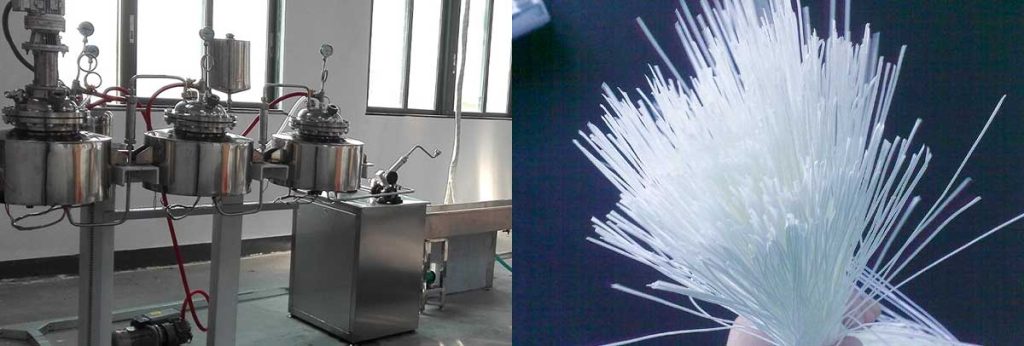
Hollow fiber spinning machine has transformed the production of membranes by introducing advanced precision controls. Engineers use automated systems to regulate dope flow, spinneret alignment, and temperature, which results in consistent membrane geometry and pore structure. The evolution of these machines can be traced through three main phases:
- Pioneering Phase (1960s-1980s): Focused on basic process development for membranes.
- Optimization Phase (1980s-2000s): Improved fiber morphology and membrane performance.
- Innovation Phase (2000s-present): Emphasizes novel materials, hybrid techniques, and automated precision control.
Manufacturers assess precision using metrics such as mechanical strength, burst pressure, and fatigue resistance. Standardized testing protocols like ASTM D6908, ASTM D3923, and ISO 13758 ensure membrane integrity and reliability. The introduction of triple-orifice spinneret designs allows the hollow fiber spinning machine to produce multi-layer membranes with tailored properties. Surface smoothness and dope flow symmetry, achieved through CNC technology, guarantee micron-level accuracy. This precision leads to uniform pore architectures and fiber wall thickness, which are essential for high-performance membranes in filtration and medical textiles.
Key milestones in manufacturing precision include:
- Development of the first commercial hollow fiber membranes by Dow Chemical in the 1970s.
- Introduction of asymmetric membrane structures in the 1980s.
- Breakthroughs in spinneret design for multi-layer fiber production.
Note: Precision in the hollow fiber spinning machine directly impacts membrane quality and consistency.
Scalability
Advancements in hollow fiber spinning machine have enabled scalable production of membranes for diverse applications. Increased automation and digitalization enhance production efficiency and minimize downtime. Integration of IoT systems allows real-time monitoring and predictive maintenance, which supports continuous operation and high output. Customization and modular designs provide tailored solutions for specific membrane requirements.
Energy-efficient spinning machines align with sustainable manufacturing practices, reducing resource consumption while maintaining high throughput. The hollow fiber spinning machine supports various spinning methods, including electrospinning and dry-wet spinning, which offer unique benefits:
| Spinning Method | Key Benefits |
|---|---|
| Electrospinning | Produces ultrathin layers with high specific area and uniform pore size. |
| Dry-Wet Spinning | Enables high production speeds (5 – 50 m/min) and tailored membrane properties. |
Braid reinforcement in membranes increases ultrafiltration and microfiltration flux due to thinner selective layers, which allows higher pressure tolerance. The hollow fiber spinning machine produces membranes with diameters ranging from 200 to 5000 micrometers, meeting the needs of various industries. Recent advances in design and construction have improved both production speed and membrane quality, supporting large-scale deployment in water treatment, bioreactors, and medical devices.
Tip: Scalability in membrane production depends on the versatility and efficiency of the hollow fiber spinning machine.
Performance Impact on Membranes
Mass Transfer
Mass transfer stands as a critical factor in the effectiveness of membranes used in bioreactors, wastewater, and dialysis applications. Spinneret design shapes the morphology and mechanical properties of hollow-fiber membranes, which directly influences mass transfer rates. Engineers adjust dope viscosity and the air gap within the spinneret to control the flow rates during membrane formation. These adjustments determine the structure and efficiency of mass transfer across the membrane.
- Spinneret design impacts the structure and mechanical properties of hollow-fiber membranes.
- Dope viscosity and air gap settings affect mass transfer rates.
- Flow rate control during spinning shapes membrane structure and mass transfer efficiency.
Membranes with optimized pore size and uniform geometry allow for faster and more selective transport of molecules. In wastewater treatment and nanofiltration, high mass transfer rates enable rapid removal of contaminants and efficient separation of solutes. Dialysis membranes with precise transport properties support effective toxin removal and fluid balance in medical treatments. Membrane properties such as porosity, thickness, and surface area all contribute to the overall transport performance.
Note: Engineers use advanced spinneret designs to fine-tune membrane properties, achieving higher mass transfer rates for applications like water treatment, nanofiltration, and dialysis.
Fouling Resistance
Fouling remains a major challenge in the operation of membranes, especially in wastewater and nanofiltration systems. Membrane fouling occurs when particles, microorganisms, or organic matter accumulate on the membrane surface or within its pores. This buildup reduces membrane performance, increases energy consumption, and shortens operational lifespan.
Engineers address fouling by designing spinnerets that create membranes with smoother surfaces and tailored pore structures. These properties reduce the likelihood of foulant attachment and make cleaning easier. The use of blend solutions, such as PVDF/PES, enhances surface hydrophilicity and decreases fouling rates. In wastewater treatment, membranes with improved fouling resistance maintain higher flux and require less frequent cleaning.
Membranes with anti-fouling properties also benefit nanofiltration and dialysis processes. In nanofiltration, reduced fouling leads to more stable solute rejection and longer operational cycles. Dialysis membranes with low fouling rates ensure consistent toxin removal and patient safety. Engineers continue to develop new materials and spinneret designs to further improve fouling resistance in all membrane applications.
Tip: Selecting the right spinneret design and blend solution can significantly enhance fouling resistance, improving the reliability and efficiency of membranes in wastewater, nanofiltration, and dialysis.
Longevity
The longevity of membranes depends on their ability to withstand physical, chemical, and biological stresses over time. Common failure modes in hollow-fiber membranes include macrovoids, which are large elongated pores that weaken structural integrity. These defects often appear under high pressure or vibration, especially in demanding environments like wastewater treatment and nanofiltration.
Spinneret design plays a crucial role in reducing these failure modes. By controlling molecular orientation and membrane morphology, engineers minimize the formation of macrovoids and other defects. Membranes with uniform wall thickness and optimized properties show greater resistance to fatigue, pressure, and chemical attack. This durability extends the service life of membranes in water treatment, dialysis, and industrial nanofiltration.
Environmental and economic impacts also influence membrane longevity. Advanced spinneret designs support the use of bio-based polymers and green solvents, reducing the environmental footprint of membrane production. The table below summarizes key environmental impacts associated with large-scale membrane manufacturing:
| Environmental Impact | Description |
|---|---|
| Global Warming | Contribution of membrane production to greenhouse gas emissions. |
| Marine Ecotoxicity | Potential harm to marine ecosystems from membrane waste. |
| Human Toxicity | Risks to human health from chemicals used in membrane fabrication. |
| Land Use Potential | Land requirements for raw material sourcing and production facilities. |
| Fossil Resource Scarcity | Depletion of non-renewable resources in membrane manufacturing. |
| Bio-based Polymers | Benefits of replacing fossil-based polymers with renewable alternatives. |
| Green Solvents | Advantages of using non-toxic, environmentally friendly solvents. |
| Hot Spots | Critical stages in production that contribute most to environmental impact. |
| Mitigation Measures | Strategies to reduce the environmental footprint of membrane production. |
Large-scale production faces challenges such as process optimization for electrospinning, disposal costs of traditional solvents, and clogging in spinneret nozzles. Engineers address these issues by refining spinneret designs and adopting sustainable materials. Membranes with enhanced longevity reduce replacement frequency, lower operational costs, and minimize environmental impact.
Callout: Membranes with improved longevity and optimized properties support sustainable wastewater, nanofiltration, and dialysis operations, benefiting both industry and the environment.
Future Trends
Ongoing Research
Researchers continue to explore new ways to improve membranes for desalination and bioreactor applications. Many teams focus on developing membranes with higher selectivity and permeability. They test new polymers and blends to create membranes that can withstand harsh conditions in seawater desalination. Scientists also study how to reduce fouling in membranes, which remains a major issue in desalination and nanofiltration processes. Some projects investigate bio-inspired membranes that mimic natural filtration systems. These efforts aim to produce membranes that last longer and require less maintenance. In chemical engineering, ongoing research looks at how to scale up the production of advanced membranes for large desalination plants.
Emerging Technologies
Several emerging technologies promise to change the future of membranes. 3D printing allows engineers to design spinnerets with complex shapes, leading to membranes with unique pore structures. Artificial intelligence helps optimize membrane fabrication by predicting the best conditions for spinning and blending. New surface modification techniques improve the anti-fouling properties of membranes, making them more effective in desalination and seawater desalination. Nanomaterials, such as graphene and carbon nanotubes, enhance the strength and selectivity of membranes. These technologies support the development of membranes that can handle higher pressures and more demanding environments. As a result, desalination plants can operate more efficiently and produce cleaner water.
Challenges
Despite progress, several challenges slow further innovation in hollow fiber spinneret design for membranes. Engineers face manufacturing constraints because non-circular designs require major changes to existing processes. Scaling up production while maintaining geometric precision becomes difficult as volume increases. Material compatibility issues also arise, as producing non-circular hollow fibers costs 30-45% more than conventional designs. Regulatory barriers exist because current standards focus on traditional geometries, making it hard for new membranes to enter the market. The table below summarizes these challenges:
| Challenge Type | Evidence Description |
|---|---|
| Manufacturing Constraints | Significant modifications to existing manufacturing processes are required to accommodate non-circular designs, which complicates production. |
| Scaling Challenges | Maintaining geometric precision during production becomes increasingly difficult as production volume increases, potentially negating efficiency gains. |
| Material Compatibility Issues | The economic assessment indicates that production costs for non-circular hollow fibers exceed those of conventional designs by 30-45%. |
| Regulatory Barriers | Current industry standards are primarily designed for conventional geometries, creating barriers to market entry for novel designs. |
Note: Overcoming these challenges will require collaboration between researchers, manufacturers, and regulatory bodies. Future advances in membranes for desalination and seawater desalination depend on addressing these obstacles.
Conclusion
Recent breakthroughs in hollow fiber spinneret design have improved membranes for bioreactor applications. Engineers use advanced spinneret features and spinning machines to create membranes with precise pore structures and enhanced durability. These innovations increase membrane efficiency and support better mass transfer. Researchers continue to develop membranes that resist fouling and last longer. Future work will focus on new materials and sustainable production methods. The field expects more reliable membranes for water treatment, medical devices, and industrial processes.
Tip: Ongoing research in membrane technology will help solve challenges in bioreactor efficiency and environmental sustainability.
FAQ
What Is the Main Advantage of Hollow Fiber Spinneret Design in Membrane Production?
Engineers use hollow fiber spinneret design to create membranes with precise pore sizes. This control improves separation efficiency and mechanical strength. The design also allows for consistent membrane geometry, which supports reliable performance in bioreactor and filtration applications.
How Do Advanced Materials Affect Membranes Used in Bioreactors?
Advanced materials like PVDF and PES increase the chemical and mechanical stability of membranes. These materials help membranes resist harsh environments and extend their lifespan. Bioreactors benefit from membranes that maintain performance during long-term operation.
Why Is Fouling Resistance Important for Membrane Applications?
Fouling resistance keeps membranes working efficiently by reducing the buildup of particles and microorganisms. Membrane surfaces with tailored pore structures prevent clogging. This feature lowers maintenance needs and helps membranes last longer in wastewater and nanofiltration systems.
Can Hollow Fiber Spinning Machine Improve Membrane Scalability?
Hollow fiber spinning machine allows manufacturers to produce membranes at larger scales. Automated controls and modular designs support high output and consistent quality. These machines help industries meet growing demand for membranes in water treatment and medical devices.
What Are the Environmental Benefits of Using Bio-Based Polymers in Membrane Manufacturing?
Bio-based polymers reduce the environmental impact of membrane production. They replace fossil-based materials and use green solvents. Membranes made with bio-based polymers support sustainable practices and help lower greenhouse gas emissions.