


Hollow fiber membrane modules have changed protein isolation by offering unique technical advantages. These modules provide effective removal of microbiological contaminants, non-chemical separation, and energy efficiency. Sensitive biologics and proteins benefit from gentle, efficient separation with minimal risk of alteration. Advanced manufacturing techniques, such as hollow fiber spinning machine and dry-wet phase inversion, allow precise control over membrane properties. The table below highlights several advantages of hollow fiber membrane modules:
| Advantages of Hollow Fiber Membrane Modules |
|---|
| Effective removal of microbiological contaminants (bacteria, fungi, viruses) |
| Non-chemical separation with no risk of alteration to the composition of filtered fluids |
| An energy-efficient process requiring zero electrical energy |
| Cost-effective filtration system |
| Zero waste generation |
| No need for storage/housing tanks saving industrial floor space |
Hollow fiber membrane modules achieve higher serum protein purity and perform better for combined preconcentration and diafiltration tasks.
Key Takeaways
- Hollow fiber membrane modules provide effective protein isolation by removing contaminants without chemicals, ensuring protein integrity.
- These modules offer high efficiency and low energy consumption, making them cost-effective for both research and industrial applications.
- The design of hollow fiber membranes allows for gentle separation, preserving sensitive proteins and improving recovery rates.
- Operators can optimize performance by monitoring key factors like transmembrane pressure and solution concentration to enhance filtration efficiency.
- Hollow fiber membrane technology supports scalability, making it suitable for both small laboratory experiments and large-scale industrial processes.
How Hollow Fiber Membrane Modules Enable Efficient Separation?
High Surface Area and Low Shear Benefits
Hollow fiber membrane modules provide a high surface-area-to-volume ratio, which is essential for efficient protein separation. Hollow fiber bioreactors demonstrate this advantage, especially in large-scale applications. The design of these modules allows for more contact between the sample and the filtration surface, increasing the rate of separation and improving yield.
Manufacturers use advanced techniques such as the hollow fiber spinning machine and dry-wet phase inversion to create membranes with precise pore sizes and uniform structures. These methods enhance the performance of the membrane module, making them suitable for sensitive protein isolation tasks.
Hollow fiber membrane modules also maintain a low shear environment. This feature is critical for fragile biologics and proteins, as it helps preserve their structure and function during separation. The following points highlight the benefits of low shear:
- Hollow-fiber TFF creates a gentle environment for sensitive proteins, improving both purity and yield.
- Membranes can integrate into downstream processes while maintaining physiological conditions and preventing excessive shear stress.
These characteristics make hollow fiber membrane modules ideal for applications where protein integrity is a priority.
Low Protein Adsorption and Binding
Low protein adsorption is a key advantage of hollow fiber membrane modules. This property reduces protein loss during filtration and increases recovery rates. The table below summarizes findings from several studies on protein adsorption and recovery:
| Study Title | Key Findings | Protein Adsorption Capacity | Recovery Rate |
|---|---|---|---|
| Protein Adsorption onto Tentacle Cation-Exchange Hollow-Fiber Membranes | High protein adsorption capacity with significant recovery | 40-45 mg BSA/ml membrane | Up to 90% recovery in desorption experiments |
| Zinc ion-promoted adsorption of lysozyme to Cibacron Blue F3GA-attached microporous polyamide hollow-fiber membranes | Non-specific adsorption and enhanced capacity with Cibacron Blue | 1.8 mg g−1 (non-specific), 63.2 mg g−1 (Cibacron Blue), 144.2 mg g−1 (Zn(II) chelated) | Up to 97% elution in specific conditions |
| Role of tentacles and protein loading on pore accessibility and mass transfer | Evaluated behavior of different cation exchangers | N/A | N/A |
Hollow fiber membrane modules show a 45.8% reduction in protein adsorption compared to traditional membranes. The protein adsorption decreases from 54.6 μg/cm² to 29.6 μg/cm², demonstrating superior anti-protein adsorption properties. This improvement means that more protein remains available for downstream applications, making the separation process more efficient.
Physical Barrier Mechanism of Hollow Fiber Membrane
The ultrafiltration layer in hollow fiber membrane modules acts as a physical barrier. This barrier retains high molecular weight proteins within the fiber lumen, allowing only smaller molecules, ions, and gases to pass through. This selective permeability is crucial for protein separation, as it concentrates the desired proteins and removes smaller impurities.
Several experiments support the effectiveness of this physical barrier mechanism:
- Gas–liquid polymeric membrane contactors use a porous membrane as a physical barrier to facilitate selective separation of gases like CO2.
- The physical barrier allows the liquid phase to capture CO2 from a gas mixture, effectively removing it as it is absorbed.
- Membrane separation techniques using polymeric hollow fiber membranes offer reduced energy consumption and compact unit sizes.
Hollow fiber membrane modules use this physical barrier to achieve high selectivity and purity in protein separation processes. The combination of advanced manufacturing, low protein adsorption, and a selective barrier makes hollow fiber membrane technology a leading choice for modern filtration and separation applications.
Advantages Over Traditional Protein Separation Methods
Enhanced Efficiency and High Flux
Hollow fiber membrane modules deliver higher efficiency and flux compared to traditional protein separation techniques. The design of the membrane maximizes the available surface area, which increases the rate of filtration and reduces processing time. Operators observe that these modules maintain consistent performance even when handling large volumes. The cost benefits also stand out. Capital expenses for modules remain low, with estimates around $0.019 per cubic meter. Operation and maintenance costs average $0.045 per cubic meter. These savings make hollow fiber membrane attractive for both research and industrial protein purification.
Tip: The longer service life and reduced need for chemical cleaning lower ongoing expenses and environmental impact.
Scalability and Versatility
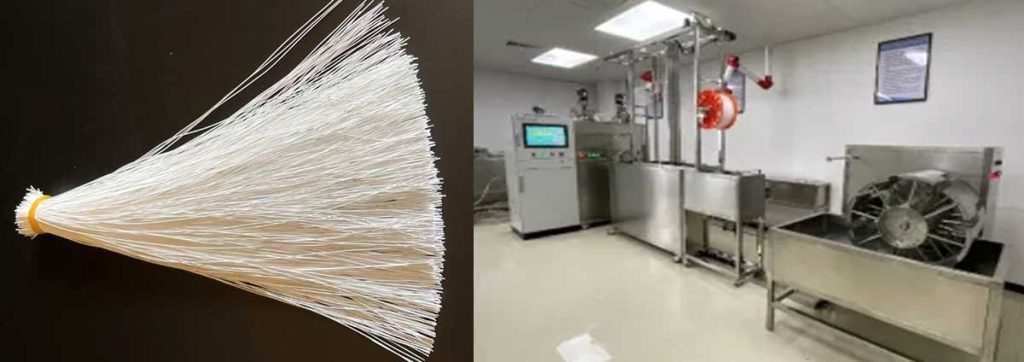
Hollow fiber membrane modules support seamless scalability from laboratory experiments to full-scale industrial protein purification. Their modular design allows users to customize systems for specific needs. Researchers and manufacturers benefit from precise control over filtration parameters, which ensures consistent results across different scales.
- Modular design supports easy customization.
- Precise control over filtration parameters maintains workflow consistency.
- Suitable for both small-scale laboratory and large-scale industrial operations.
- Lab-scale systems use semi-permeable hollow fiber membranes for selective separation, ideal for small volumes.
- These systems provide gentle processing and high recovery rates, which is important for research and development.
- The modular design enables easy transition to larger-scale operations.
Recent advances in hollow fiber nanofiltration have led to the creation of pilot and full-scale plants, showing strong growth potential for this technology.
Selectivity and Purity in Separation
Hollow fiber membrane modules achieve high selectivity and purity during protein separation. The membrane retains proteins with a rate of about 97 percent, while peptides and oligosaccharides permeate at rates above 95 percent. This high level of purification ensures that the final product meets strict quality standards.
| Aspect | Hollow Fiber Membranes | Other Technologies |
|---|---|---|
| Service Life | 30-50% longer | Conventional Membranes |
| Energy Efficiency | 15-25% reduction | Varies |
| Chemical Cleaning Frequency | Reduced by up to 40% | Higher frequency |
| Water Recovery Rates | 10-15% greater | Varies |
| Carbon Footprint Reduction | Significant | Varies |
The membrane technology also reduces environmental impact, with longer service life and greater water recovery rates. These features make hollow fiber membrane modules a preferred choice for sustainable protein purification and separation.
Applications and Implementation in Protein Isolation
Industrial and Laboratory Use Cases
Hollow fiber membrane modules have become essential in both industrial and laboratory settings for separating biomolecules. Researchers and manufacturers use these modules to achieve effective removal of microbiological contaminants and improve protein isolation outcomes. The table below highlights several documented use cases:
| Use Case Description | Membrane Type | MWCO | Outcome |
|---|---|---|---|
| Purification of LYS from chicken egg white | PES UF membrane | 30 kDa | Improved protein removal performance |
| UF of fermented cheese whey broth | PES membranes | 5, 20 kDa | Enhanced separation efficiency |
| Separation of β-lactoglobulin from whey protein | PES membrane | 30 and 10 kDa | Effective fractionation with ion-exchange chromatography |
These processes support biopharmaceutics and biopharmaceutical applications by providing reliable protein purification. In kidney dialysis, hollow fiber membrane modules allow for efficient removal of toxins and excess fluids, demonstrating their versatility in medical processes.
Best Practices and Optimization
Operators optimize membrane performance by controlling key operational parameters. The table below summarizes factors that influence efficiency:
| Parameter | Effect on Permeate Flux |
|---|---|
| Transmembrane Pressure | Significant impact on permeate flux |
| Solution Concentration | Affects the declination of permeate flux |
| Fluid Velocity | Influences the efficiency of protein separation |
| Tube Diameter | Affects the flow dynamics and separation efficiency |
| Tube Length | Impacts the overall performance of the module |
In biopharmaceutics, users integrate hollow fiber membrane modules into downstream processes such as perfusion culture, which maximizes productivity in small bioreactors. Companies like GSK have automated workflows using membrane cassettes for rapid monoclonal antibody purification, processing large batches in short periods. Dual membrane preconditioning supports continuous intensified platforms, enhancing yield and process efficiency.
Tip: Regular monitoring of transmembrane pressure and solution concentration helps maintain optimal dialysis and cell separation processes.
Limitations and Challenges
Despite their advantages, hollow fiber membrane modules face challenges such as fouling and clogging during protein isolation. Users address these issues by selecting ceramic membranes, which resist mechanical, thermal, and chemical stress better than polymeric membranes. Membrane cleaning remains essential, as fouling can reduce filtration efficiency. Operators use mechanical flushing to remove reversible fouling like concentration polarization and cake formation. Irreversible fouling, caused by adsorption of biomolecules, leads to permanent loss of flux.
Regulatory agencies evaluate membrane safety and efficacy through material qualification, extractables testing, sanitization validation, risk assessment, and toxicological evaluation. These processes ensure that membrane modules meet strict standards for biopharmaceutical applications, including kidney dialysis and dialysis for biomolecules.
Note: Proper selection of membrane type and regular cleaning protocols help maintain effective removal of microbiological contaminants and support reliable processes in protein isolation.
Conclusion
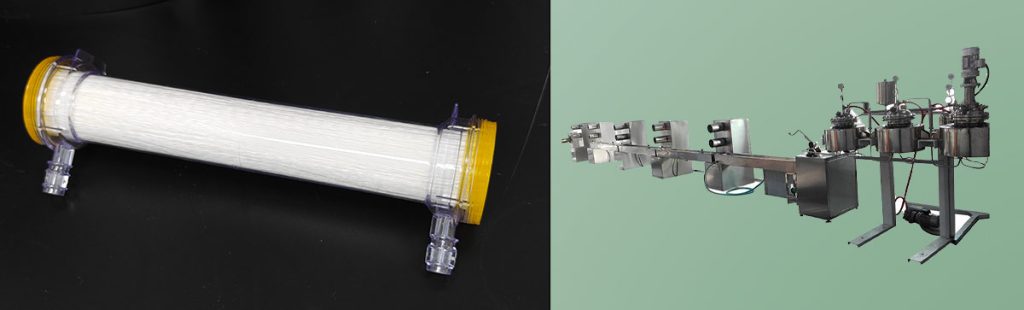
Hollow fiber membrane modules deliver high efficiency, gentle separation, and reliable purity in protein isolation. Recent innovations include:
- Advanced polymers and composite materials that boost membrane efficiency.
- Surface modification techniques that reduce fouling and improve hydrophilicity.
- Optimized module designs that enhance flow distribution and packing density.
Experts predict that these modules will transform bioprocessing, with trends toward continuous processing, single-use systems, and digital automation. Organizations invest in R&D to improve durability and sustainability, expanding applications in medical and pharmaceutical fields.
FAQ
What Makes Hollow Fiber Membrane Modules Different from Spiral-Wound Membrane Modules?
Hollow fiber membrane modules use thousands of tiny fibers to separate proteins. Spiral-wound membrane modules stack flat sheets in a spiral shape. Both designs offer unique benefits, but hollow fiber modules often provide better performance for protein isolation in fluid filtration systems.
How Do Hollow Fiber Membrane Modules Achieve Efficient Filtration?
These modules maximize surface area and maintain low shear forces. This design protects sensitive proteins and increases yield. Operators see improved results in protein isolation compared to traditional methods.
Can Hollow Fiber Membrane Modules Be Used with Other Filtration Technologies?
Researchers often combine hollow fiber membrane modules with spiral-wound membrane modules. This approach allows for multi-stage separation and enhances overall purification. Each module type supports different steps in the process.
What Are the Main Maintenance Requirements for Hollow Fiber Membrane Modules?
Operators clean membranes regularly to prevent fouling. Mechanical flushing removes reversible buildup. Proper cleaning extends service life and maintains consistent performance.
Are Hollow Fiber Membrane Modules Suitable for Large-Scale Protein Isolation?
Manufacturers use hollow fiber membrane modules in industrial settings. These modules scale easily and integrate with fluid filtration systems. They support high-volume processing and deliver reliable results.