


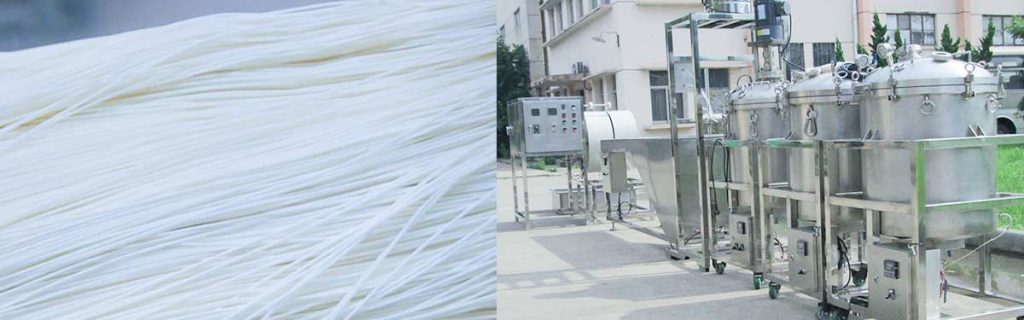
Hollow fiber microfiltration has experienced remarkable breakthroughs in 2026. The market size reached $879.78 million, with a projected compound annual growth rate of over 15%. Hollow fiber spinning machine plays a crucial role by enabling the production of advanced membranes with low fouling tendencies and strong chemical stability. These innovations allow hollow fiber microfiltration to operate under extreme conditions and expand its use in municipal wastewater and industrial applications. Membranes reinforced with braid supports withstand pressures up to 10.3 MPa, increasing durability and water flux. The global hollow fiber microfiltration market grew from $303 million in 2021 to $597 million in 2026, showing rapid progress across many sectors.
| Year | Market Size (USD) | CAGR (%) | Expected Size by 2032 (USD) |
|---|---|---|---|
| 2025 | 780.44 million | N/A | N/A |
| 2026 | 879.78 million | 15.02 | 2.07 billion |
- Hollow fiber microfiltration membrane offers versatility and enhanced mechanical strength.
- Thinner selective layers increase water flux without compromising rejection rates.
Key Takeaways
- Hollow fiber microfiltration is rapidly growing, with a market size projected to reach $2.07 billion by 2032, driven by innovations in hollow fiber membrane technology.
- Recent advancements in membrane materials, like electrospun nanofibers, achieve over 99.5% filtration efficiency for tiny particles, enhancing water treatment capabilities.
- Automation in hollow fiber membrane spinning machine improves production efficiency, reduces costs, and ensures consistent membrane quality through real-time adjustments.
- Process control improvements can extend membrane life by up to 40% and reduce cleaning agent use by 60%, leading to more sustainable operations.
- Emerging sectors, such as biotechnology and food production, are adopting hollow fiber microfiltration for enhanced purification and resource recovery.
Hollow Fiber Microfiltration Technology Advances
Membrane Materials Innovation
Recent years have seen remarkable innovation in membrane materials for microfiltration. Researchers have developed electrospun nanofiber membranes with diameters below 300 nanometers. These membranes achieve filtration efficiency above 99.5% for particles smaller than 300 nanometers, while maintaining a pressure drop below 100 pascals. The use of multi-jet and coaxial electrospinning, polymer blending, and in-situ nanoparticle incorporation has enabled these advances.
| Feature | Description |
|---|---|
| Membrane Type | Electrospun nanofibers |
| Diameter | Below 300nm |
| Filtration Efficiency | Above 99.5% for particles smaller than 300nm |
| Pressure Drop | Below 100Pa |
| Techniques Used | Multi-jet electrospinning, coaxial electrospinning, polymer blending, in-situ nanoparticle incorporation |
Nano fiber membranes also show significant improvements in contaminant removal. Their ultra-fine fibers increase surface area, which enhances the separation of heavy metals, bacteria, and organic compounds. Tailored material compositions and specialized coatings help resist fouling and degradation, extending membrane lifespan.
| Feature | Description |
|---|---|
| Membrane Type | Nano fiber membranes |
| Structure | Ultra-fine fibers increasing surface area |
| Contaminant Removal | Heavy metals, bacteria, organic compounds |
| Lifespan Improvement | Tailored material compositions and coatings to resist fouling and degradation |
- Nano fiber membranes now deliver higher efficiency and longer service life.
- Their unique structure boosts separation rates compared to traditional hollow fiber membranes.
- Scientists focus on optimizing fiber diameters and surface modifications for specific pollutants.
These technological advancements in membrane materials have transformed microfiltration, making it a preferred choice for advanced filtration technologies and integrated membrane systems. The result is more reliable separation and improved efficient separation capabilities across industries.
Automation in Spinning Machines
Automation has become a driving force in the evolution of the hollow fiber spinning machine. Manufacturers now integrate artificial intelligence and machine learning into these machines, enabling real-time process optimization. IoT-enabled sensors provide continuous monitoring and data collection, which supports predictive maintenance. This approach reduces operational costs and minimizes downtime.
| Technology | Benefit |
|---|---|
| AI and Machine Learning | Real-time process optimization |
| IoT-enabled Sensors | Continuous monitoring and data collection |
| Predictive Maintenance | Reduced operational costs and minimized downtime |
The hollow fiber spinning machine now operates with greater precision and consistency. Automated systems adjust spinning parameters instantly, ensuring uniform membrane thickness and pore size. This level of control leads to higher product quality and repeatability. Automation also allows for rapid scaling of microfiltration production, meeting the growing demand in biomanufacturing and water treatment sectors.
Tip: Automated spinning machines help manufacturers respond quickly to changing market needs, supporting innovation and efficient separation in microfiltration.
Process Control Improvements
Process control improvements have further advanced the performance of hollow fiber membranes. Modern systems use dynamic adjustment of flow rate based on membrane loading, which increases effective membrane life by up to 40%. Automated pressure profile management maintains optimal flux rates throughout the filtration process. Load-responsive backflush cycles with variable intensity reduce cleaning agent consumption by up to 60%. Localized temperature monitoring at filter interfaces prevents thermal gradients that could damage the membrane. Performance-triggered cleaning cycles optimize chemical usage while maintaining high separation performance.
| Control Parameter | Basic Approach | Advanced Implementation | Performance Improvement |
|---|---|---|---|
| Flow rate | Fixed setpoint | Dynamic adjustment based on membrane loading | 30-40% increase in effective membrane life |
| Transmembrane pressure | Manual adjustment | Automated pressure profile management | Maintains optimal flux rates throughout process |
| Backflush cycles | Time-based | Load-responsive with variable intensity | Reduces cleaning agent consumption by up to 60% |
| Temperature control | Vessel-wide | Localized monitoring at filter interfaces | Prevents thermal gradients that compromise membrane integrity |
| Cleaning cycles | Fixed schedule | Performance-triggered with customized protocols | Optimizes cleaning chemical usage while maintaining performance |
A pharmaceutical company recently scaled up from 200-liter to 2,000-liter bioreactors using advanced control strategies. They achieved a 43% reduction in filter membrane replacement frequency, a 28% decrease in buffer consumption, and a 15% improvement in product consistency. Unplanned process interruptions became virtually nonexistent. These improvements highlight the value of process control in microfiltration and separation applications.
Process control, automation, and new membrane materials together drive innovation in microfiltration. These advances deliver higher filtration efficiency, better separation, and greater scalability for industries that rely on hollow fiber membranes.
Industry Applications of Microfiltration
Biopharmaceuticals
Microfiltration plays a vital role in the biopharmaceutical sector. The growth in the biopharmaceutical industry has increased demand for advanced filtration solutions. Companies use hollow fiber microfiltration for purification of monoclonal antibodies, gene therapies, and mRNA vaccines. The transition to continuous bioprocessing and single-use, pre-sterilized filter assemblies has improved operational efficiency. These changes eliminate cleaning validation and reduce cross-contamination risks in cgmp biopharma applications. Higher cell densities and complex molecules now require filters with greater capacity and selectivity.
| Aspect | Details |
|---|---|
| Current Demand | Driven by robust pipeline of biologics and advanced therapies |
| Technological Shift | Move to continuous processing and single-use filter assemblies |
| Operational Benefits | No cleaning validation, lower cross-contamination risk |
| Future Trends | Filters with higher capacity and selectivity for complex molecules |
Advances in membrane materials and module design have led to higher throughput and selectivity. Regulatory compliance and environmental stewardship continue to shape the applications of microfiltration in this industry.
Water and Wastewater Treatment
Hollow fiber microfiltration has transformed wastewater treatment. These membranes provide a larger effective surface area than flat sheet membranes. They support versatile filtration applications, from microfiltration to reverse osmosis. The design reduces fouling, which extends system life and improves efficiency. Operators achieve higher quality permeate, making treated water suitable for reuse.
- Growth in research focuses on fouling mitigation and optimization of membrane bioreactors.
- Integration of hollow fiber membranes enables resource recovery, turning wastewater into valuable resources.
Recent studies show increased use of microfiltration in nutrient and organic matter recovery. This advancement improves the efficiency of membrane bioreactors and supports sustainable water reuse.
Medical Devices
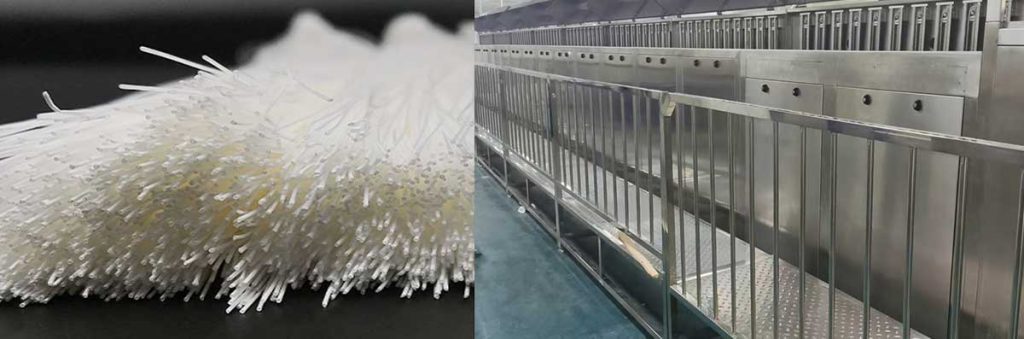
Medical device manufacturers rely on hollow fiber microfiltration for critical applications. These membranes are essential in blood oxygenators, sterile filtration, and hemodialysis machines. The technology ensures high purity and safety in medical devices. Improved filtration performance supports patient safety and device reliability.
Microfiltration continues to expand its applications in healthcare, supporting both purification and protection in life-saving devices.
Hollow Fiber Filtration Market Trends
Market Growth and Forecasts
The hollow fiber filtration market continues to expand rapidly. Analysts report that the hollow fiber filtration market size reached approximately USD 783.9 million in 2024. Forecasts suggest the hollow fiber filtration market will grow to nearly USD 2,697.9 million by 2033. The compound annual growth rate stands at 14.82% from 2025 to 2033. The microfiltration hollow-fiber membrane material market also shows strong momentum, with projections indicating steady increases in demand for advanced filtration solutions. Companies invest in new membrane technologies to improve filtration efficiency and meet evolving industry requirements.
- The global hollow fiber filtration market size was valued at USD 793.4 million in 2024.
- It is expected to grow from USD 906.86 million in 2025 to USD 2,641.85 million by 2033.
- The forecasted CAGR for the hollow fiber filters market during 2026–2033 is 14.3%.
Regional Opportunities
Asia Pacific leads the hollow fiber filtration market, holding a 34.8% share by 2035. Industrialization and water treatment needs drive growth in this region. China focuses on industrial chemical safety and wastewater treatment, especially in pharmaceutical and petrochemical sectors. India benefits from government funding for advanced filtration technologies, which boosts the microfiltration hollow-fiber membrane material market. Brazil emerges as a key player in the hollow fiber filters market, contributing to regional expansion. The asia pacific hollow fiber filtration market faces challenges in water quality and availability, prompting governments and industries to adopt efficient filtration systems. The rapid growth of pharmaceutical and biotechnology sectors increases demand for advanced membrane solutions.
| Region | Market Share (2035) | Key Drivers |
|---|---|---|
| Asia Pacific | 34.8% | Industrialization, water treatment |
| China | N/A | Chemical safety, pharma, petrochem |
| India | N/A | Government funding, technology |
| Brazil | N/A | Emerging market, sector growth |
Regulatory and Sustainability Drivers
Regulatory changes shape the hollow fiber filtration market. Industries move toward sustainable practices, including closed-loop water systems that use ultrafiltration. Public awareness of microplastics and waterborne diseases increases demand for hollow fiber filters market solutions. Manufacturers adopt environmentally friendly processes to comply with regulations and support sustainability. Sustainability initiatives drive innovation in membrane technologies, improving urban climate resilience. Circular economy approaches enable upcycling of end-of-life membranes, reducing waste and treatment costs. Climate change and water management challenges push industries to use advanced filtration systems for safe drinking water and sustainability.
Note: Sustainability and regulatory compliance now influence every stage of the microfiltration hollow-fiber membrane material market, from manufacturing to application.
Case Studies in Filtration Innovation
Biopharma Success Stories
Hollow fiber microfiltration has transformed biopharmaceutical manufacturing. Companies now achieve higher yields and greater process efficiency. Several real-world examples highlight this progress:
- Tangential flow microfiltration supports dewatering and washing of monoclonal antibodies. Operators maintain a constant transmembrane pressure, which allows for long-term continuous operation.
- Single-use tangential flow filtration modules save up to 50% of facility time. These modules eliminate many operational steps, which increases efficiency in biopharmaceutical processes.
- Continuous precipitation-filtration processes for monoclonal antibody purification use hollow fiber microfiltration to achieve yields of 87 ± 2%. These systems operate with stable performance over extended periods.
- BSA clearance reaches 100% for certain filtration modalities, compared to 90% for traditional hollow fiber conditions.
- All microfiltration methods reduce yellow pigment by over 95%, improving product purity.
These advances in filtration support the rapid growth of biopharmaceutical manufacturing. Companies benefit from reliable separation, higher product quality, and streamlined workflows. Innovation in membrane design and process integration continues to drive the industry forward.
Water Treatment Breakthroughs
Water treatment facilities rely on hollow fiber microfiltration to address complex challenges. Operators use these systems to remove contaminants and recover valuable resources. Recent innovation in filtration technology has improved system durability and reduced fouling. Facilities now achieve higher permeate quality, which supports water reuse and sustainability goals. The integration of advanced filtration modules allows for efficient removal of bacteria, organic matter, and heavy metals. These breakthroughs help cities and industries meet strict water quality standards while reducing operational costs.
Medical Device Advances
Medical device manufacturers have adopted hollow fiber microfiltration to enhance patient safety and device reliability. The following table summarizes key applications and outcomes:
| Medical Device Use | Outcomes Measured |
|---|---|
| Dialysis machines | Reduced infection rates |
| IV fluid sterilization | Improved patient safety |
| Air purification systems | Enhanced infection control |
Innovation in filtration supports the development of safer and more effective medical devices. Consistent performance and high purity levels protect patients and improve healthcare outcomes.
Future Outlook for Microfiltration
Digital Manufacturing Integration
Digital manufacturing is shaping the future of hollow fiber microfiltration. Companies now use digital twins and process analytical technology to optimize production. These tools allow real-time monitoring and control, which leads to greater innovation in membrane fabrication. Digital twins can double productivity by eliminating hold times. They also reduce batch failures, achieving reliability rates of 99.9%. Automation through digital twins lowers operator workload and stress. Quality by Design strategies help optimize scheduling in virus-like particle manufacturing.
| Benefit | Description |
|---|---|
| Increased Productivity | Digital twins and process analytical technology can double productivity by eliminating hold times. |
| Reduced Batch Failures | Reliability rates reach 99.9% with digital twins. |
| Enhanced Process Control | Quality by Design strategies optimize scheduling in manufacturing. |
| Reduced Operator Workload | Automation halves the number of operators needed. |
Note: Digital manufacturing supports rapid innovation and prepares the industry for future challenges.
Spinning Machine Design Evolution
Spinning machine design continues to evolve. Manufacturers focus on modular systems that adapt to changing production needs. New machines feature advanced sensors and AI-driven controls. These upgrades improve membrane quality and consistency. Modular designs allow easy scaling for future demand. Engineers use predictive maintenance to reduce downtime and extend machine life. The industry expects further innovation in hollow fiber spinning machine, which will drive future growth.
- Modular spinning machines support flexible production.
- AI-driven controls enhance membrane quality and enable future expansion.
Emerging Sectors
Several sectors will adopt hollow fiber microfiltration in the future. Biotechnology and pharma need single-use, high-performance modules for cell harvesting and virus filtration. Food and beverage companies use microfiltration for juice clarification and beverage sterilization. Specialty gas production benefits from CO2 capture and lithium extraction. Advanced recycling uses membranes for efficient waste processing. Environmental remediation relies on microfiltration for trace contaminant removal.
| Sector | Key Drivers |
|---|---|
| Biotechnology and Pharma | Demand for single-use, high-performance modules for cell harvesting and virus filtration. |
| Food and Beverage | Focus on product quality, regulatory compliance, and energy/water savings. |
| Specialty Gas Production | Opportunities in CO2 capture and lithium extraction. |
| Advanced Recycling | Efficient waste processing and contaminant removal. |
| Environmental Remediation | Trace contaminant removal from industrial waste. |
Tip: Companies should monitor these emerging sectors for future opportunities and innovation.
The future of hollow fiber microfiltration will depend on continued innovation in manufacturing, machine design, and new applications. Industry leaders must stay alert to future trends and market shifts to maintain progress.
Conclusion
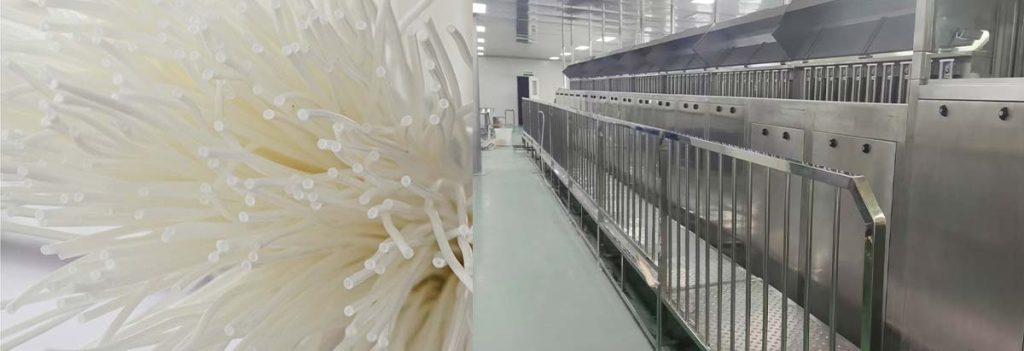
Recent breakthroughs in hollow fiber microfiltration and hollow fiber spinning machine drive industry progress. Key advances include rapid growth in separation and purification applications, sustainable fabrication techniques, and improved membrane materials like PVDF.
- Stakeholders should engage in strategic collaborations, partner with research institutions, and integrate digital technologies for better solutions.
- Experts recommend addressing challenges such as high capital investment and membrane fouling through innovation.
| Key Focus Areas | Description |
|---|---|
| R&D Investment | Accelerate performance improvements and cost reductions. |
| Regulatory Monitoring | Track policy changes for new opportunities. |
| Digital Transformation | Optimize operations and extend product lifecycle management. |
The industry will continue to innovate as automation, regulatory changes, and specialized applications shape the future of microfiltration.
FAQ
What Are Hollow Fiber Microfiltration Membranes?
Hollow fiber microfiltration membranes use thin, tubular fibers to filter particles from liquids. They provide high surface area and efficient separation. Industries use these membranes for water treatment, biopharmaceuticals, and medical devices.
How Do Spinning Machines Improve Membrane Quality?
Spinning machines control fiber diameter and pore size. Automated systems adjust parameters in real time. This process ensures consistent membrane quality and reduces defects.
Which Industries Benefit Most from Hollow Fiber Microfiltration?
Biopharmaceuticals, water treatment, and medical device manufacturing benefit most. These sectors require high purity and reliable filtration. Hollow fiber microfiltration meets these needs with advanced materials and efficient processes.
What Is the Main Advantage of Automation in Microfiltration?
Automation increases production speed and reduces human error. Machines monitor and adjust processes automatically. This approach improves membrane consistency and lowers operational costs.
Are Hollow Fiber Microfiltration Membranes Sustainable?
Manufacturers use eco-friendly materials and recycling methods. Sustainability initiatives reduce waste and energy use. Hollow fiber microfiltration supports environmental goals in water management and industrial applications.