


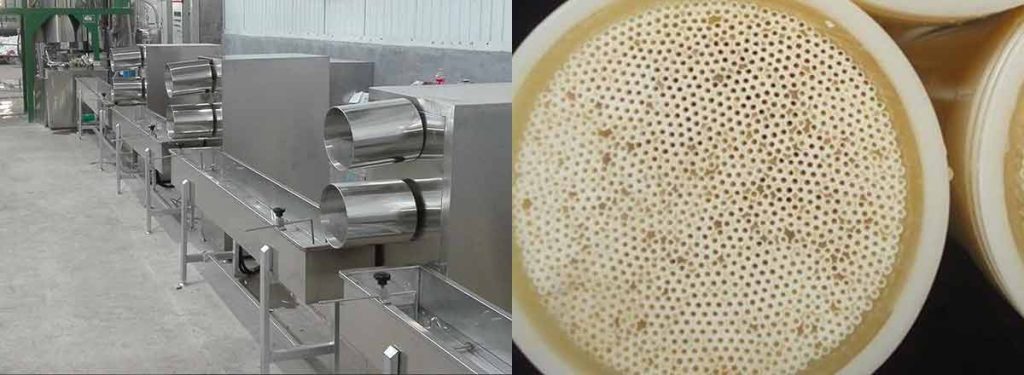
Hollow fiber perfusion bioreactor provides an environment that supports optimal cell growth. The advanced bioreactor mimics natural physiological conditions, delivering nutrients and oxygen through continuous perfusion. The hollow fiber spinning machine produces high-quality fibers, which enhance culture performance. Researchers report impressive results using hollow fiber perfusion bioreactor:
- T cell yield increased from 10.8E +09 to over 28E +09 in ten days.
- Cell densities reached more than 2E +08 cells/mL, a fourfold improvement.
- Yields doubled with cell viability above 81% and CD3+ T cell purity exceeding 98.8%.
Hollow fiber bioreactors make cell culture easier and more efficient for both beginners and experts.
Key Takeaways
- Hollow fiber perfusion bioreactors enhance cell growth by mimicking natural conditions, leading to higher cell yields and viability.
- These bioreactors support continuous nutrient supply and waste removal, creating a stable environment for optimal cell culture.
- The modular design allows for easy scalability, making it suitable for both small research projects and large-scale production.
- Using hollow fiber bioreactors can significantly improve cell functionality, leading to better results in research and industry applications.
- Automated processes in these systems reduce manual labor, making cell culture more efficient and cost-effective.
Hollow Fiber Perfusion Bioreactor Overview
Design and Function
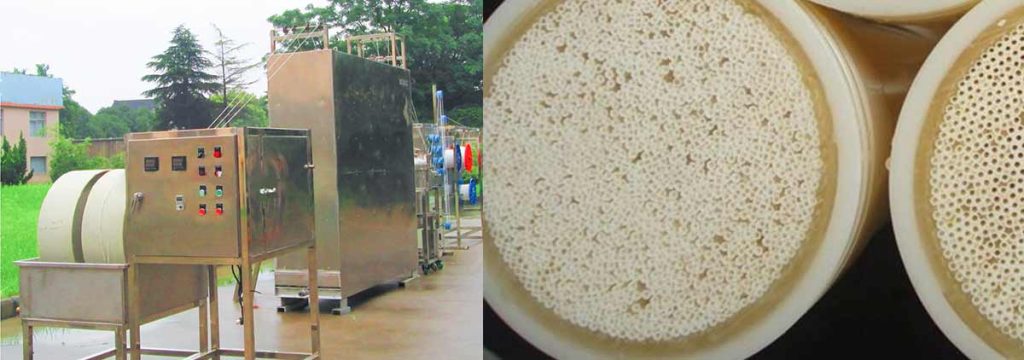
A hollow fiber perfusion bioreactor uses small, semi-permeable capillary membranes arranged in parallel. These membranes have a molecular weight cut-off between 10 and 30 kDa. The bioreactor features two main compartments: the intracapillary space, which carries media, and the extracapillary space, which supports cell growth. Cells are seeded in the extracapillary space, while nutrients and oxygen flow through the intracapillary space. This setup allows for efficient waste removal and high cell densities. EC cycling helps distribute nutrients evenly and prevents gradients. The design supports high productivity and cost-effective culture.
Tip: Hollow fiber bioreactors reduce medium usage compared to traditional systems, making them more economical for large-scale cell culture.
Hollow Fiber Spinning Machine
The hollow fiber spinning machine plays a crucial role in the quality of hollow fiber perfusion bioreactor. This machine prepares a polymer solution, then forces it through a hollow fiber spinneret to form hollow fibers. The fibers enter a coagulation bath, solidify, and undergo washing and treatment to remove chemicals. After drying, the fibers are bundled for use in bioreactors.
| Step | Description |
|---|---|
| Polymer Solution Preparation | Defines membrane characteristics. |
| Spinning Process | Forms hollow fibers with precise dimensions. |
| Coagulation | Solidifies fibers for stability. |
| Washing and Treatment | Removes residual chemicals. |
| Drying and Bundling | Prepares fibers for bioreactor modules. |
The machine uses high-quality stainless steel and operates with minimal staff, ensuring consistent fiber production for reliable perfusion bioreactor performance.
Comparison to Traditional Methods
Hollow fiber perfusion bioreactor offers several advantages over traditional cell culture systems:
- Cells reach higher concentrations (up to 2.8 × 10^6 cells/mL) with 98% viability.
- Automated perfusion bioreactor processes shorten doubling time to 20 hours, compared to 25 hours in manual methods.
- Continuous media inflow reduces FCS consumption by 80%.
- Labor efficiency improves, with automated systems requiring less time and achieving target cell doses faster.
- The steady-state environment supports stable cell growth and higher productivity.
These features make hollow fiber perfusion bioreactor a preferred choice for researchers seeking consistent culture outcomes and improved cell yields.
Enhancing Cell Growth
Physiological Environment
Hollow fiber bioreactors create a setting that closely resembles the natural environment inside the body. These systems support high cell density and maintain stable conditions for temperature and oxygen. The design mimics capillary beds, allowing cells to interact and thrive. Researchers observe that the flow-based system in a hollow fiber perfusion bioreactor acts like the mammalian circulatory system. This approach provides a nutrient-rich environment and supports continuous exchange of nutrients and waste. As a result, cells experience conditions that promote natural behavior and function.
- Hollow fiber bioreactors enable high-density cell cultures, similar to natural tissues.
- The system maintains stable temperature and oxygen, supporting cell-cell interactions.
- Continuous nutrient exchange and waste removal help maintain cell viability.
- The flow-based design mimics the circulatory system, creating in vivo-like conditions.
This physiological environment leads to improved productivity and supports enhanced productivity in research and industry.
Continuous Perfusion
Continuous perfusion stands at the core of efficiency in hollow fiber perfusion bioreactor. This process ensures a steady supply of nutrients and constant removal of waste. The table below highlights the main advantages of continuous perfusion for cell culture:
| Advantage | Description |
|---|---|
| Stability of culture environment | Provides a steady and stable culture environment, essential for cell physiology. |
| Continuous nutrient supply | Delivers a constant supply of nutrients for cell growth and function. |
| Effective waste removal | Continuously removes waste products, preventing toxic buildup that can harm cells. |
| Mimics physiological conditions | Closely resembles the human body, enhancing the relevance of experimental results. |
| Enhanced cellular processes | Flow-induced shear stresses can promote desired cellular activities, such as differentiation. |
Hollow fiber bioreactors use flexible feeding strategies to optimize cell growth. Operators can run the intracapillary and extracapillary circuits independently. This flexibility allows for tailored feeding protocols, such as unidirectional feeding for adherent cells or bidirectional circulation for suspended cells. Users may apply the same or different media formulations in each circuit. Cytokine supplementation in the intracapillary circuit further supports specific cell requirements.
Waste management also plays a vital role in maintaining high cell density and culture quality. The system supplies nutrients at rates matching cellular consumption and removes metabolic waste like lactic acid and ammonia. Dilution of harmful factors, such as cytokines and proteins, prevents premature cell death and supports long-term culture.
3D Cell Culture
Three-dimensional cell culture in hollow fiber bioreactors offers significant advantages over traditional two-dimensional methods. In 3D culture, cells experience an environment that closely matches their natural surroundings. This setting leads to improved cell differentiation and function. Cells in 3D culture display better morphology and proliferation. They also achieve proper post-translational modifications, which are essential for bioactivity.
Hollow fiber bioreactors support continuous production of cells without frequent splitting or passaging. This approach ensures that cells have consistent access to nutrients and gases. The result is improved cell quality and functionality. Researchers note that 3D culture in hollow fiber bioreactors leads to higher productivity and scalability, making these systems ideal for advanced cell culture applications.
Note: 3D cell culture in hollow fiber bioreactors eliminates many limitations of 2D systems, supporting efficiency and improved productivity for a wide range of cell types.
Key Benefits
Scalability
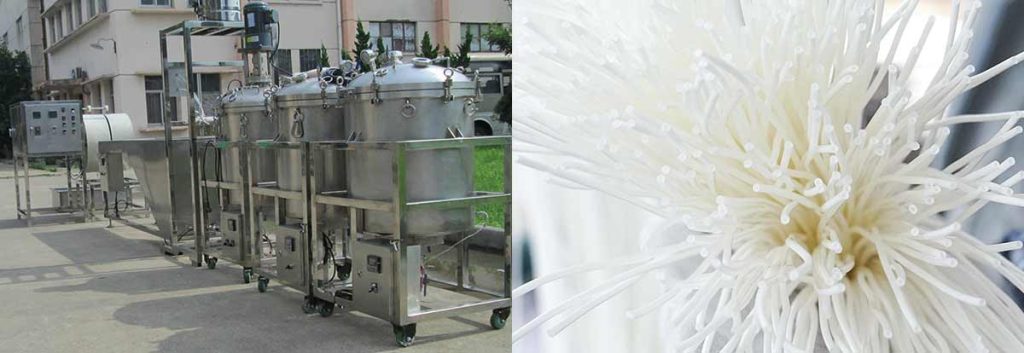
Hollow fiber perfusion bioreactor offers cost-effective scalability for cell culture applications. Researchers and industry professionals can expand production from laboratory experiments to large-scale manufacturing. The modular design allows users to add more fiber bundles or bioreactor units as demand increases. Parallel fiber arraying improves manufacturing efficiency by arranging hollow fibers in a uniform pattern. This method ensures consistent nutrient delivery and supports high cell density, which is essential for tissue engineering and biopharmaceutical production.
| Scalability Option | Description |
|---|---|
| Parallel Fiber Arraying | Methods arrange hollow fibers in parallel, boosting large-scale manufacturing efficiency. |
| Uniform Nutrient Delivery | Consistent fiber distribution ensures reliable nutrient supply and improves tissue quality. |
| Sustainable Materials | Recyclable and edible materials enhance environmental impact and practicality in production. |
Tip: Modular bioreactor systems help users scale up cell culture without redesigning the entire process.
Efficiency
Efficiency remains a core advantage of hollow fiber bioreactors. These systems deliver nutrients continuously and remove waste products, maintaining a stable environment for cell growth. Operators observe that low shear stress protects cells, which promotes higher viability and productivity. The bioreactor supports extremely dense cell populations, making it ideal for monoclonal antibody and viral vector production. Efficient waste removal prevents toxic buildup, allowing for long-term culture and consistent results.
| Advantage | Description |
|---|---|
| Continuous Nutrient Delivery | Cells receive a steady flow of essential nutrients, preventing depletion. |
| Efficient Waste Removal | Byproducts diffuse away from the culture, maintaining a stable environment. |
| Low Shear Stress | Scaffold-like structure protects cells, supporting higher viability. |
| High Cell Density | Supports dense cell populations, ideal for advanced bioprocessing applications. |
Note: Automated perfusion bioreactor systems reduce manual labor and lower operational costs, making them a practical choice for research and industry.
Consistency
Hollow fiber bioreactors deliver consistent cell growth and reproducible results. The high surface-area environment enables dense cell proliferation, while continuous nutrient supply mimics in vivo conditions. Waste diffusion maintains a healthy culture environment, and compartmentalization allows for uninterrupted protein collection. Programmable flow rates match different growth phases, optimizing conditions for cell development. Real-time monitoring ensures optimal pH, oxygen, and glucose levels, which are crucial for cell health. Closed-loop control systems minimize contamination risk, enhancing reliability. Scalability features support the transition from laboratory to production, ensuring consistent results at every stage.
| Feature | Contribution to Cell Growth and Reproducibility |
|---|---|
| High Surface-Area Environment | Enables dense cell growth and proliferation. |
| Continuous Nutrient Supply | Ensures cells receive necessary nutrients consistently. |
| Waste Diffusion | Maintains a healthy culture environment. |
| Compartmentalization | Allows for continuous protein collection without disturbing cell cultures. |
| Programmable Flow Rates | Optimizes conditions for different growth phases. |
| Real-Time Monitoring | Maintains optimal pH, oxygen, and glucose levels. |
| Closed-Loop Control Systems | Minimizes contamination risk and enhances reliability. |
| Scalability | Supports consistent results from lab to production scale. |
Block Quote: Consistent cell culture outcomes depend on reliable perfusion, real-time monitoring, and modular design features.
Users benefit from leak-free perfusion, modular scalability, and automated control systems. These features make hollow fiber perfusion bioreactor a preferred solution for long-term cell culture, high cell density, and reproducible productivity.
Using the Bioreactor
Setup Steps
Setting up a hollow fiber perfusion bioreactor involves several clear steps. First, users assemble the bioreactor module and connect the tubing for media flow. Next, they sterilize all components to prevent contamination. After sterilization, operators fill the system with the selected cell culture media. They then seed the cell suspension into the extracapillary space. The system starts with a gentle flow to allow cells to settle and attach. Finally, users adjust the perfusion rate to match the desired high cell density and continuous nutrient supply.
Tip: Always verify connections and seals before starting the culture to ensure leak-free operation and maintain efficiency.
Operation Tips
Operators can optimize cell growth and productivity by following proven strategies:
- Media selection matters. Begin with enriched media to identify essential nutrient components, then refine the formula for cost-effective scalability.
- Choose harvesting technologies that protect cells. Systems like XCell ATF minimize cell damage and maximize output.
- Apply a Design of Experiments approach. Systematically test parameters such as pH, cell density, and temperature to improve culture quality and efficiency.
A well-planned process supports efficient nutrient supply and maintains optimal conditions for cell culture.
Troubleshooting
Users may encounter common issues during operation. Product retention sometimes occurs in hollow fiber perfusion bioreactor. Switching to larger pore size membranes often solves this problem. This adjustment reduces product retention without affecting cell clarification. If nutrient delivery seems inconsistent, check for blockages in the tubing or fiber bundles. Regular monitoring helps maintain high cell density and reliable performance.
- Product retention: Use larger pore size membranes.
- Inconsistent nutrient flow: Inspect tubing and fiber bundles for blockages.
- Low cell yield: Review perfusion rates and media composition.
Note: Routine checks and prompt adjustments help maintain culture stability and support cost-effective scalability.
Applications and Results
Cell Culture Success
Researchers have reported remarkable improvements in cell growth using hollow fiber perfusion bioreactor. These systems support higher cell functionality and productivity compared to traditional methods.
- Albumin secretion by cells grown in hollow fiber bioreactors is 15-fold higher than in 2D cultures. This increase demonstrates enhanced cell function.
- Caco-2 cells show improved differentiation, with greater enzyme activity and protein expression in hollow fiber bioreactors.
- Primary human hepatocytes maintain higher metabolic activity and delayed dedifferentiation in perfusion culture.
The following table highlights cell types that have shown significant improvement in culture success:
| Cell Type | Description |
|---|---|
| Hybridomas | Used for monoclonal antibody production |
| CHO | Commonly used for protein production |
| HEK293 | Widely used in gene expression studies |
| HepG2 | Human liver cancer cells, useful in drug metabolism studies |
Tip: Hollow fiber perfusion bioreactor helps researchers achieve consistent results with a wide range of cell types.
Research and Industry
Hollow fiber perfusion bioreactor plays a vital role in both research and industrial applications. Scientists use these systems for monoclonal antibody production, recombinant protein production, and virus amplification. Lymphocyte culture and stem cell culture also benefit from the high-density environment. In vitro toxicology research relies on these bioreactors for reliable data.
These bioreactors support various perfusion processes, such as N-1 Perfusion, Intensified Fed batch, Concentrated Fed batch, and Continuous Perfusion. Each method enhances cell retention and enables high-density cell cultures, which are essential for efficient biopharmaceutical production.
User Experiences
Users in academic and industrial settings report positive experiences with hollow fiber perfusion bioreactor. They note improved cell viability and higher yields. Many appreciate the ability to maintain long-term cultures without frequent intervention. The modular design and automated control systems simplify operation and scaling. Researchers find that these bioreactors deliver reproducible results, making them a trusted choice for advanced cell culture projects.
Conclusion
Hollow fiber perfusion bioreactor simplifies cell growth by providing automation, scalability, and optimal culture conditions. Researchers benefit from:
- Efficiency through automated processes
- Modular scalability for different production needs
- Improved nutrient supply and waste removal
- Cost-effective and single-use options
Laboratories can start with automated monitoring, then expand using modular systems. For more information, explore these resources:
| Type | Title | Link |
|---|---|---|
| Whitepaper | Solving Production Challenges | Link |
| Publication | Difficult-to-Express Proteins | Link |
| Peer-reviewed | Comparison of cell growth in T-flasks and bioreactors | Link |
FAQ
What Types of Cells Can Grow in a Hollow Fiber Perfusion Bioreactor?
Researchers can culture many cell types, including hybridomas, CHO, HEK293, and primary human hepatocytes. The system supports both adherent and suspension cells. This flexibility makes it useful for research and industrial applications.
How Does the Bioreactor Prevent Contamination?
The closed-loop design and automated monitoring reduce contamination risk. Sterile connections and regular system checks help maintain a clean environment. Operators follow strict protocols to ensure cell cultures remain safe.
Can Users Scale up Production Easily?
Yes, users can scale up by adding more fiber bundles or modules. The modular design allows for gradual expansion. This approach supports both small-scale research and large-scale manufacturing.
What Maintenance Does the System Require?
Operators should perform routine cleaning and sterilization. Regularly checking tubing, connections, and sensors helps prevent issues. Scheduled maintenance ensures reliable performance and long-term use.
Is the System Suitable for Long-Term Cell Culture?
Yes, the bioreactor supports long-term culture. Continuous nutrient supply and efficient waste removal maintain cell health. Researchers can keep cultures active for extended periods without frequent intervention.