


Many industries require a hollow fiber membrane spinneret tailored to their unique processes. Polymer solution compatibility plays a key role in achieving optimal results. The hollow fiber spinning machine must align with the spinneret design to ensure smooth operation. Customization improves performance, efficiency, and quality. For example, adjusting polymer extrusion velocity or bore fluid pressure can raise process efficiency and alter membrane characteristics, as shown below:
| Parameter | Production Efficiency Impact | Membrane Quality Impact |
|---|---|---|
| Polymer Extrusion Velocity | Increases process speed | Changes wall thickness and diameter |
| Bore Fluid Pressure | Boosts outflow velocity | Enlarges diameter, reduces wall thickness |
| Air Gap Distance | Raises outflow velocity | Thins capillary wall |
| Process Temperature | Modifies membrane characteristics | Alters structure and transport capabilities |
| Humidity | Affects membrane formation | Changes porosity and hydrophilicity |
| Solution Composition | Enhances membrane properties | Improves application performance |
Key Takeaways
- Customization of hollow fiber membrane spinneret enhances performance and efficiency. Adjusting parameters like polymer extrusion velocity can significantly improve production outcomes.
- Material compatibility is crucial for spinneret design. Selecting the right materials ensures durability and prevents issues like corrosion, which can affect membrane quality.
- Modular spinneret systems offer flexibility. They allow manufacturers to easily swap components, adapting to different applications without needing to replace the entire system.
- Precision manufacturing is essential for consistent quality. Maintaining strict standards in hole diameter and surface finish leads to uniform fiber characteristics and reduces defects.
- Regular maintenance extends the lifespan of hollow fiber membrane spinneret. Implementing daily cleaning routines and professional servicing helps prevent clogs and ensures high-quality membrane production.
Why Customization Matters for Hollow Fiber Membrane Spinneret?
Application Needs and Compatibility
Industries rely on the hollow fiber membrane spinneret to meet specific filtration and separation goals. Each application demands unique requirements, such as material compatibility and dimensional accuracy. The spinneret must work with the chosen polymer solution to ensure consistent fiber formation. The hollow fiber membrane spinning machine plays a critical role in this process. It allows operators to adjust spinneret design features, such as nozzle size and channel geometry, to match the polymer solution and application needs. The following table highlights common requirements that drive customization:
| Requirement | Description |
|---|---|
| Material Compatibility | The spinneret must be inert to both the polymers and the solvents. |
| Dimensional Accuracy | Control in fiber diameters and filter pore size directly relates to filtration efficiency. |
| Flow Uniformity | Uniform polymer flow reduces defects and improves fiber consistency. |
| Reliability | High reliability and stable performance provide better cost efficiency. |
| Cleanability | Spinnerets need to be easily cleanable to protect from contamination and maintain fiber quality. |
Customization enables the chemistry-in-a-spinneret approach, which enhances compatibility with various polymer solutions. By integrating functional additives, manufacturers improve permeability and selectivity, increasing the value of high-quality hollow fiber membranes.
Impact on Membrane Quality
Spinneret customization directly influences product quality and production efficiency. Adjustments in spinneret design, such as channel shape and nozzle configuration, control pore size distribution and selectivity. Studies show that using additives like β-cyclodextrin and piperazine results in a narrower pore size distribution and improved ion selectivity. The table below summarizes these findings:
| Evidence Description | Findings | Implications |
|---|---|---|
| Use of β-cyclodextrin and piperazine | Achieved a narrower pore size distribution | Improved selectivity for ions |
| Interaction effects of HA-CD and piperazine | Reduced diffusion rate of piperazine | Thinner and smoother polyamide layer, narrower pore size distribution |
| Salt filtration test results | Excellent anion selectivity (alphamax:114) and permeability (10.66 L m−2 h−1 bar−1) | Demonstrates enhanced membrane performance |
High-quality hollow fiber membranes result from precise spinneret design and careful selection of polymer solution. This approach maximizes efficiency and ensures long-term value for manufacturers.
Role of Hollow Fiber Spinning Machine
The hollow fiber membrane spinning machine determines the scalability and flexibility of spinneret customization. Manufacturers select machines with adjustable nozzle sizes and modular designs to produce hollow fiber membranes with tailored properties. The machine supports various spinneret materials and shapes, such as rotating cylinders and dual spinnerets for tubular constructs. Channel geometry, including conical or straight channels, affects polymer solution flow and membrane structure. Recent trends show that automation and sustainable manufacturing processes increase product quality and efficiency. Industries such as water treatment, biomedicine, and gas separation benefit from these innovations, as they prioritize efficiency, selectivity, and value in their operations.
Tip: Selecting the right hollow fiber membrane spinning machine ensures compatibility with spinneret design and supports high production efficiency.
Customization Options for Spinneret Design
Selecting the right customization options for a hollow fiber membrane spinneret shapes the performance, efficiency, and quality of the final product. Manufacturers can tailor spinneret design to meet specific application needs by adjusting nozzle sizes, using modular systems, adopting advanced manufacturing techniques, and optimizing material and channel geometry. Each option brings unique benefits for producing high-quality hollow fiber membranes.
Adjustable Nozzle Sizes
Nozzle size stands as one of the most critical factors in spinneret design. By changing the diameter and shape of the nozzle, manufacturers control the outer and inner diameters of hollow fiber membranes. This adjustment influences wall thickness, permeability, and mechanical strength. Operators can fine-tune the spinneret to match the viscosity of the polymer solution, ensuring consistent fiber formation and optimal fluid dynamics. Adjustable nozzles also support rapid prototyping and small-batch production, which increases efficiency and value for research and development teams.
Tip: Precision features in nozzle design help maintain product quality and reduce defects during high-speed production.
Modular and Specialized Designs
Modular spinneret systems offer unmatched flexibility and scalability. These designs allow users to swap components or adjust configurations without replacing the entire spinneret. The table below highlights how modularity supports customization and compliance:
| Aspect | Description |
|---|---|
| Customization | Enables testing of various polymer combinations without redesigning machinery. |
| Adaptability | Allows adjustment of flow rates and spinning conditions tailored to specific applications. |
| Regulatory Compliance | High-quality spinnerets assist in meeting compliance standards in sensitive sectors like healthcare. |
Manufacturers benefit from modular designs in several ways:
- They can vary air gaps, spinneret designs, and bath conditions to create tailored membrane structures.
- Multi-channel spinnerets enable co-spinning of different polymers, expanding the range of possible membrane properties.
- Real-time monitoring systems ensure precise control over fiber dimensions, which improves product quality and efficiency.
The integration of advanced features such as PLC automation and touchscreen interfaces further enhances the value of modular spinneret systems. These features allow for rapid adjustments and support long-term value in production environments.
Advanced Manufacturing Techniques
Modern manufacturing methods have transformed spinneret production. Hybrid approaches that combine 3D printing and CNC machining deliver both complex geometries and high precision. The table below summarizes the main benefits of these advanced techniques:
| Feature/Benefit | Description |
|---|---|
| Combines 3D Printing and CNC | Hybrid manufacturing integrates both additive and subtractive methods in one machine. |
| Complex Geometries | Capable of producing intricate designs that traditional machining cannot achieve. |
| High Precision | Achieves tighter tolerances and better surface finishes than standalone 3D printing. |
| Increased Productivity | Reduces the need for equipment recalibration and manual post-processing, speeding up production. |
| Versatile Applications | Suitable for creating new parts, repairing existing ones, and applying coatings. |
| Reduced Waste | More efficient than traditional machining, leading to less material waste. |
These techniques have led to significant improvements in energy efficiency and fiber quality. Manufacturers now develop recyclable and eco-friendly spinnerets, and some have implemented IoT systems for real-time process optimization. Micro- and nano-spinneret technologies have also emerged, enabling the production of membranes with advanced structural properties.
Material and Channel Geometry
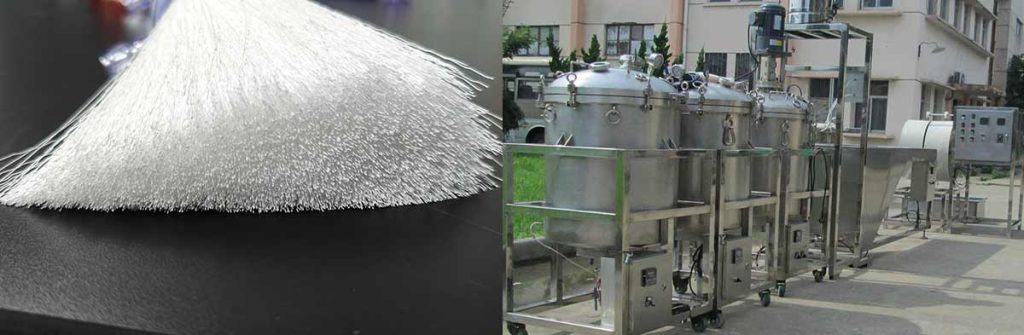
The choice of spinneret material and channel geometry plays a vital role in membrane performance and durability. Materials such as stainless steel, titanium, and ceramic coatings provide resistance to corrosion, heat, and wear, which ensures long-term value and consistent product quality. The table below outlines how design features impact membrane properties:
| Design Feature | Impact on Membrane Performance and Durability |
|---|---|
| Concentric Precision | Ensures consistent fiber geometry, preventing uneven wall thickness and weak mechanical strength. |
| Orifice Size | Determines fiber outer diameter, lumen diameter, and wall thickness, affecting permeability and structural strength. |
| Material Compatibility | Affects resistance to corrosion, heat, and wear, influencing overall durability. Common materials include Stainless Steel, Titanium, and Ceramic Coatings. |
Channel geometry directly affects fluid dynamics and the mechanical properties of hollow fiber membranes. For example, the viscosity of the polymer solution regulates the morphology and permeability of the fibers, while spinneret geometry determines how shear forces shape the final product. Studies show that different fiber shapes—such as cylindrical, rectangular, or triangular—can enhance surface area and hydrodynamic conditions, leading to improved flux and selectivity. Micro-engineered spinnerets allow for specific geometrical shapes that optimize membrane performance, especially in applications like gas separation and diffusion dialysis.
Note: Careful selection of spinneret material and channel geometry ensures high-quality hollow fiber membranes and supports long-term production efficiency.
Manufacturers who invest in advanced spinneret design and customization options gain a competitive edge. They achieve better product quality, higher efficiency, and greater value for their customers.
Ensuring Spinneret Quality and Performance
Precision Manufacturing
Manufacturers rely on precision manufacturing to achieve consistent quality in hollow fiber membrane spinneret production. They follow strict standards to control hole diameter and uniformity, which ensures fibers have the same thickness and strength. The shape and placement of each hole in the spinneret design affect fiber properties and prevent clogs. A smooth surface finish supports efficient polymer solution flow and reduces blockages. These practices help maintain product quality and production efficiency.
- Consistent hole diameter leads to uniform fiber thickness.
- Precise hole shapes create desired fiber characteristics.
- Proper hole placement improves efficiency and prevents clogs.
- Smooth surfaces support quality production.
Research shows that spinneret quality directly influences membrane consistency. Variations in flow rate can cause irregular fiber diameters and defects, such as beads or uneven surfaces. High-quality spinnerets stabilize the polymer jet and electric field, resulting in fewer defects and better fiber diameter uniformity. Production capacity increases when manufacturers maintain narrow diameter distributions.
Material Selection for Quality
Choosing the right materials for spinneret construction is essential for durability and efficiency. Stainless steel and titanium are popular choices because they resist corrosion and wear, even in harsh production environments. The table below highlights their advantages:
| Material | Advantages |
|---|---|
| Stainless Steel | Durable, resistant to corrosion and wear |
| Titanium | Long-lasting, withstands harsh production conditions |
Material inspection and precision machining quality serve as important quality control measures. Manufacturers check chemical composition and physical properties to ensure standards are met. They monitor dimensions and surface finish during machining for uniform fiber production. Final inspection and documentation support quality assurance and long-term value.
Maintenance and Longevity
Regular maintenance extends the operational lifespan of spinnerets and supports high-quality hollow fiber membranes. Daily cleaning routines, such as backflushing and low-pressure water flushing, prevent debris buildup. Professional maintenance resolves existing issues and prevents future problems. Periodic checks, including integrity testing and membrane inspections, help identify issues early. Monitoring feedwater quality and avoiding excessive flow rates protect the spinneret and maintain efficiency.
Quality assurance relies on continuous improvement. Manufacturers collect customer feedback and adopt new technologies to enhance spinneret design and product quality. These practices ensure scalability and long-term value for membrane production.
Tip: Consistent maintenance and careful material selection help manufacturers achieve reliable performance and high-quality results.
Matching Customization to Application Requirements
Evaluating Filtration and Process Needs
Selecting the right hollow fiber membrane spinneret begins with a clear understanding of the filtration and process requirements. Each application presents unique challenges, such as the nature of the contaminant, process conditions, and desired capture efficiency. Engineers assess these criteria to ensure the spinneret design aligns with the operational goals and delivers consistent quality.
| Key Criteria | Description |
|---|---|
| Nature of the Contaminant | The type of contaminant determines the filter media selection based on particle size, shape, and behavior in fluid. |
| Process Conditions | Viscosity, flow rate, temperature, and chemical compatibility must be considered to ensure the filter material withstands the operational environment. |
| Inlet Pressure | The inlet pressure affects filter performance and must remain within the rated limits of the filter media. |
| Desired Capture Efficiency | The micron size of the filter determines the size of particles captured, which is essential for achieving the required purity level. |
| Initial Clean Differential Pressure | A low clean differential pressure drop maximizes filter service life and efficiency. |
| Installation Location | The physical setup, including piping and connections, influences filter size and orientation selection. |
| Batch vs Continuous Process | Understanding the process type helps in selecting the appropriate filter, as batch and continuous operations have different requirements. |
Operators also consider filter material, pore size, and compatibility with the polymer solution. The filter format must suit the volume and flow rate, while the inherent properties of the filter must align with the filtration objectives. Engineers prioritize efficiency and quality by balancing flow rate with retention to maintain purity. They select spinneret designs that optimize fluid dynamics and support high-quality hollow fiber membranes.
Tip: A thorough evaluation of process needs ensures the spinneret delivers long-term value and meets production efficiency targets.
Compatibility with Hollow Fiber Spinning Machine
Ensuring compatibility between the customized spinneret and the hollow fiber membrane spinning machine is essential for reliable operation and consistent quality. Engineers review several functional requirements to confirm that the spinneret integrates seamlessly with existing equipment.
| Functional Requirement | Importance in Production |
|---|---|
| Dimensional Accuracy | Ensures uniformity and structural consistency |
| Material Compatibility | Prevents chemical reactions and clogging |
| Thermal Stability | Maintains structural integrity under high heat |
| Smooth Surface Finish | Reduces friction and prevents fiber breakage |
| Customizability | Supports diverse application requirements |
Operators check that the spinneret matches the machine’s specifications, including nozzle size, channel geometry, and material selection. The hollow fiber spinning machine must accommodate the spinneret’s design features to maintain efficiency and prevent defects. Engineers verify that the spinneret withstands process temperatures and chemical exposure from the polymer solution. They also ensure the surface finish supports smooth fiber formation and reduces the risk of breakage.
Challenges often arise in maintaining high precision during manufacturing and ensuring consistent quality across large production volumes. Supply chain disruptions can affect raw material availability, while regulatory standards require strict compliance, especially in medical and aerospace sectors. Engineers address these issues by working closely with suppliers and adopting robust quality assurance practices.
Note: Compatibility checks between hollow fiber spinneret and hollow fiber membrane spinning machine protect production efficiency and support scalability for future expansion.
Cost-Effectiveness and Supplier Support
Balancing cost-effectiveness with quality and efficiency remains a priority for organizations customizing spinnerets. Decision-makers evaluate the total value offered by suppliers, considering not only the initial investment but also long-term value through support services and product durability.
Organizations value suppliers who provide strong relationships, commitment to quality, and continuous after-sales services. Customization options, warranties of at least three years, and specialized services such as spinneret cleaning, repair of clogging holes, and surface re-polishing enhance operational reliability. Hand-made spinnerets and custom designs for various shapes further support unique application needs.
- Spinneret cleaning and repair services extend equipment lifespan.
- Surface re-polishing maintains smooth fluid dynamics and fiber quality.
- Custom designs allow adaptation to changing process requirements.
- Warranty and after-sales support ensure long-term value.
Supplier support proves essential for filtration, separation, and purification processes in water treatment, gas separation, biopharmaceutical, and medical device applications. Consistency, endurance, and precision in spinneret design contribute to high-quality hollow fiber membranes and sustained production efficiency.
Alert: Investing in supplier support and quality assurance helps organizations overcome challenges and achieve reliable, efficient membrane production.
Conclusion
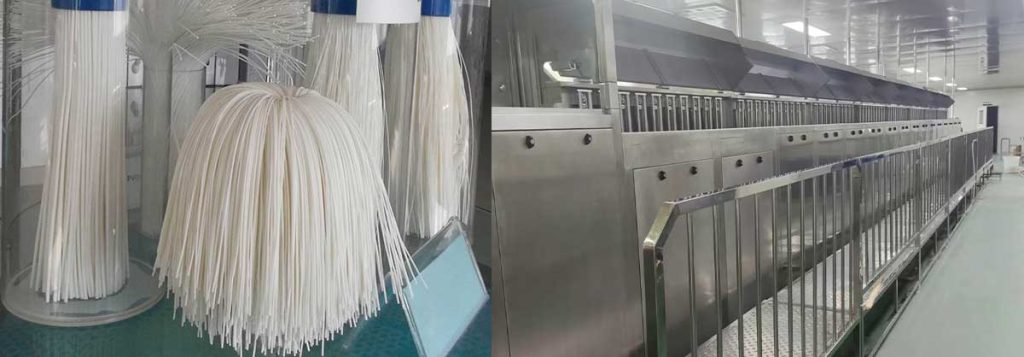
Customizing a hollow fiber membrane spinneret involves several important steps. Engineers focus on quality, compatibility, and material suitability to match each application. High-quality filters improve reliability and reduce maintenance. Compatibility with the intended use prevents inefficiencies. When seeking specialized solutions, experts recommend the following:
- Engage with engineers to discuss customization needs.
- Assess the supplier’s ability to modify equipment.
- Collaborate on design for tailored results.
For best results, consult experienced suppliers who support design collaboration and understand your process requirements.
FAQ
What Factors Influence Spinneret Customization?
Manufacturers consider polymer type, desired fiber diameter, and application needs. They select nozzle size, channel geometry, and material based on these factors.
Tip: Matching spinneret design to process requirements improves membrane quality.
How Does Spinneret Material Affect Membrane Performance?
Spinneret material determines durability and resistance to corrosion. Stainless steel and titanium offer long service life.
| Material | Benefit |
|---|---|
| Stainless Steel | Corrosion resistance |
| Titanium | High strength |
Can Spinneret Design Be Modified for Different Applications?
Engineers adjust nozzle size, channel shape, and modular components to suit various filtration tasks. Modular spinnerets allow quick changes for new processes.
- Nozzle diameter
- Channel geometry
- Modular features
What Maintenance Practices Extend Spinneret Lifespan?
Regular cleaning, inspection, and professional servicing prevent clogs and wear. Operators use backflushing and surface re-polishing to maintain performance.
Note: Consistent maintenance ensures reliable membrane production.