


Hollow fiber membrane filter supports critical industrial processes by enabling precise microfiltration and ultrafiltration. Many industries rely on these filters for removing bacteria, viruses, and particulates from liquids, as well as for pretreatment in reverse osmosis systems. The table below highlights key features:
| Feature | Description |
|---|---|
| Pore Diameter | 0.03 μ for bacteria, virus, and particulate removal |
| Material | PVDF polymeric for durability and resistance |
| Cleaning | Hydrophilic fibers for easy cleaning |
| Flow Configuration | Outside In for high solids tolerance |
| Housing | U-PVC for cost-effective installation |
Industries use these filters for applications such as drinking water purification, wastewater treatment, and process water recovery. Manufacturing advances, like the hollow fiber spinning machine, improve filter performance and consistency.
Key Takeaways
- Hollow fiber membrane filter effectively removes contaminants like bacteria and viruses, ensuring high water quality in industrial applications.
- These filters are energy-efficient and cost-effective, operating without electrical energy and generating minimal waste.
- The unique structure of hollow fiber membranes allows for high filtration efficiency and adaptability to various industrial needs.
- Regular maintenance, including cleaning and pre-treatment, is essential to prevent fouling and maintain optimal filter performance.
- The growing market for hollow fiber membranes reflects their importance in water treatment, food processing, and chemical purification.
Industrial Applications of Hollow Fiber Membrane Filter
Water and Wastewater Treatment
Hollow fiber membrane filter plays a vital role in water and wastewater treatment. These filters remove suspended solids, bacteria, and oil droplets from industrial water streams. Microfiltration and ultrafiltration processes use hollow fiber membranes to separate larger particles and some bacteria, while ultrafiltration targets smaller contaminants. The global market for these applications continues to expand:
- Projected market size in 2024: USD 1.7 billion
- Expected growth rate (CAGR) from 2025 to 2034: 8.7%
- Water and wastewater treatment segment market share in 2024: approximately 41.4%
- Projected market size in 2034: USD 3.8 billion
Industrial filtration systems rely on hollow fiber membrane filter to meet strict water quality standards. Regulatory bodies such as the EPA and EU Water Framework Directive have raised filtration thresholds, prompting industries to adopt advanced polymeric and ceramic membranes. These filters help industries comply with environmental regulations and support water conservation efforts.
Note: Hollow fiber membranes provide high filtration efficiency with lower energy and chemical usage, making them a sustainable choice for industrial water treatment.
Oil, Gas and Chemical Purification
Oil, gas, and chemical industries use hollow fiber membrane filter for several critical applications. These include separating emulsions, recovering solvents, and purifying chemical streams. Hollow fiber membranes excel at separating oil and water mixtures during extraction, which is essential for environmental compliance and operational efficiency. Ceramic hollow fiber membranes withstand high temperatures and corrosive environments, making them suitable for challenging industrial conditions.
Hollow fiber membrane filter efficiently removes water, heavy hydrocarbons, and acid gases from natural gas streams. Advanced pretreatment systems enhance reliability, allowing for the removal of multiple impurities with minimal intervention. This improves the quality of natural gas and reduces operational costs. In biogas purification, hollow fiber membranes offer simplicity, scalability, and cost-effectiveness compared to traditional methods. Their large surface area increases gas separation efficiency, making them ideal for removing impurities such as CO2.
Key benefits of hollow fiber membranes in industrial filtration include:
- Effective removal of microbiological contaminants (bacteria, fungi, viruses)
- Non-chemical separation that preserves fluid composition
- Energy-efficient operation with zero electrical energy required
- Cost-effective filtration with minimal waste generation
- Space-saving design with no need for large storage tanks
Food and Beverage Processing
The food and beverage industry depends on hollow fiber membrane filter for a range of applications. These filters clarify liquids, remove microbes, and extend product shelf life. Hollow fiber membranes help manufacturers meet health regulations for safe drinking water and ensure product purity. Applications include juice clarification, dairy processing, and beverage sterilization.
Regulatory standards drive the adoption of advanced filtration technologies in food and beverage manufacturing. Stringent food safety requirements and consumer demand for high-quality products encourage companies to use hollow fiber membranes. These filters maintain product quality and safety while supporting efficient industrial operations.
A comparison of filtration technologies highlights the advantages of hollow fiber membranes:
| Filtration Technology | Operational Cost | Energy Use | Efficiency | Suitability for High Throughput |
|---|---|---|---|---|
| Hollow-fiber Membranes | Low | Low | High | Ideal |
| Spiral-wound Modules | Lower | Moderate | High | Good |
Hollow fiber membrane filter offers lower operational costs and higher efficiency, making them a preferred choice for many industrial filtration applications.
How Does Hollow Fiber Membrane Filter Work?
Structure and Filtration Mechanism
Hollow fiber membranes feature a unique structure that maximizes their effectiveness in industrial filtration. Each membrane consists of thousands of thin, flexible fibers bundled together. This design creates a high surface area-to-volume ratio, which allows the system to filter large volumes of liquid using minimal material. The flexible configuration supports customization in pore size and arrangement, making these membranes adaptable for a wide range of industrial applications.
The filtration process relies on two main mechanisms: microfiltration and ultrafiltration. Both use semi-permeable membranes and differential pressure to separate substances. Microfiltration primarily removes larger particles by trapping them on the membrane surface, while ultrafiltration targets smaller molecules through size exclusion. The cross-flow filtration pattern, where liquid flows tangentially across the membrane, helps reduce fouling and maintains high filtration efficiency. This approach ensures that suspended solids do not accumulate, which extends the lifespan of the hollow fiber membranes.
- Ultrafiltration allows only small molecules to pass, retaining larger ones.
- Microfiltration uses adsorption to capture larger particles.
- Both methods use pressure to force water and small particles through the membrane, leaving contaminants behind.
Note: The structure of hollow fiber membranes enables efficient cross-flow filtration, which boosts performance and reduces maintenance needs.
Role of Hollow Fiber Spinning Machine
The hollow fiber spinning machine plays a critical role in producing high-quality hollow-fiber membranes for industrial filtration. This machine controls several key parameters during manufacturing, such as temperature, pressure, polymer concentration, and spinning speed. Each parameter directly affects the membrane’s properties and performance.
| Parameter | Impact on Membrane Quality |
|---|---|
| Temperature | Influences pore size and mechanical strength |
| Pressure | Affects the formation and integrity of fibers |
| Polymer Concentration | Determines the membrane’s chemical properties |
| Spinning Speed | Impacts the uniformity and consistency of fibers |
Manufacturers use the hollow fiber spinning machine to maintain strict limits on flow rates and chemical composition. This precision enables the custom design of membrane properties, such as pore size and strength, to meet specific industrial requirements. Recent advancements in spinning technology and material formulations have led to more efficient and durable membranes. These improvements help reduce production costs and enhance operational efficiency for membrane filter systems.
Advantages and Limitations
Key Benefits in Industry
Hollow fiber membranes deliver significant advantages in industrial filtration. Their design provides a large surface area, which increases separation efficiency and supports high throughput. Many industries rely on these membranes for effective removal of contaminants, including bacteria, fungi, and viruses. The following table highlights key benefits and features:
| Benefit/Feature | Description |
|---|---|
| Effective removal of contaminants | Removes microbiological contaminants such as bacteria, fungi, and viruses. |
| Non-chemical separation | Filters fluids without altering their composition, ensuring purity. |
| Energy efficiency | Operates without electrical energy, reducing operational costs. |
| Cost-effectiveness | Offers an economically viable solution for industrial applications. |
| Zero waste generation | Produces no waste, supporting sustainable practices. |
| Space-saving features | Eliminates the need for large storage tanks, optimizing floor space. |
| Applications in oil and gas processing | Used for residual oil and sulfate removal in challenging environments. |
| Biopharmaceutical applications | Enhances medical treatments through antibiotic and enzyme filtration. |
Hollow fiber membranes also improve process efficiency and product quality. Their ease of cleaning and simple structure help prevent secondary pollution. Industries use these membranes for solvent recovery, catalyst filtration, and chemical separation in harsh environments.
Common Challenges
Industrial users face several challenges when implementing hollow fiber membrane filter form biofilms, which resist cleaning and reduce filtration efficiency. Colloidal fouling results from fine particles blocking membrane pores, causing flux decline and increased energy use. Organic fouling, caused by fats, oils, and proteins, reduces permeability and requires frequent cleaning. Limited membrane availability and technical difficulties in surface modification can restrict adoption. High costs for advanced membranes may deter some industries from switching to newer technologies.
Tip: Regular cleaning and pre-treatment help reduce fouling and maintain membrane performance.
Implementation Considerations
Selecting the right hollow fiber membranes for industrial applications requires careful evaluation. Pore size determines what passes through the filter, with options ranging from 0.1μm to 100μm. Temperature constraints and chemical compatibility influence material selection. Surface area requirements depend on process volume and fouling potential. Polyethylene and polysulfone membranes offer resistance to chemical degradation and fouling. Modular designs allow easy scaling from laboratory to commercial manufacturing, improving productivity and cost efficiency. Factors such as water quality, flow rates, and specific contaminants play a crucial role in achieving optimal filtration performance.
Conclusion
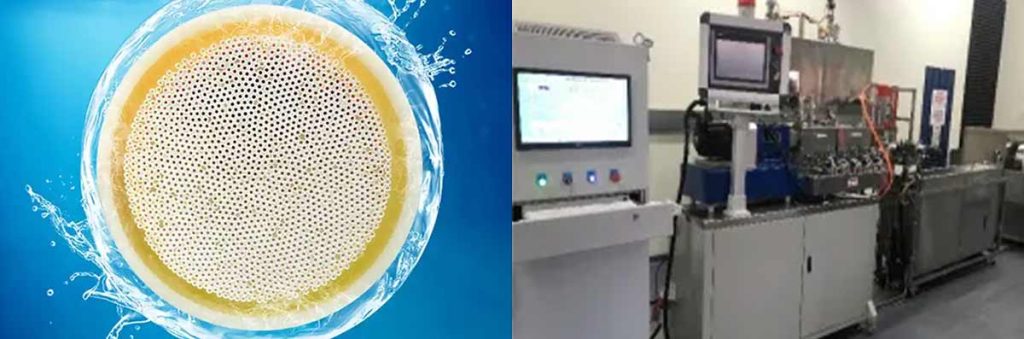
Hollow fiber membrane filter supports industrial chemical processing by improving separation efficiency and product quality. These filters offer several technical advantages:
- Spacious surface area with compact footprint
- Efficient flow paths and high packing density
- High flow rate and loading capacity
- Flexibility for unique filter configurations
Future trends include:
- Growth in water treatment, biopharmaceutical, and food sectors
- Innovations in membrane durability and fouling resistance
- Global market expansion driven by new technologies
These advancements will help industries achieve better resource management and sustainability.
FAQ
What Makes Hollow Fiber Membrane Filter Unique in Industrial Applications?
Hollow fiber membrane filter offers a high surface area in a compact design. They handle large volumes and provide efficient separation of contaminants. Many industries choose them for their reliability and adaptability.
How Do Hollow Fiber Membrane Filters Improve Water Quality?
These filters remove bacteria, viruses, and suspended solids from water. They help industries meet strict water quality standards. Their structure supports effective removal of even tiny particles.
Can Hollow Fiber Membrane Filters Be Used in Fluid Filtration Systems?
Yes, hollow fiber membrane filters work well in fluid filtration systems. They support processes that require precise separation of particles and microbes. Their design allows for easy integration into existing setups.
What Maintenance Do Hollow Fiber Membrane Filters Require?
Regular cleaning helps maintain filter performance. Operators often use backwashing or chemical cleaning to remove fouling. Proper maintenance extends the lifespan of the membranes.
Are Hollow Fiber Membrane Filters Suitable for High-Temperature Processes?
Hollow fiber membranes withstand high temperatures and harsh chemicals. They suit demanding industrial environments where polymeric membranes may fail.