


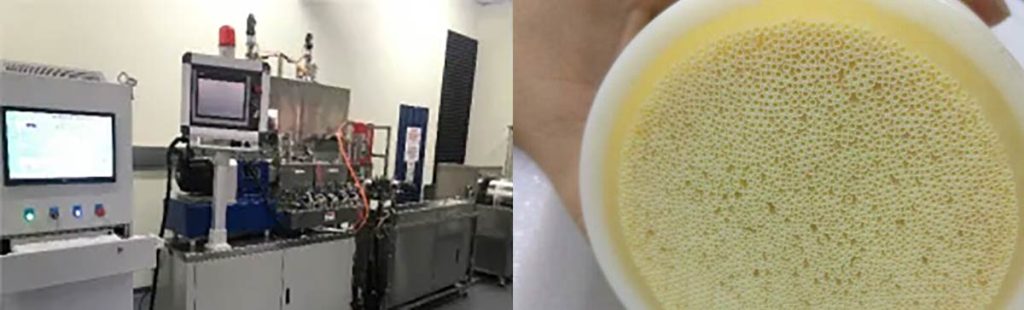
Optimizing hollow fiber membrane module design accelerates system performance in advanced filtration technologies. Researchers found that reducing the compliance of the blood conduit adjacent to the fiber bundle and minimizing bundle resistance can boost gas exchange efficiency. Innovation plays a central role, as the hollow fiber spinning machine enables precise control over module geometry. Key factors drive rapid gains in sustainability and innovation-driven improvements:
- The physical characteristics of membranes, such as hydrophobicity and thickness, determine flux improvement.
- The geometric structure of the support layer impacts separation efficiency.
- Membrane structure influences vapor and heat transport.
Market trends show that innovation in hollow fiber membrane module design supports effective optimization.
Key Takeaways
- Optimize fiber diameter and length to enhance filtration rates and reduce costs in hollow fiber membrane.
- Maintain an ideal packing density to maximize surface area for filtration while avoiding flow disruptions that can lower performance.
- Understand fluid dynamics by choosing the right flow configuration to improve contaminant separation and maintain high flux.
- Select appropriate materials and apply surface modifications to enhance membrane efficiency and extend operational lifespan.
- Implement regular monitoring and feedback systems to quickly address issues and sustain high performance in membrane modules.
Fiber Geometry in Hollow Fiber Membrane Module Design
Diameter and Length Optimization
The geometry of fibers plays a crucial role in the performance of a hollow fiber membrane module. Engineers select fiber diameter and length based on the desired application, such as ultrafiltration or gas separation. Smaller diameters increase the surface area available for filtration, which boosts flux and enhances separation efficiency. Longer fibers allow for greater contact time between feed and membranes, improving contaminant removal. However, excessive length can increase resistance and reduce overall module efficiency. The market of hollow fiber membrane module often favors designs that balance these factors to maximize throughput and minimize energy consumption. Manufacturers use advanced hollow fiber membrane spinning machines to produce hollow fiber membranes with precise dimensions, ensuring consistent performance across modules.
Tip: Adjusting fiber diameter and length can quickly improve ultrafiltration rates and reduce operational costs in hollow fiber membrane module systems.
Packing Density and Surface Area
Packing density refers to how tightly fibers are arranged within the module. High packing density increases the effective surface area, which is essential for maximizing ultrafiltration capacity. The hollow fiber membrane module market values modules with optimal packing density because they deliver higher flux and better contaminant removal. However, simulations show that poor packing at the fiber bundle-case interface can disrupt fluid distribution. As packing density rises, negative effects on flow extend across the bundle diameter, leading to reduced module performance. This decrease in recovery and dimensionless feed flow results in higher operational costs due to increased losses in the permeate. Designers must carefully balance packing density to avoid these pitfalls and maintain efficient operation. The market of hollow fiber membrane module continues to innovate, seeking new ways to optimize fiber arrangement for improved ultrafiltration and flux.
- Key benefits of optimal packing density:
- Increased surface area for filtration
- Enhanced ultrafiltration performance
- Lower operational costs
The geometry and arrangement of fibers directly influence the effectiveness of hollow fiber membrane modules. The hollow fiber membrane module market relies on these design strategies to deliver reliable and efficient ultrafiltration solutions.
Fluid Dynamics and Flow Configuration
Understanding fluid dynamics inside a hollow fiber membrane module is essential for boosting efficiency and reliability. The way fluids move through the module affects how well the system separates contaminants and maintains high flux. Engineers in the hollow fiber membrane module market focus on both shell-side and tube-side flow to achieve the best results.
Shell-Side vs. Tube-Side Flow
Shell-side flow means the feed solution moves around the outside of the hollow fibers, while tube-side flow means the feed passes through the inside of the fibers. Each flow type offers unique advantages for the performance of hollow fibers. Shell-side flow often provides better mixing and contact between the feed and the membrane surface. Tube-side flow can reduce fouling and make cleaning easier.
The hollow fiber membrane module market uses both configurations, depending on the application. For example, water treatment systems often use shell-side flow to maximize contact and improve flux. Gas separation modules may use tube-side flow for better control of pressure and flow rates.
The geometry of air-flow channels and the arrangement of spacers inside the module also play a major role. These factors influence the exit axial velocity, which is the speed at which fluid leaves the module. Higher exit axial velocity can increase permeate production rate, but it may also raise energy costs. The hollow fiber membrane module market studies these effects to find the best balance between efficiency and cost.
The following table summarizes how air-flow channel geometry and spacer layout affect module performance:
| Evidence Description | Findings |
|---|---|
| Spacer layout effects | Significant impact on membrane module efficiency, increasing pressure drop and heat transfer coefficient by about two times. |
| Temperature polarization | More pronounced at high feed temperatures and low feed velocities, affecting thermal efficiency. |
| Flow distribution | Improved by optimal spacer positioning, enhancing permeate flux and overall efficiency. |
Simulation studies show that the heat transfer coefficient increases by about two times when spacers are present. Staggered filament orientation leads to a more uniform temperature polarization coefficient, which improves heat transfer. Permeate flux increases when the flow rate and inlet temperature rise, and when the membrane module length decreases. The market of hollow fiber membrane module uses these findings to design modules that deliver high flux performance and reliable operation.
Minimizing Pressure Drop
Pressure drop refers to the loss of pressure as fluid moves through the hollow fiber membrane module. High pressure drop can reduce system efficiency and increase energy costs. The hollow fiber membrane module market seeks ways to minimize pressure drop while maintaining high flux.
Engineers use several strategies to achieve this goal. They optimize module design by adjusting flow channels and spacer configurations. Aeration systems help control pressure drop by reducing fouling and keeping the membrane surface clean. Advanced monitoring systems collect real-time data and respond automatically to changes, which helps manage pressure drop and maintain steady operation.
The table below highlights effective strategies for minimizing pressure drop:
| Strategy | Description |
|---|---|
| Optimized Module Design | Specific design features such as optimized flow channels and improved spacer configurations reduce pressure drop while maintaining filtration efficiency. |
| Aeration Systems | Incorporating aeration helps control pressure drop by reducing fouling and maintaining membrane permeability through turbulence. |
| Advanced Monitoring Systems | Real-time data collection and automated responses help manage pressure drop by detecting fouling and other issues early. |
Effective flow distribution is also important for managing shear forces and pressure drops. Many hollow fiber membrane module designs include flow distributors, baffles, or turbulence promoters. These features ensure that fluid moves evenly across all fibers, which helps maintain high flux and reduces the risk of clogging.
The hollow fiber membrane module market continues to innovate in this area. By focusing on fluid dynamics and flow configuration, manufacturers can deliver modules that offer high performance, low energy use, and long service life.
Mass Transfer and Material Selection
Reducing Mass Transfer Resistance
Engineers recognize that mass transfer resistance limits the effectiveness of a hollow fiber membrane module. This resistance often arises from how fibers are packed and arranged. Studies show that mass transfer correlations depend strongly on packing density. When fibers are packed too tightly or unevenly, fluid cannot flow smoothly. This non-uniform placement increases resistance and reduces the efficiency of ultrafiltration. Fractal theory helps researchers analyze these effects and understand how to improve module design.
Nonuniform packing at the fiber bundle–case interface can cause poor fluid distribution. This problem leads to lower separation rates in gas modules and can impact ultrafiltration membranes used for wastewater treatment. High-fidelity simulations help designers see how these issues affect module performance. They use this information to set better manufacturing guidelines for hollow fiber membrane module production.
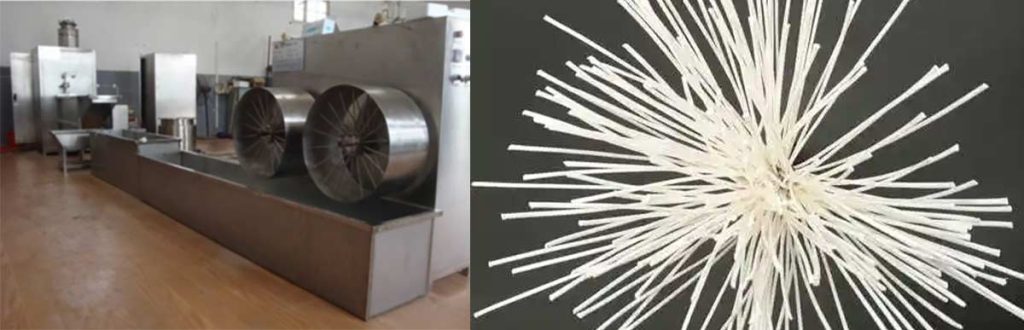
Several design modifications can reduce mass transfer resistance and improve ultrafiltration:
- Engineers optimize module design for better flow distribution. They adjust fiber packing density and module geometry to enhance membrane efficiency.
- Proper design ensures uniform flow, which minimizes pressure drop and reduces fouling.
- Biomimetic structures in spacer designs create efficient flow paths. These structures lower energy losses while maintaining effective mass transfer.
These strategies help hollow fiber membrane module systems deliver reliable ultrafiltration for wastewater treatment and biologically treated wastewater. Improved flow distribution also supports higher flux and better contaminant removal. By focusing on these factors, engineers can boost the performance of the membrane filtration process.
Material Choice and Surface Modification
Material selection plays a key role in the success of a hollow fiber membrane module. The choice of polymer or ceramic affects how well the module handles ultrafiltration and separation. Surface modifications can further enhance selectivity by changing how membranes interact with specific molecules. This improvement allows for better separation efficiency while maintaining permeability.
Controlling pore size and distribution is essential for selectivity. Tailored membranes can separate molecules based on size, which is important for ultrafiltration membranes used in wastewater treatment. However, there is a trade-off between mechanical stability and separation performance. Enhancing one property can sometimes reduce the other, so engineers must balance these needs.
Surface modification techniques have shown significant improvements in fouling resistance. The table below compares two approaches for polyethersulfone (PES) membranes:
| Surface Modification Technique | Membrane Type | Improvement in Fouling Resistance | Initial Permeability Maintenance | Adhesion Force (mN m−1) |
|---|---|---|---|---|
| Polymerized surfactant coating | PES | 43% improvement | 65% | < 0.5 |
| Unmodified PES membrane | PES | N/A | 22% | 1.5 |
Polymerized surfactant coatings provide a 43% improvement in fouling resistance compared to unmodified membranes. They also help maintain higher initial permeability and reduce adhesion force. These benefits make them valuable for ultrafiltration applications, especially in challenging wastewater environments.
Material choice and surface modification directly impact the effectiveness of hollow fiber membrane module systems. By selecting the right materials and applying advanced coatings, engineers can extend module life and maintain high ultrafiltration rates. These improvements support efficient treatment of wastewater and biologically treated wastewater, ensuring that ultrafiltration membranes continue to deliver strong results.
Compact Structure and Scalability
High Surface Area Advantage
Compact hollow fiber modules offer significant benefits over flat sheet designs. These modules provide a high packing density, which means engineers can fit a large membrane area into a small space. For example, a fiber bundle with a diameter of about 4 inches can deliver up to 600 square meters of membrane area. This design supports high throughput in environments where space is limited and rapid growth in demand occurs.
| Advantage | Hollow Fiber Modules | Flat Sheet Designs |
|---|---|---|
| High Packing Density | Provides a large membrane area in a compact module | Less efficient in space |
| Flexibility in Operation | Handles variations in feed composition and flow rate | Limited versatility |
| Cost-Effective | Lower production and operational costs | Higher costs |
Membranes in hollow fiber modules allow for efficient separation and filtration. The compact structure supports the growth of advanced water treatment and industrial processes. High surface area ensures that systems can handle increased flow rates without requiring more physical space. This advantage drives the growth of hollow fiber technology in many sectors.
Modular Integration and Maintenance
Designers use modular strategies to support easy scaling and integration of hollow fiber membrane modules. They optimize fiber packing density, module geometry, and flow distribution patterns to enhance efficiency and support system growth. The following table outlines key design strategies and scaling stages:
| Design Strategy | Description |
|---|---|
| Fiber Packing Density | Optimizing the arrangement of fibers to enhance membrane efficiency. |
| Module Geometry | Designing the shape of the module to ensure uniform flow distribution and minimize pressure drop. |
| Flow Distribution Patterns | Implementing effective flow patterns to reduce fouling and enhance separation efficiency. |
| Scaling Stage | Description |
|---|---|
| Bench-Scale Testing | Initial testing phase with small surface area (0.01-1 m²) to evaluate design efficiency. |
| Pilot-Scale Demonstrations | Intermediate phase (1-10 m²) to refine designs and assess operational parameters. |
| Full Industrial Deployment | Final phase (10-1000+ m²) requiring recalibration of pressure drop models for larger scales. |
Recent trends show a move toward higher integration, modularization, and on-site adaptability. These trends support the rapid growth of membrane-based solutions in diverse applications.
Maintenance practices also play a vital role in ensuring long-term performance and supporting growth. Effective refurbishment strategies can extend the operational lifespan of modules by 30-50 percent. Technicians use potting repair techniques, such as removing damaged material and applying bonding compounds, to maintain membrane integrity. Quality control standards ensure that refurbished modules perform as well as new units.
Note: Regular maintenance and refurbishment help reduce waste and environmental impact, supporting sustainable growth in membrane technology.
Membranes in modular systems enable easy upgrades and expansion, which supports the ongoing growth of water treatment and industrial filtration sectors.
Quick Optimization Tips for Hollow Fiber Membrane Module Design
Fast Design Adjustments
Engineers can achieve rapid performance gains in hollow fiber membrane modules by applying targeted design modifications. Small changes often lead to significant improvements. For example, applying a polydopamine coating through oxidative polymerization on PTFE hollow fiber membranes enhances antifouling properties and helps recover flux quickly. Incorporating zinc oxide nanoparticles into the membrane structure also boosts efficiency and fouling resistance. These adjustments support ongoing innovation in the field and allow for immediate optimization of module performance.
| Modification Technique | Description | Performance Improvement |
|---|---|---|
| Polydopamine Coating | Oxidative polymerization of dopamine on PTFE membranes | Enhanced antifouling properties and flux recovery |
| Zinc Oxide Nanoparticles | Incorporated into membrane structure | Improved efficiency and fouling resistance |
However, engineers must remain aware of common pitfalls during fast optimization. Membrane stability issues, such as fouling and chemical degradation, can reduce performance by up to 30% within the first 1,000 hours. Scaling up production may introduce variations in fiber dimensions, leading to inconsistent permeance. Non-uniform flow patterns can cause up to 30% of the membrane area to be underutilized. Economic factors also play a role, as costs remain higher than desired targets.
Monitoring and Feedback
Continuous monitoring and feedback are essential for sustaining high performance after initial adjustments. Real-time data collection allows operators to detect issues like fouling or flow maldistribution early. Automated feedback systems can adjust operational parameters to maintain optimal conditions. This approach supports ongoing optimization and encourages further innovation in module design.
Tip: Regularly review system data and adjust settings to address emerging challenges. This proactive approach helps maintain efficiency and extends module lifespan.
By focusing on these quick optimization strategies and monitoring key factors, engineers can leverage technology to achieve rapid and lasting improvements in hollow fiber membrane module performance.
Conclusion
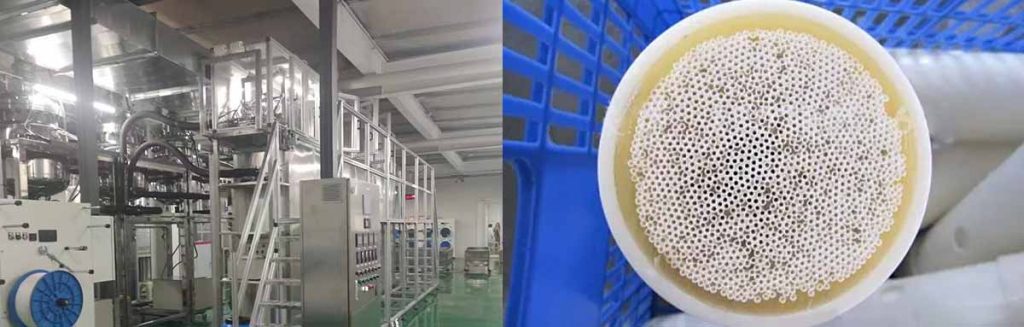
Focusing on fluid dynamics, mass transfer, fiber geometry, and compact module design enables rapid performance gains in hollow fiber membrane systems. Industry leaders use advanced materials, automation, and real-time monitoring to improve efficiency and reliability. The market of hollow fiber spinning machine grows as automation and digitalization drive faster, cost-effective design improvements. Key performance indicators include maximizing permeation flux, balancing selectivity with energy use, and optimizing pressure drop.
Predictive maintenance and intelligent monitoring help sustain high performance, reduce downtime, and extend membrane lifespan.
| Future Trend | Impact |
|---|---|
| High-efficiency membrane design | Greater surface area and stable flux |
| Durable, anti-fouling materials | Improved longevity and resistance |
| Modular, integrated systems | Easier scaling and adaptability |
| Digital monitoring and automatic control | Enhanced operational efficiency |
FAQ
What Is a Hollow Fiber Membrane Module?
A hollow fiber membrane module is a filtration device. It contains many thin, tube-like fibers. Fluids pass through or around these fibers. The module separates particles or gases based on size or chemical properties.
How Does Fiber Geometry Affect Performance?
Fiber geometry, including diameter and length, determines surface area and contact time. Smaller diameters increase filtration area. Longer fibers allow more interaction with the feed. Proper geometry boosts efficiency and reduces energy use.
Why Is Packing Density Important?
Packing density shows how tightly fibers fit inside the module. High packing density increases surface area for filtration. However, too much density can block flow and reduce performance. Designers balance density for best results.
What Materials Are Used for Hollow Fiber Membranes?
Manufacturers use polymers like polyethersulfone (PES) or ceramics. Material choice affects strength, chemical resistance, and fouling. Surface modifications, such as coatings, improve selectivity and lifespan.
How Can Operators Maintain High Module Performance?
Operators monitor system data and clean membranes regularly. They use automated feedback systems to adjust settings. Quick repairs and routine maintenance help prevent fouling and extend module life.