


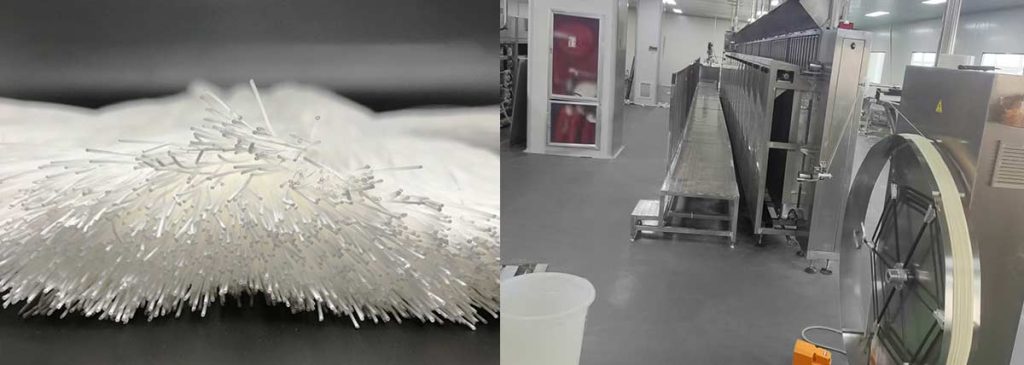
The hollow fiber membrane spinneret shapes the fiber wall thickness uniformity during production. Spinneret geometry, orifice precision, and operational factors such as flow rate and polymer solution properties directly influence fiber structure. Consistent wall thickness supports stable filtration performance and extends membrane lifespan.
- Variations in wall thickness can change membrane morphology and permeability, affecting filtration efficiency.
- Increased polymer flow rate thickens fiber walls, leading to larger surface pores and altered filtration.
- Non-uniformity causes uneven flux, higher pressure, and faster fouling, reducing module effectiveness.
Key Takeaways
- Spinneret design directly affects fiber wall thickness. Precise geometry and orifice dimensions lead to better filtration performance.
- Maintaining stable flow rates and pressure is crucial. Operators should monitor these parameters to ensure consistent fiber quality.
- Regular spinneret maintenance prevents clogging and wear. Clean and calibrated spinnerets produce fibers with uniform thickness.
- Real-time monitoring technologies help detect thickness variations. Operators can adjust parameters quickly to maintain membrane quality.
- Optimizing polymer solution properties enhances uniformity. Proper viscosity adjustments lead to better membrane performance.
Hollow Fiber Membrane Spinneret Design
Geometry and Orifice Precision
The geometry of a hollow fiber membrane spinneret determines the shape and size of the fibers produced. Engineers design spinnerets with fine tolerances to control the inner and outer dimensions of the hollow fibers. These dimensions directly affect wall thickness and the overall geometry, which are essential for effective filtration membranes. Manufacturers often use stainless steel or specialized alloys to ensure the hollow fiber spinneret maintains its precision during operation.
Precise orifice dimensions in the spinneret play a critical role in fiber wall thickness uniformity. The inner and outer diameters of the capillary influence the diameter and wall thickness of the fibers. Even small variations in these measurements can cause significant differences in fiber morphology. When engineers optimize the geometric design by increasing the number of orifices and reducing their height, they improve both production efficiency and uniformity. This optimization leads to better pore distribution and enhances the performance of membranes in filtration applications.
Tip: Regular calibration of spinneret orifices helps maintain high precision and consistent fiber quality.
The mechanical strength of hollow fiber membranes also depends on spinneret design parameters. Higher shear rates in the spinneret create thicker and denser skin layers in the hollow fibers. Increased shear rates improve molecular orientation, which boosts tensile strength and Young’s modulus. However, as shear rate rises, pure water flux and elongation decrease, while storage modulus and tensile strength increase. These changes impact the overall quality and performance of the membrane.
Hole Distance and Channel Alignment
The spacing between holes in a hollow fiber spinneret affects the density and arrangement of the fibers. Uniform hole distance leads to improved packing density and regularity, which supports consistent wall thickness. When the hole distance varies, the fibers may show uneven thickness, reducing the uniformity and effectiveness of the membrane.
Channel alignment in spinneret design is another key factor. The alignment of the dope layer and bore tube diameters ensures that the fibers have uniform wall thickness. Concentricity, or the coaxial alignment of these channels, influences the bubble point pressure and filtration performance of the hollow fiber membranes. Poor alignment can result in uneven pore structures and variations in fiber wall thickness, which negatively affect filtration efficiency.
| Spinneret Feature | Impact on Fiber Wall Thickness Uniformity | Effect on Filtration Performance |
|---|---|---|
| Orifice Precision | High precision reduces thickness variation | Improves pore distribution |
| Hole Distance | Uniform spacing increases regularity | Enhances packing density |
| Channel Alignment | Proper alignment ensures uniformity | Boosts filtration efficiency |
Design optimization of the hollow fiber membrane spinneret supports better pore distribution and filtration performance. Engineers who focus on geometry, precision, and alignment produce membranes with consistent quality, suitable for a wide range of applications.
Hollow Fiber Spinneret Operation
Flow Rate and Pressure Control
Operators of the hollow fiber spinning machine must carefully manage flow rate and pressure to achieve uniform fiber wall thickness. The hollow fiber spinneret relies on stable operational parameters to produce high-performance fibers for water filtration and other applications. When the internal coagulant flow rate increases, the thickness of the fiber decreases sharply. For example, raising the internal coagulant flow rate from 2.6 to 13 ml/min can reduce membrane thickness by over 300%. This change occurs because higher flow rates increase internal pressure and the amount of coagulant at the inner surface during production.
Pressure control also plays a vital role in the hollow fiber spinneret. At an applied pressure of about 4 bar, the spinning process yields fibers with nearly uniform diameter, which improves wall thickness uniformity. Maintaining pressure around 4 to 4.5 bar supports consistent fiber quality. However, if the pressure rises to 5 bar, the fibers show greater variation in wall thickness, which reduces membrane performance.
Tip: Operators should monitor both flow rate and pressure closely to maintain optimal fiber quality and filtration efficiency.
The following table summarizes key operational parameters and their influence on membrane performance:
| Parameter | Description | Influence on Membrane Performance |
|---|---|---|
| Annular gap width (d) | The gap (thickness) of the dope flow channel. | Determines fiber wall thickness; narrower gaps yield thinner walls. |
| Concentricity | Coaxial alignment of dope and bore tube diameters at the spinneret outlet. | Affects wall thickness uniformity and bubble point pressure. |
Polymer Solution Factors
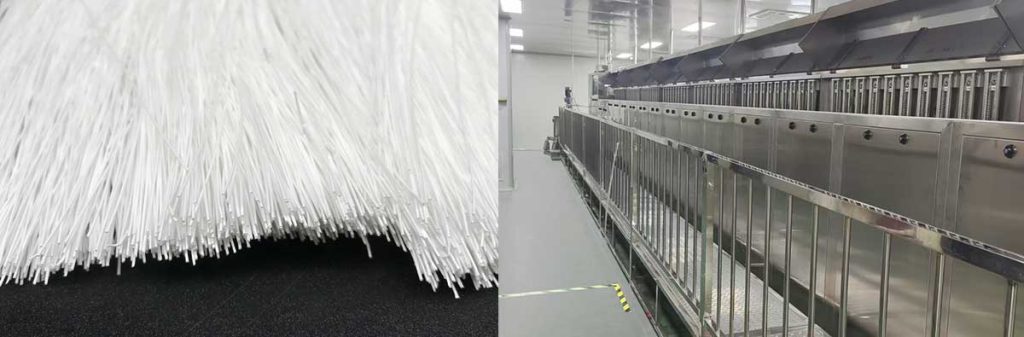
The properties of the polymer solution directly affect the hollow fiber spinneret’s ability to produce uniform membranes. High viscosity in the polymer solution can cause uneven wall thickness during hollow fiber spinning. This unevenness results from the way viscosity influences the membrane’s morphology. Operators must adjust the polymer solution to achieve the right balance for consistent wall thickness.
Increasing the flow rate of the polymer solution can improve the uniformity of the membrane thickness. This adjustment helps maintain the structural integrity of the hollow fiber membranes and supports reliable filtration performance. By optimizing both the polymer solution and the operational parameters of the hollow fiber spinning machine, manufacturers can produce filtration membranes with superior quality and consistent fiber wall thickness.
Addressing Non-Uniformity Issues
Common Causes and Solutions
Non-uniform wall thickness in hollow fiber membranes often results from several factors during production. The hollow fiber membrane spinneret plays a central role in determining fiber quality. Operators frequently encounter challenges with polymer coating uniformity, especially in braid-reinforced membranes. The speed at which the braid advances and the polymer dope flow rate both influence thickness. When the braid moves faster, the coating becomes thinner and more uniform. Slower speeds can create thicker, uneven areas. If the braid speed exceeds the dope flow rate, some sections may remain uncoated, causing inconsistencies in membrane thickness.
Non-uniform wall thickness impacts membrane performance and filtration efficiency. Poorer performance in gas separation modules leads to lower retentate recovery. This reduction increases operating costs because more pressurized nitrogen escapes during permeation. The loss of compression energy also affects carbon capture applications.
Operators can address these issues by optimizing process parameters. Adjusting the braid speed and dope flow rate helps maintain uniform coating. Monitoring these variables ensures consistent fiber quality and supports reliable filtration.
Note: Consistent monitoring of process variables reduces the risk of non-uniformity and improves membrane quality.
Spinneret Maintenance and Process Adjustments
Regular spinneret maintenance is essential for achieving uniform wall thickness. Over time, spinneret orifices may become clogged or worn, reducing precision and affecting fiber quality. Cleaning and calibrating the spinneret ensures that the hollow fiber spinneret continues to produce membranes with consistent thickness.
Industry leaders use several strategies to address non-uniformity in large-scale production:
- Improve module design for uniform flow distribution.
- Apply surface modifications to enhance membrane properties and reduce fouling.
- Use advanced materials to increase mechanical strength and separation capabilities.
- Employ chemical treatments and polymer grafting to alter surface properties.
- Incorporate functional additives for better separation performance.
Technical barriers include non-uniform flow patterns, which cause concentration polarization, and underutilization of membrane area due to channeling effects and dead zones. Process adjustments, such as optimizing flow rates and pressure, help overcome these challenges and improve filtration efficiency.
Routine spinneret maintenance and process optimization support consistent fiber quality and membrane performance across various applications.
Ensuring Consistent Wall Thickness
Design and Process Best Practices
Engineers achieve fiber quality uniform in hollow fiber spinning by following several best practices. They select a homogeneous membrane spinneret with precise geometry and high-quality materials. This choice ensures a uniform structure and supports high quality production. The spinneret design, including die precision and the layout of the die, plays a key role in maintaining thickness and feed uniformity. The length-to-diameter ratio of the spinneret affects filament uniformity and production yield. Proper filtering of the melt prevents clogging, which helps maintain fiber quality and performance consistency.
Operators also focus on the number of holes in the spinneret. An optimal number ensures even pressure distribution and consistent polymer flow. This approach leads to high-performance fibers and membranes with reliable filtration. High-performance membranes require careful control of spinneret parameters to support applications such as water filtration and advanced membrane technology.
Tip: Regular cleaning and calibration of the spinneret help maintain quality and consistency in membrane production.
Real-Time Monitoring and Quality Control
Modern membrane technology uses advanced tools for real-time monitoring and quality control. These tools help maintain fiber quality and ensure membrane performance. The following technologies support high quality production:
- Digital twin technology integrates online measurement of forming information and real-time control of processing parameters. This system enables intelligent control during the spinning process.
- Non-contact measuring devices, such as two contraposition laser profilometers, monitor the cross-sectional contours of fibers during production.
These technologies allow operators to detect deviations in wall thickness immediately. They can adjust parameters to maintain consistency and achieve a uniform structure. Real-time monitoring ensures that membranes meet strict quality standards for various applications. High-performance membranes produced with these methods show improved performance and reliability in water filtration and other fields.
Conclusion
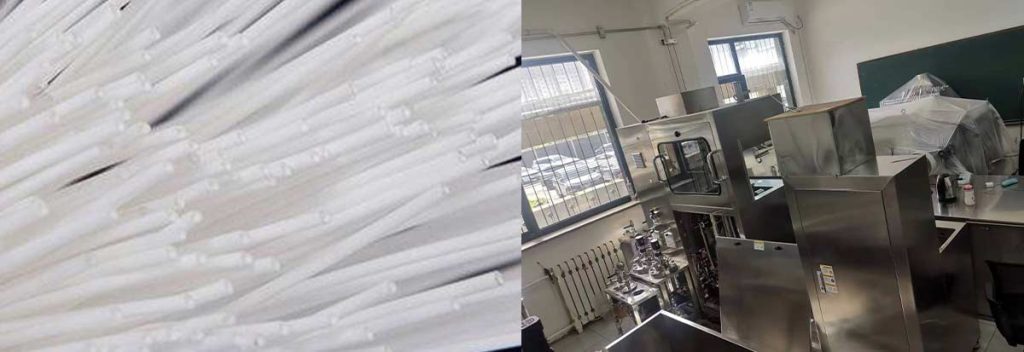
The design and operation of the hollow fiber membrane spinneret shape fiber wall thickness uniformity. Engineers who optimize spinneret geometry and control machine parameters produce membranes with reliable quality for many applications. Recent studies highlight several key practices:
- Controlling extrusion parameters reduces fiber breakage.
- Managing shear fields through fluid dynamics enhances membrane integrity.
- Optimizing packing density improves uniformity and membrane performance.
Operators who maintain stable flow and pressure, adjust polymer solutions, and perform regular spinneret maintenance support consistent membrane thickness. These steps help membranes deliver dependable results in filtration and other applications.
Tip: Applying these best practices ensures high membrane quality and supports successful production.
FAQ
What Is the Role of Spinneret Geometry in Fiber Wall Thickness?
Spinneret geometry shapes the inner and outer dimensions of hollow fibers. Engineers select precise designs to control wall thickness. This process helps maintain consistent filtration performance in different applications.
How Does Flow Rate Affect Wall Thickness Uniformity?
Operators adjust flow rate to control fiber wall thickness. Higher flow rates can reduce thickness, while lower rates may increase it. Stable flow ensures uniformity and supports reliable membrane quality.
Why Is Spinneret Maintenance Important?
Regular spinneret maintenance prevents clogging and wear. Clean orifices help produce fibers with consistent wall thickness. Maintenance supports long-term membrane performance and reduces production issues.
What Technologies Help Monitor Fiber Wall Thickness?
Digital twin systems and laser profilometers provide real-time monitoring. These tools detect thickness variations quickly. Operators use this data to adjust parameters and maintain membrane quality.
How Do Polymer Solution Properties Influence Membrane Uniformity?
Polymer solution viscosity affects fiber morphology. Operators optimize viscosity to achieve even wall thickness. Proper adjustment leads to membranes suitable for various applications.