


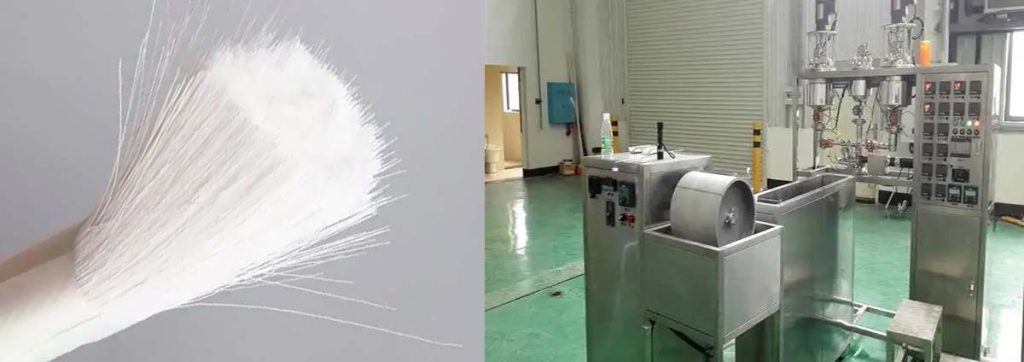
Controlling fiber morphology in a hollow fiber spinning machine shapes membrane structure and performance. Membrane performance improves or declines based on changes in fiber diameter, wall thickness, and internal layer thickness. For example, increasing dope solution flow rate or bore fluid flow rate alters hollow fiber membranes, affecting their outer and inner diameters. Adjusting parameters like wind-up speed and draw ratio in the spinning machine changes fiber packing and reduces macro-voids. Selecting suitable polymers and monitoring spinning conditions helps optimize membrane morphology and achieve consistent fiber quality.
Fiber morphology directly impacts hollow fiber membranes, making careful control essential for high membrane performance.
Key Takeaways
- Controlling fiber morphology is crucial for optimizing membrane performance in hollow fiber spinning machine.
- Adjusting spinning parameters like air gap and flow rates can significantly enhance fiber structure and membrane efficiency.
- Selecting the right dope solution and polymer type directly influences the thickness and quality of hollow fibers.
- Real-time monitoring of spinning conditions helps maintain consistent fiber quality and improves overall membrane performance.
- Implementing best practices in quality control and troubleshooting can prevent common issues and ensure reliable membrane fabrication.
Hollow Fiber Spinning Machine Basics
Spinning Process Overview
A hollow fiber spinning machine enables the continuous fabrication of hollow fibers for membrane applications. The process begins with the extrusion of a dope solution through a hollow fiber spinneret. This spinneret features a tube-in-orifice design, which allows the dope solution to form the outer layer while a bore fluid creates the hollow core. The spinneret typically has an inner diameter between 0.5 and 1 mm and an outer diameter between 0.9 and 2 mm. The dope solution moves through the spinneret under gas pressure, while the bore fluid enters through the central tube. This setup ensures the formation of a consistent hollow structure during membrane fabrication.
The spinning process uses several methods, including melt spinning, dry spinning, wet spinning, and dry/wet spinning. After extrusion, the nascent fiber passes through an air gap before entering a coagulation bath. This sequence is crucial for controlling the initial fiber structure and membrane properties.
The design of the hollow fiber spinneret ensures uniform flow and pressure distribution, which is essential for producing fibers with consistent mechanical quality and membrane performance.
The table below summarizes how key parameters influence fiber consistency and structure during membrane fabrication:
| Parameter Type | Influence on Fiber Morphology |
|---|---|
| Solution Properties | Material concentrations and viscosities affect the spinning process and final fiber structure. |
| Coagulation Kinetics | Slow diffusion leads to uniform porous membranes; fast coagulation creates denser fibers. |
| Production Techniques | Optimized extrusion rates and coagulation conditions ensure consistent fiber quality during membrane fabrication. |
Phase Inversion and Solidification
Phase inversion is a critical step in hollow fiber membrane fabrication. This process transforms the liquid dope solution into a solid membrane structure. When the extruded fiber enters the coagulation bath, solvent and non-solvent exchange occurs, causing the polymer to solidify and form the membrane.
Several factors influence phase inversion and the resulting fiber morphology:
- Increasing the bore fluid flow rate leads to elongated voids and thinner fiber walls, which improves pure water permeability in the membrane.
- A greater air gap distance allows for more extensive phase inversion, resulting in larger pore diameters and enhanced membrane performance.
- Adding particles such as AC-MgO during fabrication increases hydrophilicity and promotes a more porous membrane structure.
The rate of solidification also affects the final fiber morphology. For example, higher internal coagulant flow rates can create finger-like or highly porous structures, while lower rates produce skinless, more uniform fibers. The table below illustrates how different internal coagulant flow rates impact the resulting fiber structure:
| Internal Coagulant Flow Rate (ml/min) | Resulting Structure Description |
|---|---|
| 3.6 | Skinless porous structure |
| 5 | Similar structure with smaller pores |
| 7 | Formation of finger-like structures |
| 9 | Porous structure with high pore density |
| 13 | Surface with porous structure and high density |
Understanding these basics of the hollow fiber spinning machine and membrane fabrication process helps operators control fiber morphology and achieve desired membrane properties for various applications.
Morphology and Membrane Performance
Why Membrane Morphology Matters
Membrane morphology shapes the fundamental properties of hollow fiber membranes. Operators in hollow fiber spinning machine environments observe that fiber structure directly influences membrane performance. The arrangement and size of pores, wall thickness, and surface roughness determine permeability and separation efficiency. Membrane morphology affects how water, gases, or solutes move through the fiber. Smoother surfaces and hydrophilic properties reduce fouling, which extends operational lifespan. Membrane fabrication techniques, such as adjusting shear rate, alter fiber morphology and impact flux and rejection rates. Scanning electron microscopy and polarized infrared spectroscopy provide characterization of fiber structure and molecular orientation. These tools help operators understand how fiber morphology links to membrane performance.
Membrane morphology, including surface roughness and hydrophilicity, significantly affects fouling resistance. Smoother membranes with low charge surfaces are less prone to particulate fouling. Fouling mechanisms such as pore blocking and cake layer formation are influenced by membrane morphology, impacting operational lifespan.
Structure-Performance Relationship
The relationship between fiber structure and membrane performance is quantifiable. Operators use characterization methods to measure morphological characteristics and predict membrane properties. The following table summarizes how specific features influence membrane performance:
| Morphological Feature | Quantitative Relationship with Membrane Performance |
|---|---|
| Pore size | Directly influences membrane selectivity and permeation rate, especially in NF, UF, and MF membranes where pores are visible. |
| Pore size distribution | Affects selectivity and permeation rate similarly to pore size, impacting separation efficiency. |
| Surface roughness | Correlates with flux behavior in RO and gas separation membranes; also linked to fouling tendency in RO/NF and UF membranes. |
| Nodule and nodule aggregates | Quantifiable via AFM and related to membrane surface morphology, indirectly influencing performance. |
Membrane performance indicators include permeability coefficient, separation factor, and Robeson upper bound. The table below highlights these metrics:
| Parameter | Description |
|---|---|
| Permeability Coefficient | Indicates the speed at which gas molecules transport through the membrane. |
| Separation Factor | Reflects the degree of separation of target molecules from others. |
| Robeson Upper Bound | A plot that illustrates the separation performance limit of homogeneous polymer membranes. |
| Performance Indicator | Closer data points to the upper bound line indicate better gas separation performance. |
Operators find that higher shear rates during membrane fabrication increase flux and alter separation performance. Membrane morphology and molecular orientation, measured by SEM and infrared spectroscopy, reveal that extrusion shear rate affects both flux and rejection rates. Fiber structure, pore size, and surface properties determine membrane performance in hollow fiber membranes used for separation and permeability applications.
Factors Affecting Morphology
Dope Solution and Polymer Choice
The selection of the dope solution and polymer type plays a crucial role in determining fiber morphology during membrane fabrication. Operators in hollow fiber spinning machine observe that polymer concentration and viscosity directly influence the thickness of hollow fiber layers and the formation of macrovoids. Higher polymer concentrations result in thicker outer and inner layers, while changes in viscosity affect the structural stability of the membrane. The table below summarizes how polymer concentration and viscosity impact fiber morphology and membrane properties:
| Polymer Concentration (wt. %) | Flow Rate (mL/min) | Resulting Morphology |
|---|---|---|
| 13 | 25.1 | Thicker outer and inner layers |
| 15 | 25.1 | Transition from finger-like to sponge |
| 17 | 25.1 | Increased thickness of layers |
| Polymer Concentration (wt. %) | Viscosity (cp) | Effect on Morphology |
|---|---|---|
| 30 | 5×10^4 | Threshold for macrovoid-free membranes |
Choosing the right polymer and adjusting its concentration ensures optimal membrane performance, permeability, and hydrophilicity for water treatment applications.
Spinning Parameters: Air Gap, Flow, Temperature
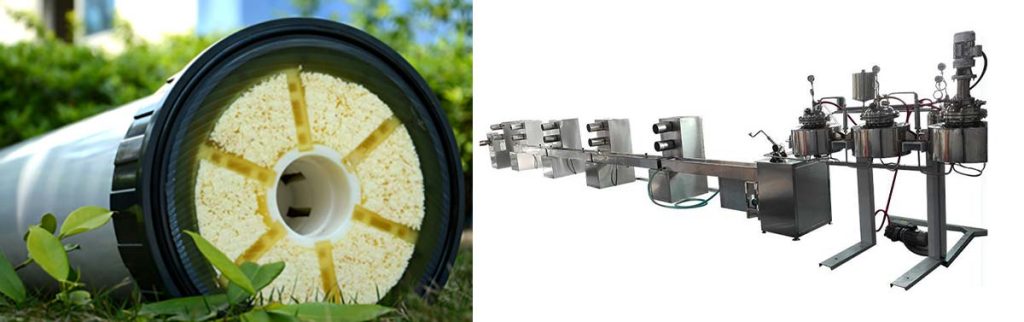
Operators adjust spinning parameters such as air gap, flow rate, and temperature to control fiber morphology and membrane properties. The air gap distance influences the structure and separation performance of hollow fibers.
The study shows that manipulating air gap intervals at 5, 10, 15, 20, and 25 cm during the spinning of PVDF hollow fiber membranes leads to significant changes in their morphology and gas separation performance. It was found that increasing the air gap distance reduces inner lumen defects and enhances CO2 gas permeance, with optimal selectivity observed at 15 cm before declining at longer distances.
Adjustments in flow rate and spinning temperature affect the cross-sectional morphology of hollow fibers. The formation of the right size pores, their distribution, and wall thickness are critical for achieving desired membrane characteristics. The flow rate, shear rate, and composition of the dope solution during fabrication directly impact structural stability and permeate flux. Operators monitor these parameters to optimize membrane permeability and separation performance.
Additives and Coagulants
Additives and coagulants influence pore size, distribution, and hydrophilicity in hollow fiber membranes. Polyethylene glycol (PEG) increases mean pore size and improves uniformity of pore formation. Membranes with higher PEG content show larger mean pore sizes and better control over fiber morphology. The list below highlights the effects of additives and coagulants:
- The influence of polyethylene glycol (PEG) on pore size and distribution in hollow fiber membranes is significant, with increased PEG content leading to larger mean pore sizes.
- The mean pore sizes for different membranes were reported as follows: DHF-512 (26.8 nm), DHF-520 (27.4 nm), DHF-528 (33.2 nm), and CHF (31.7 nm).
- BSA leakage was affected by the mean pore size, with lower leakage observed in membranes with smaller pore sizes, such as DHF-528 (0.06 ± 0.02%) compared to CHF (2.16 ± 0.02%).
- The uniformity of pore formation in DHFs was superior to that in CHF, indicating better control over pore structure with the use of additives like PEG.
Operators select additives and coagulants to enhance membrane hydrophilicity, permeability, and separation performance. Careful adjustment of these parameters during membrane fabrication leads to improved fiber properties and consistent quality.
Morphology Optimization Strategies
Adjusting Spinning Parameters
Operators in hollow fiber spinning machine focus on adjusting spinning parameters to achieve optimal fiber morphology and membrane performance. They monitor air gap, extrusion rate, bore fluid flow, and spinning temperature to control fiber structure. Real-time process monitoring enables precise adjustments to parameters such as nozzle velocity and extrusion rate. Immediate feedback from the polymerization front allows operators to maintain consistent material deposition, which is essential for reproducible fiber morphology. Consistency in fiber formation leads to improved membrane performance and reliability.
Operators use the following actionable tips for parameter adjustment and process monitoring:
- Monitor extrusion rate and bore fluid flow continuously to maintain uniform hollow fiber structure.
- Adjust air gap distance to optimize pore size and wall thickness for desired membrane permeability.
- Control spinning temperature to influence fiber solidification and hydrophilicity.
- Use real-time sensors to detect deviations in parameters and respond quickly to maintain optimal morphology.
Real-time monitoring of spinning parameters ensures reproducibility in fiber morphology and enhances membrane performance. Operators achieve consistent fiber quality by responding to immediate feedback during membrane fabrication.
Operators also track flow rates and spinning conditions to prevent defects such as macrovoids or uneven pore distribution. They document parameter changes and analyze their effects on fiber morphology using characterization tools like scanning electron microscopy. This approach supports continuous improvement in membrane performance for water treatment applications.
Experimental Design for Optimization
Optimization of fiber morphology and membrane performance requires systematic experimentation. Operators employ statistical design of experiments (DOE) methods to evaluate multiple parameters and their interactions. These approaches help identify critical factors that influence hollow fiber membranes and define the design space for product quality.
Response surface methodology (RSM) is highlighted as a key experimental design method for optimizing spinning parameters in hollow fiber production. It effectively assesses the impact of various parameters on membrane performance while minimizing the number of required experimental trials.
The RSM technique with central composite design was utilized to create predictive models that evaluate the effects of significant variables on hollow fiber membrane performance, thereby reducing experimental trials and enhancing reliability.
The table below summarizes the contributions of DOE approaches to morphology optimization:
| Evidence Description | Key Findings |
|---|---|
| Statistical Design of Experiment (DoE) | A systematic approach to evaluate multiple variables and their interactions, leading to improved understanding and optimization of processes essential for morphology optimization. |
| Design of experiments (DoE) in pharmaceutical development | Emphasizes DoE’s role in establishing mathematical models that correlate Critical Process Parameters (CPPs) and Critical Material Attributes (CMAs) with Critical Quality Attributes (CQAs), defining the design space for product quality. |
| Design of Experiments in Pharmaceutical Development | Articulates DoE’s objectives in product development, demonstrating its advantages over One Factor At a Time (OFAT) approaches by enabling simultaneous investigation of multiple factors. |
| Design of Experiments Application, Concepts, Examples | Contextualizes DoE as a multipurpose tool for identifying critical factors and optimization across various scientific industries. |
Operators select experimental design methods based on the complexity of the spinning process and the desired membrane characteristics. They use predictive models to guide parameter adjustments and optimize fiber morphology. This systematic approach reduces trial-and-error and improves membrane performance for hollow fiber membranes.
Case Studies in Hollow Fiber Membranes
Successful optimization of fiber morphology and membrane performance is demonstrated in several case studies. Operators analyze process changes and their effects on hollow fiber membranes using characterization techniques and performance metrics.
The table below presents key findings from case studies on hollow fiber membranes:
| Evidence Description | Key Findings |
|---|---|
| Optimization of hollow fiber membranes for CO2/CH4 separation | CO2 permeance increased from 17.39 to 56.25 × 10⁻⁶ cm3 (STP)/cm2.s.cmHg with optimal dope extrusion rate. Membranes showed excellent selectivity of 40.26 for CO2/CH4. |
| Influence of membrane module configuration on CO2/CH4 separation | Cascade arrangement produced higher CO2/CH4 selectivity, especially at low feed pressures, compared to series configuration. |
| Study on polysulfone hollow fiber membrane system | Single-stage gas permeation in cascade arrangement yielded the highest CO2/CH4 selectivity, demonstrating the impact of module configuration on separation performance. |
Operators also observe improvements in membrane characteristics through process changes. For example, the redesign of filtration processes led to higher bubble points and lower diffusive flow rates for CPF filters. These filters demonstrated superior clean water flow rates and greater serum throughput compared to competitors. In clinical hemodialysis membranes, the PAES membrane, with high porosity and large pore size, improved clearance of middle molecules and enhanced hydrophilicity. This resulted in more efficient filtration and lower serpin levels during dialysis sessions.
The table below highlights improvements in membrane performance for various treatment applications:
| Modified membrane | Improvement |
|---|---|
| Pomegranate juice | Flow rate was three times higher than normal in clarification, saving time and obtaining 60°Brix. |
| Green tea | Turbidity of green tea extract was reduced by 90% even after 30 days of refrigerated storage. |
| Apple juice | Improvement in antiscalant properties, with flow recovery above 90%, and in color, turbidity, total soluble solids, total phenolic content, and antioxidant capacity. |
Operators achieve optimal fiber morphology and membrane performance by combining parameter adjustment, experimental design, and process monitoring. These strategies support continuous improvement in hollow fiber spinning machine and ensure consistent quality for water treatment applications.
Best Practices for Hollow Fiber Membranes
Consistent Quality Tips
Operators maintain consistent quality in hollow fiber membranes by following several best practices. They inspect and replace worn machine components, such as seals and bearings, to extend equipment life and ensure stable membrane performance. Automation and energy-efficient systems improve production flow and reduce costs. Operators reuse waste products and water, which supports sustainability in membrane fabrication and treatment processes. Inclusive management styles encourage continual improvement and adoption of new technologies, leading to better membrane performance and reliability.
Quality control measures play a vital role in achieving uniform fiber morphology and membrane performance. The table below summarizes key measurement techniques used during membrane fabrication:
| Measurement Technique | Description |
|---|---|
| High Volume Instrument | Measures fiber physical characteristics, including length and strength. |
| Length/Strength Module | Analyzes two samples simultaneously for consistent testing. |
| Length Uniformity | Ratio of mean length to upper half mean length, indicating fiber consistency. |
| Micronaire | Assesses fiber fineness and maturity, impacting membrane quality. |
| Airflow Instrument | Measures air permeability of compressed cotton fibers, aiding characterization. |
Operators monitor these parameters to ensure hollow fiber membranes meet performance standards for water treatment applications. They document flow rates and membrane characteristics to support optimization and consistent treatment results.
Troubleshooting Common Issues
Operators encounter several common issues during hollow fiber membrane fabrication. Orifice clogging often results from debris or residual dope, causing downtime and affecting membrane performance. Capillary wear occurs with prolonged high pressure, producing thicker fibers that fall outside specifications. Eccentric spinning leads to uneven wall thickness, which impacts membrane performance and treatment efficiency. Leakage arises from seal failure or exposure to solvents, such as DMAC, NMP, or DMF, and poor assembly can cause leaks at interfaces. Precision drift develops after long-term heat or chemical attack, resulting in diameter and concentricity drift that reduces membrane performance.
Effective troubleshooting strategies help resolve morphology-related defects and restore membrane performance. Operators use illumination correction to address spatial inconsistencies in images, improving detection of subtle morphological characteristics. Machine learning supports quality control by identifying and eliminating aberrant images that could compromise membrane characterization. Morphological image feature extraction measures cellular characteristics, ensuring robust identification of membrane sub-compartments for accurate analysis.
Operators document troubleshooting steps and monitor flow rates to prevent recurrence of defects. They focus on maintaining optimal membrane performance for water treatment applications and continually improve fabrication processes.
Conclusion
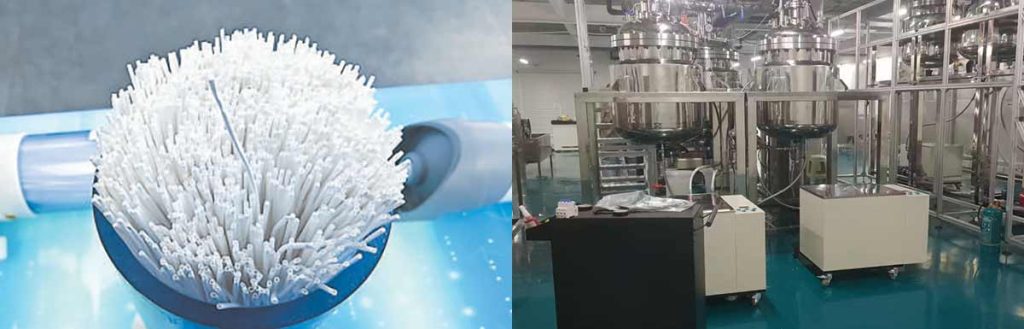
Effective control of membrane morphology in hollow fiber spinning machine relies on precise adjustment of process factors. The table below highlights the most significant contributors to membrane performance:
| Significant Process Factors | Impact on Membrane Performance |
|---|---|
| Bore Fluid Ratio | High |
| Dope Extrusion Rate | High |
| Coagulation Bath Temperature | High |
| Air Gap Length | High |
Systematic parameter adjustment, such as tuning catalyst layer thickness and ionomer ratios, improves membrane hydration and conductivity. Ongoing experimentation with spinning parameters and polymer concentrations enables operators to tailor morphological characteristics for enhanced separation performance. Material selection, including preferred polymers and solvents, supports scalable membrane fabrication and consistent quality for water treatment applications. Operators should apply these best practices and continue monitoring membrane characterization to achieve optimal results.
FAQ
What Is the Role of the Hollow Fiber Spinning Machine in Membrane Fabrication?
The hollow fiber spinning machine shapes the fiber structure during membrane fabrication. Operators use this equipment to control flow rates and optimize morphological characteristics. This process improves membrane quality and supports water treatment applications.
How Does Optimization Improve Separation Performance in Hollow Fiber Membranes?
Optimization adjusts spinning parameters and material choices. Operators monitor flow and temperature to enhance fiber structure. Improved morphological characteristics lead to higher separation performance in membrane systems used for water treatment applications.
Which Characterization Methods Help Analyze Fiber Morphology?
Operators use scanning electron microscopy and infrared spectroscopy for characterization. These methods reveal fiber structure and pore distribution. Accurate analysis supports membrane fabrication and optimization for water treatment applications.
Why Is Consistent Flow Important During Membrane Fabrication?
Consistent flow ensures uniform fiber formation. Operators maintain steady flow rates to prevent defects and achieve reliable morphological characteristics. This practice improves membrane performance and supports effective water treatment applications.
What Are Common Issues in Hollow Fiber Membrane Fabrication?
Operators encounter orifice clogging, capillary wear, and uneven fiber walls. Troubleshooting involves monitoring flow and using characterization tools. Addressing these issues maintains membrane quality and supports water treatment applications.