By LydiaPosted on September 15, 2025Category: Hollow Fiber
The hollow fiber spinning machine creates cylindrical membrane structures, while the flat sheet membrane casting machine produces flat sheets. Each design leads to distinct advantages in membrane production. Manufacturers often choose based on factors like scalability, performance, maintenance needs, and cost. These differences affect how well a system fits specific industrial or laboratory applications.
Key Takeaways
Hollow fiber spinning machine creates cylindrical membranes with high surface area, making them ideal for efficient water treatment in compact spaces.
Flat sheet membrane casting machine produces robust membranes that are easier to maintain, suitable for laboratory and pilot-scale applications.
Choosing the right machine depends on production needs, available space, and cleaning requirements, ensuring optimal performance in membrane applications.
Hollow fiber membranes excel in high packing density and continuous production, while flat sheet membranes offer straightforward cleaning processes.
Evaluate the specific operational demands and long-term maintenance needs before selecting a membrane manufacturing method.
Key Differences
Overview
Manufacturers use two main approaches to produce membranes: the hollow fiber spinning machine and the flat sheet membrane casting machine. Each method shapes the membrane differently and influences its properties and applications. The hollow fiber spinning machine forms cylindrical fibers through a dry-jet wet spinning process. This process uses specific dope solutions and coagulants. The air gap distance in this method changes the internal and external surfaces of the fibers, which affects pore size and separation performance. In contrast, the flat sheet membrane casting machine creates flat membranes by spreading a polymer solution onto a surface and then solidifying it.
The choice between these machines impacts the membrane’s structure, performance, and suitability for different industries.
The following tables highlight the main differences between the hollow fiber spinning machine and the flat sheet membrane casting machine in membrane production:
These differences guide manufacturers in selecting the right machine for their needs. The hollow fiber spinning machine excels in applications requiring high packing density and efficient cleaning. The flat sheet casting machine suits environments where durability and straightforward maintenance matter most.
Hollow Fiber Spinning Machine
Design
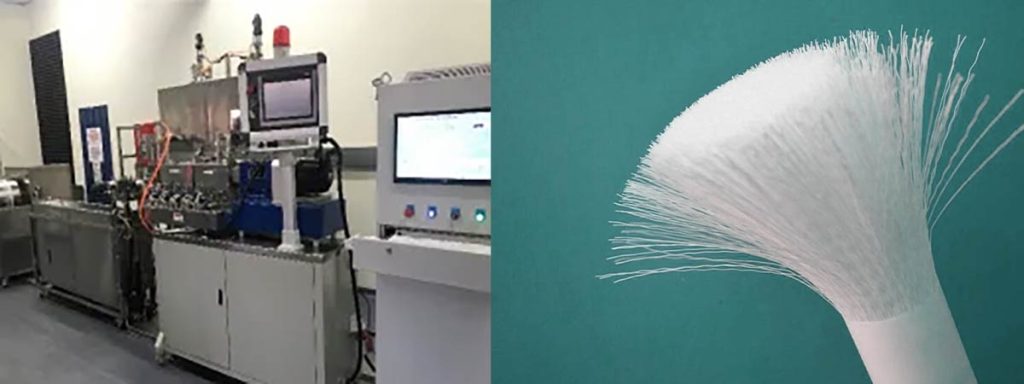
The hollow fiber spinning machine uses a specialized process to create hollow fiber membranes. This machine pushes a polymer solution through a hollow fiber spinneret, forming thin, cylindrical fibers with a hollow core. The design of the hollow fiber spinning machine allows for precise control over the diameter and wall thickness of each membrane. Operators can adjust parameters such as flow rate and air gap to influence the final membrane structure. This level of control helps manufacturers achieve high quality and consistency in hollow fiber mbr production. The unique design also supports the fabrication of advanced composite membranes, which are gaining attention in research for their improved performance.
Packing Density
Packing density plays a crucial role in the performance of hollow fiber mbr systems. The hollow fiber spinning machine produces hollow fiber membranes that offer much higher packing densities compared to flat sheet membranes. This advantage comes from the cylindrical shape and arrangement of the fibers. The design of hollow fiber modules brings several benefits:
The structure allows for easier backwashing, which helps reduce fouling.
The system does not require spacers, simplifying module assembly and maintenance.
High packing density means that more membrane surface area fits into a smaller volume. This feature increases the efficiency of water treatment processes and supports the compact design of hollow fiber mbr units.
Efficiency
Efficiency remains a key reason why many manufacturers choose the hollow fiber spinning machine for membrane production. Hollow fiber membranes deliver excellent filtration performance in mbr applications. The high surface area provided by the dense packing of fibers boosts throughput and supports rapid water flow. Operators find that the hollow fiber mbr design helps control fouling, as the system allows for effective backwashing and cleaning. The hollow fiber spinning machine also supports continuous production, which improves overall efficiency and reduces downtime. High quality and reliable operation make this technology a preferred choice for large-scale water treatment and industrial applications.
Flat Sheet Membrane Casting Machine
Design
Flat sheet membrane casting machines play a vital role in the production of flat-sheet membranes. These machines use a precise casting process to create uniform membrane layers. Operators spread a polymer solution onto a flat surface, then control temperature and speed using digital displays. The robust construction of these machines, often made from stainless steel, ensures durability and long-term performance. Flat-sheet membranes produced by this method show consistent thickness and quality, which benefits both research and industrial applications. The user-friendly design allows technicians to adjust settings easily, making the process accessible for laboratory and pilot-scale work.
Feature
Description
Superior Casting Precision
Ensures precise coating of membranes, delivering consistent and high-quality results.
Robust Construction
Durable materials, often stainless steel, for long-lasting performance.
User-Friendly Design
Digital controls for temperature and coating speed, easy operation.
Versatile Applications
Suitable for research, lab-scale tests, and pilot modules.
Scalability Limits
Flat-sheet membranes face certain scalability limits in large-scale membrane production. The flat mbr design requires more space compared to hollow fiber systems. Manufacturers often find that scaling up flat-sheet membranes leads to increased module size and higher material costs. The flat-sheet casting machine works well for small batches and pilot projects, but it may not match the efficiency of hollow fiber spinning machines in high-volume operations. Flat mbr systems also need more support structures, which can complicate installation and increase expenses. These factors make flat-sheet membranes less suitable for very large water treatment plants.
Cleaning Challenges
Cleaning flat-sheet membranes presents unique challenges. The flat mbr configuration exposes more surface area to potential fouling, especially in environments with high solids. Operators must remove modules for thorough cleaning, which can interrupt system operation. Unlike hollow fiber membranes, flat-sheet membranes do not allow for easy backwashing. Manual cleaning or chemical soaking often becomes necessary, increasing maintenance time and cost. Technicians must monitor membrane performance closely to prevent buildup and maintain efficiency. These cleaning challenges influence the overall suitability of flat mbr systems for certain applications.
Performance
Stability
Membrane stability plays a crucial role in the long-term operation of mbr systems.Hollow fiber spinning machinesproduce membranes with excellent mechanical properties. These membranes withstand high-pressure treatment environments and maintain their structure over time. The mechanical strength reaches up to 185 MPa, which supports reliable performance in industrial water treatment. Flat sheet membrane casting machines do not provide the same level of mechanical data, but their membranes offer consistent thickness and durability for moderate treatment needs.
Operators often select hollow fiber membranes for applications that demand high stability and resistance to pressure fluctuations. The fiber bundle design, sometimes enhanced with GO doping, increases reinforcement and extends membrane life. In contrast, flat sheet membranes suit smaller mbr setups where mechanical stress remains low.
The following table summarizes key stability features:
Efficient flow rate handling determines the success of mbr treatment systems. Hollow fiber membranes excel in supporting high flow rate operations. Their design allows permeation flux up to 115.6 L m−2 h−1, which boosts efficiency in large-scale water treatment. These membranes also achieve impressive dye rejection rates, such as 99.8% for Congo red, making them ideal for advanced treatment processes.
Flat sheet membranes manage moderate flow rates and suit laboratory or pilot-scale mbr modules. Their structure limits the maximum flow rate, which can affect efficiency in demanding treatment scenarios. Operators may prefer hollow fiber membranes when high flow rate and efficiency are critical for system performance.
Hollow fiber mbr units handle larger volumes with less risk of fouling.
Choosing the right membrane type ensures optimal efficiency and reliable treatment results in any mbr application.
Scalability
Production Capacity
Production capacity plays a major role in selecting between hollow fiber and flat sheet machines for mbr systems. Hollow fiber spinning machines allow manufacturers to produce large volumes of membrane in a continuous process. This method supports high throughput, which benefits industries that require large-scale water treatment. High production rates also improve energy efficiency because the process reduces downtime and waste. Flat sheet casting machines, on the other hand, often suit smaller batches. These machines work well for research or pilot projects but may struggle to meet the demands of full-scale mbr plants. When companies focus on sustainability, they often choose hollow fiber systems. High output and energy efficiency help reduce the environmental impact of membrane manufacturing. Operators who need to scale up quickly often prefer hollow fiber spinning machines for their flexibility and consistent results.
Space Requirements
Space requirements differ greatly between hollow fiber and flat sheet mbr systems. Hollow fiber modules offer a compact design. Their high packing density means operators can fit more membrane surface area into a smaller footprint. This feature improves energy efficiency by reducing the need for large support structures and extra equipment. Flat sheet membrane casting machines and their modules usually require more space. The flat design spreads out the membrane, which increases the size of the installation. Larger systems can lead to higher energy use and maintenance costs. Companies that value sustainability often select hollow fiber mbr units because they save space and lower energy consumption. Efficient use of space also supports energy efficiency and helps facilities meet sustainability goals. When planning a new mbr installation, decision-makers should consider both the available space and the long-term impact on sustainability.
Maintenance
Routine Tasks
Operators perform routine tasks to maintain mbr systems and ensure consistent treatment efficiency. They inspect modules for signs of fouling and check for leaks or damage. Technicians monitor flow rates and pressure levels to maintain optimal performance. Regular backwashing helps reduce fouling in hollow fiber mbr units. Flat sheet mbr modules require manual cleaning and periodic replacement of support structures. Teams record data on membrane quality and anti-pollution performance to track system health. These tasks support long-term efficiency and help prevent unexpected downtime.
Tip: Scheduling routine inspections and cleanings improves membrane quality and extends the lifespan of mbr systems.
Common routine tasks include:
Checking for fouling and buildup
Monitoring treatment flow rates
Recording anti-pollution performance data
Replacing worn components
Performing backwashing or manual cleaning
Routine maintenance ensures that both hollow fiber and flat sheet mbr systems deliver reliable treatment and maintain high efficiency.
Cleaning Ease
Cleaning ease varies between hollow fiber spinning machine and flat sheet casting machine. Manufacturer documentation highlights differences in cleaning procedures and outcomes. Flat sheet membranes offer simple cleaning processes. Operators can remove modules and clean surfaces directly, which reduces downtime and maintains treatment efficiency. Hollow fiber membranes present challenges in cleaning due to their design. The dense packing and cylindrical structure make it harder to reach all surfaces, increasing the risk of fouling and reducing anti-pollution performance.
The following table summarizes cleaning ease for each membrane type:
Technicians often choose flat sheet mbr modules for environments where cleaning speed and efficiency matter most. Hollow fiber mbr units require more careful cleaning routines to maintain membrane quality and treatment performance. Effective cleaning supports high efficiency and reduces the impact of fouling on mbr systems.
Selection Guide
Decision Factors
Selecting the right machine for membrane production depends on several important factors. Manufacturers must consider the membrane material, pore size, filtration area, flow rates, and types of solution. These elements influence the performance and suitability of the final product in mbr systems. Hollow fiber membranes offer densely packed fibers with a small hollow portion. Filtration can occur from inside the fiber to the outside or vice versa, which allows for a backwash cycle. This design makes hollow fiber membranes more resilient to small particulates than spiral membranes, but they often require pre-filtration for larger particulates.
Most hollow fiber membranes cannot operate at pressures above 30 psi (2 bar) without breaking. This pressure limitation is critical for applications that demand high durability. Flat sheet membranes provide consistent thickness and robustness, which suits environments with moderate pressure requirements. Manufacturers should evaluate the cost of each machine, as hollow fiber spinning machines often require higher initial investment but deliver greater scalability for mbr projects.
Tip: Always match the membrane type to the specific needs of the mbr application, considering both operational demands and long-term maintenance.
Environment Fit
The operating environment plays a major role in machine selection. Hollow fiber spinning machines excel in large-scale mbr installations where high packing density and efficient cleaning are essential. These machines fit compact spaces and support continuous production, making them ideal for industrial water treatment. Flat sheet membrane casting machines work best in laboratory or pilot-scale mbr setups. Their design allows for easy cleaning and maintenance, which benefits research and small-scale operations.
Manufacturers should assess the available space, desired production capacity, and maintenance resources before choosing a machine. The right choice ensures reliable mbr performance and supports long-term operational goals.
Conclusion
Manufacturers face important choices between hollow fiber spinning machine and flat sheet casting machine. Recent studies highlight several key points:
Adjusting spinning or casting parameters improves pore uniformity and film quality.
Hollow fiber spinning machine suits large-scale, space-limited environments, while flat sheet machine offers easy maintenance for smaller setups.
Readers should evaluate production needs, available space, and cleaning requirements before selecting a membrane manufacturing method.
FAQ
What Is the Main Advantage of Hollow Fiber Spinning Machine?
Hollow fiber spinning machine provides high packing density. This design allows more membrane surface area in a compact space. Operators achieve efficient water treatment and save installation space.
How Does Flat Sheet Membrane Casting Machine Support Maintenance?
Flat sheet membrane casting machine offers easy module removal. Technicians clean surfaces directly. This process reduces downtime and supports consistent membrane performance.
Which Machine Handles Larger Production Volumes?
Hollow fiber spinning machine supports continuous, high-volume production. Manufacturers use these machines for large-scale water treatment projects and industrial applications.
Are Hollow Fiber Membranes More Prone to Fouling?
Hollow fiber membranes resist fouling due to their structure. Operators use backwashing to clean fibers. This method helps maintain membrane quality and reduces maintenance time.
What Factors Influence Machine Selection?
Manufacturers consider membrane type, production capacity, available space, and cleaning needs. Each factor affects system performance and long-term costs.