


Solvents play a critical role in determining the efficiency of a hollow fiber membrane spinning machine. They influence how the hollow fiber membrane forms, its internal structure, and its final performance. The choice of solvent affects dope viscosity and interacts with the bore solution, shaping the membrane’s porosity and mechanical strength. Selecting the right solvent and managing these factors can lead to higher productivity and better quality.
Key Takeaways
- Solvent choice is crucial for hollow fiber membrane quality. It affects how membranes form and perform.
- Dope viscosity influences membrane structure. High viscosity creates sponge-like membranes, while low viscosity leads to finger-like pores.
- Using green solvents reduces environmental impact. They help meet safety regulations and support sustainable production.
- Additives like nanoparticles can enhance membrane properties. They improve strength, permeability, and resistance to fouling.
- Regular cleaning and solvent management are essential. They ensure long-term stability and high performance of hollow fiber membranes.
Solvents and Hollow Fiber Membrane Spinning Machine Performance
Solvent Effects on Membrane Structure
The choice of solvent in the hollow fiber membrane spinning machine directly shapes the structure of hollow fiber membranes. Solvents control the phase inversion process, which determines pore formation and the internal morphology of the membrane. Different solvents interact with polymers like pvdf and sio2, leading to unique membrane architectures. For example, scanning electron microscopy (SEM) images show that some pores become filled during phase inversion, which reduces pore availability and affects flux. The phase inversion time varies with different polymers, impacting the structural integrity of hollow fiber membranes. The miscibility of certain monomers, such as HDA in the ternary phase diagram, plays a crucial role in membrane formation and stability. When glycerol is added to a pvdf/NMP system, the precipitation rate increases, resulting in a sponge-like structure with high wetting resistance. This property is essential for hollow fiber membranes for co2 absorption.
Solvent exchange during hollow fiber spinning also influences the final membrane structure. Solvents like NMP, THF, DMF, and DMAc are commonly used in the spinning process. The right solvent selection leads to optimal separation performance. Additives can enhance pore formation and hydrophilicity, improving water flow. However, excessive additives may compromise mechanical strength and pore size, reducing long-term stability.
- SEM images reveal that some pores were filled during phase inversion, affecting pore availability and permeate flux.
- Different polymers exhibit varying phase inversion times, impacting the structural integrity of hollow fiber membranes.
- The conversion of hollow STRIPS white fiber to a solid membrane through UV irradiation highlights the role of HDA as a monomer.
- HDA’s miscibility in the ternary phase diagram is important for membrane formation and stability.
- The addition of glycerol to pvdf/NMP increases the precipitation rate, leading to a sponge-like structure with high wetting resistance, crucial for co2 absorption.
Impact on Permeability and Selectivity
Solvent selection has a significant impact on the permeability and selectivity of hollow fiber membranes. The morphological structure, shaped by the solvent, determines how easily liquids and gases pass through the membrane. For instance, a sponge-like structure formed by high dope solution viscosity can decrease mutual diffusion between the solvent and non-solvent. This slower solidification process affects the selectivity and permeability of hollow fiber membranes. The draw ratio and shear rate during spinning also influence these properties.
The performance of hollow fiber membranes depends on the balance between permeability and selectivity. High permeability allows for greater mass transfer flux, which is vital for applications like carbon dioxide absorption. However, excessive permeability can reduce selectivity, leading to lower separation efficiency. The stability of hollow fiber membranes over long-term operation is also linked to the solvent used during spinning. Membranes made with pvdf and sio2 often show improved long-term stability and resistance to liquid absorption, which is essential for hollow fiber membrane contactor systems.
Role of Dope Viscosity and Bore Solution
Dope solution viscosity is a critical parameter in the hollow fiber spinning machine. It influences the morphology, shape, and performance of hollow fiber membranes. Variations in dope viscosity affect the flow rate, draw ratio, and spinning speed. These factors are essential for optimizing membrane performance. High viscosity in the spinning dope solution can lead to a sponge-like structure, which decreases mutual diffusion between the solvent and non-solvent. This results in slower solidification and impacts the selectivity and permeability of hollow fiber membranes.
The composition of the bore solution also plays a significant role in determining membrane structure and performance. As the concentration of NMP in the bore fluid increases, the viscosity rises. This higher viscosity can hinder solvent-exchange progression and confine the process to a thinner outer region. The result is a thinner skin layer with defects, which reduces the permselectivity of hollow fiber membranes. The operational parameters of the hollow fiber spinning machine, such as temperature and spinning parameters, must be carefully controlled to maintain optimal dope viscosity and bore solution properties.
Tip: Maintaining the right dope solution viscosity and bore solution composition ensures consistent membrane quality and long-term stability.
The scalability of hollow fiber membrane production also depends on solvent-related process parameters. For example, the use of γ-butyrolactone (GBL) as a solvent promotes environmentally friendly practices and supports the scalability of hollow fiber membranes. This approach aligns with green chemistry principles and enhances the sustainability of the process.
| Process Parameter | Influence on Scalability |
|---|---|
| Crossflow Velocity | Affects energy consumption and retention |
| Staging | Partly determines efficiency in membrane performance |
| Commercial Viability | Rapid availability of HF NF modules indicates scalability |
The careful selection of solvents, control of dope viscosity, and adjustment of spinning parameters all contribute to the high performance, stability, and long-term operation of hollow fiber membranes. These factors are especially important for applications such as co2 absorption, where membrane flux and mass transfer flux must remain stable over time.
Comparing Solvents for Hollow Fiber Membranes
Common Solvents and Their Properties
The hollow fiber spinning machine relies on several solvents to produce high-quality hollow fiber membranes. Each solvent affects the process, membrane structure, and performance. The most common solvents include DMAC and TMP. These solvents play a key role in controlling dope solution viscosity, which shapes the final membrane. The table below summarizes their properties:
| Solvent | Key Properties |
|---|---|
| DMAC | Influences membrane morphology and performance. |
| TMP | Affects membrane structure and process outcomes. |
Solvents like DMAC and TMP interact with pvdf and sio2 during spinning. They help control the viscosity of the dope, which determines the pore structure and flux of hollow fiber membranes. The right solvent choice ensures consistent absorption and long-term stability.
Solvent Influence on Mechanical and Hydrophilic Properties
Solvent selection impacts the mechanical strength and hydrophilicity of hollow fiber membranes. The chemical composition of the solvent can add hydrophilic functional groups to the membrane surface. This increases water affinity and improves absorption. Surface roughness, porosity, and fiber diameter also change with different solvents. For example, higher porosity increases the effective surface area for liquid interaction, which boosts mass transfer flux and absorption rates.
- Hydrophilic organic solvents, such as benzyl alcohol, ethanol, and propylene glycol, can accelerate emulsification and improve membrane performance.
- Benzyl alcohol shows the least damaging effect on membrane stability, making it suitable for long-term use.
- Membranes with higher surface energy exhibit greater hydrophilicity, which is important for hollow fiber membranes for co2 absorption.
The hollow fiber spinning machine must maintain the right dope solution viscosity and temperature to achieve optimal mechanical properties and stability.
Environmental and CO2 Considerations
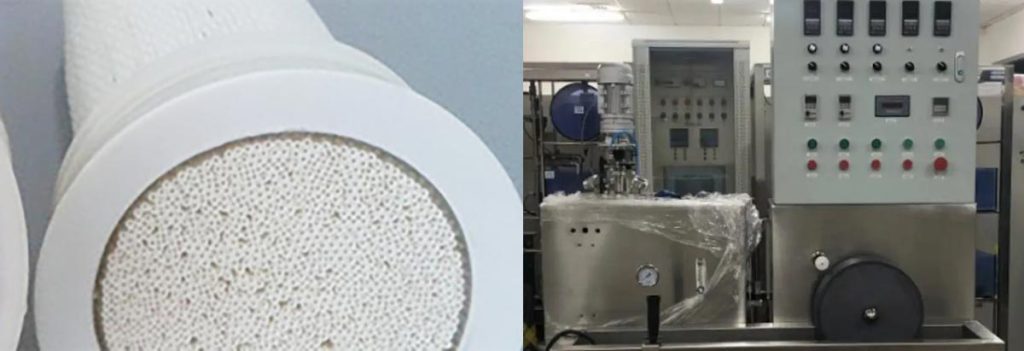
Environmental regulations now require careful selection of solvents in hollow fiber membrane production. Many traditional solvents release volatile organic compounds and pose health risks. Regulatory agencies demand more analytical testing and risk assessment for extractables like PFAS and nanoplastics. Green solvents, such as thymol mixtures, offer safer alternatives and reduce the carbon footprint of the process.
- Substituting toxic solvents with eco-friendly options supports sustainable manufacturing.
- Disposal of hollow fiber membranes, especially those made from pvdf and sio2, can release harmful byproducts during incineration or landfill.
- Recycling remains a challenge due to emission risks, but green solvents help minimize environmental impact.
The hollow fiber spinning machine benefits from process adjustments that use safer solvents, maintain dope solution viscosity, and control temperature. These steps improve long-term stability, absorption, and performance in applications like carbon dioxide absorption and hollow-fiber membrane contactor systems.
Optimizing Solvent Use for Better Performance
Selecting the Right Solvent
Choosing the optimal solvent for a hollow fiber membrane spinning machine requires careful consideration of several criteria. The solvent must match the materials used in the membrane, such as pvdf and sio2, to ensure compatibility and stability. Mechanical strength and cost also play important roles in solvent selection. Operators often rely on trial and error, especially in applications like HF3LPME, but understanding the properties of analytes can guide the process. Analytes with log P values above 2 work best with standard solvents, while those below 2 may need additional carriers for effective absorption.
- Compatibility with membrane materials, including pvdf and sio2
- Mechanical strength of hollow fiber membranes
- Cost and availability of the solvent
- Suitability for the target analytes based on log P values
The solvent directly affects dope solution viscosity, which shapes membrane morphology and performance. Lower viscosity leads to finger-like porous structures, while higher viscosity creates sponge-like structures. Operators must monitor viscosity to achieve the desired membrane structure and long-term stability. The right solvent also supports consistent absorption and flux, which are critical for hollow fiber membranes for co2 absorption and carbon dioxide absorption.
Process Adjustments and Additives
Process adjustments and the use of additives can significantly improve membrane quality and spinning machine efficiency. Adjusting temperature, stretching ratio, stretching rate, and cooling conditions helps control membrane morphology and performance. Operators must fine-tune these spinning parameters to maintain optimal dope solution viscosity and dope solution composition.
Additives such as nanoparticles enhance the properties of hollow fiber membranes. Incorporating materials like silver-doped zinc oxide, titanium dioxide, and graphene oxide during phase inversion increases water permeability, mechanical strength, and fouling resistance. The table below summarizes the reported performance enhancements for various nanoparticle additives:
| Nanoparticle Type | Incorporation Method | Reported Performance Enhancements |
|---|---|---|
| Silver-doped Zinc Oxide | Phase inversion | Up to 2.73 times increase in water permeability; strong antibacterial activity; enhanced mechanical strength; improved hydrophilicity |
| Zinc Oxide | Phase inversion | Increased hydrophilicity, permeability, porosity; reduced fouling |
| Titanium Dioxide | Phase inversion | Improved dye removal; enhanced anti-fouling; increased permeability |
| Silicon Dioxide | Phase inversion | Increased fouling resistance; improved membrane durability |
| Aluminum Oxide | Phase inversion | Enhanced anti-fouling; increased permeation flux |
| Carbon Nanotubes | Phase inversion | Improved water flux; anti-fouling properties; mechanical strength |
| Graphene Oxide | Blending/Phase inversion | Improved water flux; anti-fouling; increased hydrophilicity; high aspect ratio and functional groups aiding dispersion |
| Halloysite Nanotubes | Surface modification | Increased hydrophilicity; improved rejection ratio; enhanced anti-fouling |
Operators must also monitor process variables influenced by solvent choice. Viscosity affects phase inversion kinetics, flow rate, draw ratio, and spinning speed. Local polymer concentration determines the type of phase separation, which impacts membrane morphology. Residence time during spinning changes membrane structure and long-term performance stability.
Tip: Adjusting temperature, stretching ratio, and cooling conditions helps maintain consistency in hollow fiber membrane production.
Managing Residual Solvents and Cleaning
Effective management of residual solvents and cleaning procedures ensures high performance and long-term stability in hollow fiber membranes. Operators should use green solvents to minimize toxicity and environmental impact. Waste reutilization reduces raw material consumption and supports sustainability. Adapting manufacturing processes to be less energy-intensive increases efficiency and lowers costs.
- Use green solvents to reduce environmental risks
- Recycle and reuse solvents whenever possible
- Optimize cleaning protocols to remove residual solvents from hollow fiber membranes
- Monitor dope solution viscosity and temperature during cleaning to preserve membrane structure
The hollow fiber membrane spinning machine benefits from these strategies by producing membranes with stable absorption, high flux, and reliable long-term operation. Consistent cleaning and solvent management also protect the hollow-fiber membrane contactor system from contamination and degradation.
Note: Operators should regularly check membrane stability and performance after cleaning to ensure optimal mass transfer flux and absorption rates.
Conclusion
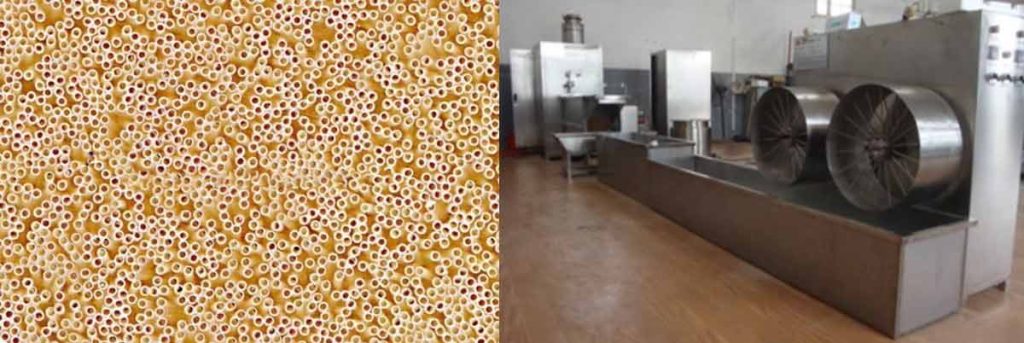
Solvents shape the efficiency of a hollow fiber spinning machine by controlling membrane formation and quality. Careful solvent selection influences polarity selectivity and solute rejection, which directly affect membrane purity and efficiency. Operators must monitor process variables to maintain consistent membrane performance. Environmental impact remains a key concern, so green solvent choices support safer production. For best results, operators should match solvents to membrane materials, adjust process settings, and use effective cleaning routines. These steps help the hollow fiber spinning machine deliver stable membrane output and reliable long-term operation.
FAQ
What Is the Role of Solvents in a Hollow Fiber Spinning Machine?
Solvents dissolve polymers and help form the membrane structure. They control the viscosity of the dope solution. The right solvent choice leads to better membrane quality and higher efficiency in the hollow fiber spinning machine.
How Does Dope Viscosity Affect Membrane Performance?
Dope viscosity determines the shape and porosity of the membrane. High viscosity creates sponge-like structures. Low viscosity forms finger-like pores. Operators must monitor viscosity to maintain consistent output from the hollow fiber spinning machine.
Why Should Operators Consider Green Solvents?
Green solvents reduce health risks and environmental impact. They help meet regulations and support sustainable production. Using green solvents in a hollow fiber spinning machine improves safety and lowers the carbon footprint.
Can Additives Improve Membrane Quality in Hollow Fiber Spinning Machine?
Additives such as nanoparticles enhance membrane strength, permeability, and fouling resistance. Operators blend these materials during phase inversion. The hollow fiber spinning machine produces membranes with better performance when additives are used correctly.
What Are the Best Practices for Cleaning Residual Solvents?
Operators should use eco-friendly cleaning agents and recycle solvents when possible. Regular cleaning keeps the hollow fiber spinning machine running smoothly. Proper cleaning also protects membrane quality and ensures long-term stability.